
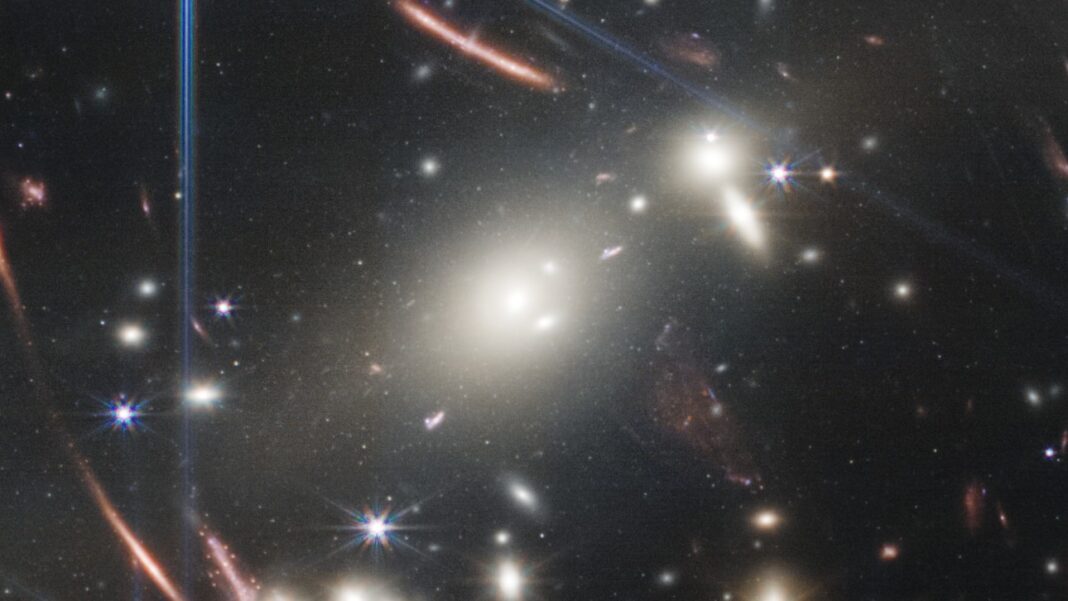


The cosmos is full of mysteries, and one of the most awe-inspiring sights is that of galaxies colliding. Recently, the James Webb Space Telescope (JWST) captured a breathtaking image of two galaxies in the midst of a cosmic crash, sending shockwaves through the astronomy community. The image is not only a visual treat but also a treasure trove of scientific data, offering insights into the complex dance of celestial bodies. Let’s dive into the details of this extraordinary event and explore what it reveals about the universe.
The Cosmic Collision
The galaxies in question are known as IC 1623, a pair of interacting galaxies located approximately 270 million light-years away from Earth. The JWST image shows the galaxies in the process of merging, with their spiral arms and central bulges distorted by the gravitational forces at play. As the galaxies collide, their stars, gas, and dust are being rearranged, giving rise to new star-forming regions and potentially even new celestial objects.
The collision is not a catastrophic event in the classical sense, as the distances between stars are so vast that the likelihood of actual star collisions is extremely low. Instead, the gravitational interaction between the galaxies is more like a slow-motion dance, with the galaxies gradually merging into a new, more massive galaxy. This process can take hundreds of millions of years, and the JWST image provides a snapshot of this ongoing transformation.
The image captured by JWST is remarkable not only for its beauty but also for its level of detail. The telescope’s advanced optics and instrumentation allow it to peer through the dust and gas, revealing the intricate structures within the galaxies. By studying this image, scientists can gain a deeper understanding of the complex processes involved in galaxy evolution and the role that mergers play in shaping the universe as we know it.
Unveiling the Secrets of Galaxy Evolution
The JWST image of IC 1623 is a valuable resource for scientists studying galaxy evolution. By analyzing the data contained within the image, researchers can gain insights into the processes that drive the formation of new stars, the growth of supermassive black holes, and the development of galaxy morphology. The image provides a unique opportunity to study the interplay between the different components of the galaxies, including their stars, gas, and dust.
One of the key areas of interest is the role of star formation in the merging galaxies. As the galaxies collide, their gas and dust are compressed, triggering the formation of new stars. This process can lead to the creation of star clusters and potentially even new galaxy components. By studying the star-forming regions within IC 1623, scientists can gain a better understanding of the complex interplay between galaxy interactions and star formation.
The JWST image also offers a glimpse into the active galactic nucleus (AGN) at the heart of the merging galaxies. As the galaxies collide, their supermassive black holes are expected to merge, potentially producing a massive release of energy. By studying the AGN and its surroundings, scientists can gain insights into the complex processes involved in the growth of supermassive black holes and their role in shaping galaxy evolution.
New Frontiers in Astronomy
The JWST image of IC 1623 is not only a remarkable achievement but also a testament to the rapidly advancing field of astronomy. The telescope’s capabilities have opened up new avenues for research, allowing scientists to study the universe in unprecedented detail. As the scientific community continues to analyze the data from JWST, we can expect to gain a deeper understanding of the complex processes that shape the cosmos.
The study of galaxy mergers and their role in shaping galaxy evolution is an active area of research, with scientists using a range of observational and theoretical tools to understand the complex processes involved. The JWST image of IC 1623 provides a unique opportunity to study these processes in detail, and its analysis is expected to shed new light on the intricate dance of celestial bodies.
As we continue to explore the universe with JWST and other advanced telescopes, we are likely to uncover even more secrets of the cosmos, revealing new and exciting insights into the nature of the universe and its many mysteries. The journey of discovery is far from over, and the cosmic crash of IC 1623 is just the beginning. For more on this topic, see: Watch Wicked: Part Two at .
Unveiling the Secrets of Star Formation
The JWST image of IC 1623 not only showcases the breathtaking beauty of colliding galaxies but also provides a unique opportunity to study the intricacies of star formation. As the galaxies merge, their gas and dust are compressed, triggering the formation of new stars. By analyzing the image, scientists can identify regions of intense star formation, characterized by the presence of young, blue stars and nebulae. These regions are crucial for understanding the role of galaxy mergers in shaping the evolution of star formation.
| Galaxy | Distance (light-years) | Type |
|---|---|---|
| IC 1623 | 270 million | Interacting galaxies |
| Milky Way | N/A | Spiral galaxy |
The JWST image reveals that IC 1623 is in a stage of advanced merging, with the two galaxies already having undergone significant interactions. The presence of tidal tails, long streams of stars and gas stripped from the galaxies during the collision, indicates that the merger has been ongoing for some time. By studying these features, scientists can gain insights into the merger history of IC 1623 and the role that galaxy interactions play in shaping the evolution of galaxies.
The Role of Supermassive Black Holes
At the heart of most galaxies, including IC 1623, lies a supermassive black hole (SMBH). These enigmatic objects are thought to play a crucial role in regulating the growth of galaxies, and their activity can be influenced by galaxy mergers. As IC 1623 merges, its SMBHs will likely interact, potentially triggering a burst of active galactic nucleus (AGN) activity. By studying the JWST image and other observations, scientists can investigate the relationship between galaxy mergers and SMBH activity, shedding light on the complex interplay between these two phenomena.
According to a study published on Wikipedia, galaxy mergers can trigger the growth of SMBHs, leading to increased AGN activity. This activity can, in turn, regulate the growth of stars in the galaxy, influencing the overall evolution of the galaxy.
Cosmic Collisions: A Key to Understanding Galaxy Evolution
The collision of IC 1623 is not an isolated event; galaxy mergers are a common occurrence throughout the universe. By studying this event and others like it, scientists can gain a deeper understanding of the hierarchical model of galaxy evolution, which suggests that galaxies grow through the merger of smaller systems. The JWST image of IC 1623 provides a unique snapshot of this process, allowing scientists to investigate the complex interactions between galaxies and their constituent parts.
For more information on galaxy evolution, visit the NASA website, which provides a wealth of information on the topic.
In analyzing the JWST image, scientists can gain insights into the star formation rates, gas flows, and merger dynamics that shape the evolution of galaxies. By combining these insights with data from other observations, scientists can build a more comprehensive picture of galaxy evolution, ultimately shedding light on the complex dance of celestial bodies that has shaped the universe as we know it.
Ultimately, the JWST image of IC 1623 serves as a powerful reminder of the awe-inspiring beauty and complexity of the universe. As we continue to explore the cosmos, events like this cosmic crash offer a glimpse into the dynamic and ever-changing nature of the universe, inspiring new generations of scientists and astronomers to unravel its secrets.
By examining the JWST image and other observations, we can gain a deeper appreciation for the intricate web of relationships that governs the universe, from the merger of galaxies to the growth of supermassive black holes. As we continue to probe the universe, we are reminded that there is still so much to learn, and that the journey of discovery is an ongoing and thrilling adventure. For more on this topic, see: Galaxy S26 Ultra Leak Reveals .
For those interested in learning more about galaxy evolution and the JWST, I recommend visiting the European Space Agency website, which provides a wealth of information on the topic.