
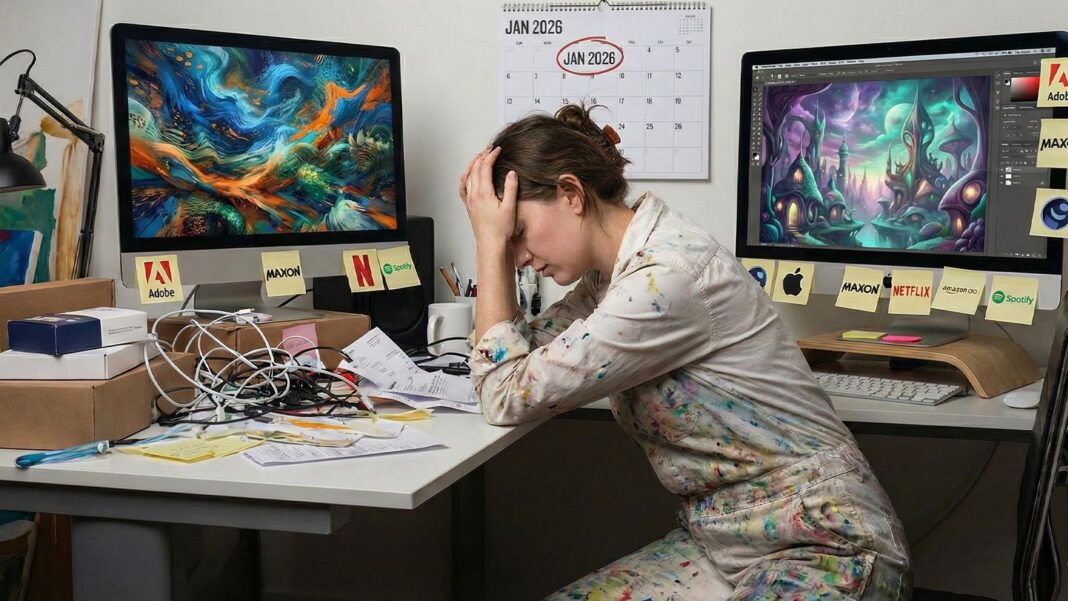


Adobe’s Price Hikes Just Accelerated the Biggest Artist Walkout in History
While most people were watching the new House of the Dragon trailer, tens of thousands of designers, illustrators and VFX artists were quietly hitting “delete” on the software that built their careers. The trigger arrived in their inboxes the same week Affinity announced its entire creative suite was going 100% free—no asterisks, no trial traps, no “gotcha” screen after 30 days. Adobe’s “Important updates to your subscription pricing” email sparked the loudest non-union walkout the industry has ever seen, and suddenly the Photoshop monopoly feels as stable as a Marvel phase post-Endgame.
The email that broke the camel’s back
Adobe’s new pricing structure—up roughly 15% across the board, with individual apps now pushing £25 a month in the UK—would have been merely annoying if it hadn’t arrived alongside similar “updates” from Netflix, Spotify and a £1.99 water-tracking app. Creatives opened their banking apps and found statements that read like hostage letters: £32 here, £19 there, £2 for H2O. The cumulative effect created a collective “I’m out” moment that’s spreading faster than a TikTok dance.
Inside forums where pros usually swap texture packs and LUTs, the tone has flipped from helpful to vengeful. One senior concept artist at a AAA studio told me he screen-grabbed his cancellation confirmation and set it as his phone lock-screen—”just to smile every time I unlock.” Another motion-graphics guru compared the exodus to the 2007 writers’ strike: “Except this time we’re not picketing, we’re just… leaving. And we’re never coming back.”
Affinity’s mic-drop moment
Affinity didn’t just slash prices—it obliterated them. Designer, Photo and Publisher are now freeware, and the company’s servers nearly melted under the download surge. Traffic spiked 1,200% in 48 hours; their subreddit grew faster than any celebrity gossip drop this year. The secret sauce isn’t merely the price tag—it’s the file compatibility. PSD, AI and even editable PDFs open without hiccup, so switching doesn’t mean rebuilding a decade of client assets from scratch.
The real kicker is performance. Affinity’s apps are lean enough to run on a three-year-old MacBook Air without the fan orchestra Adobe users accept as background noise. For freelancers who’ve been coughing up £600 a year just to crop social tiles, that feels like swapping a rented Lamborghini for a paid-off Prius that somehow still does 0–60 in three seconds.
Open-source isn’t the ugly sibling anymore
Remember when Blender was the thing you downloaded because you were broke, then quietly uninstalled once you landed a staff job? Those days died somewhere around Spider-Verse, when Sony Imageworks started crediting Blender alongside Maya. Today the open-source 3D suite handles volumetric rendering, USD pipelines and real-time compositing that makes After Effects look like iMovie with a ray-tracing filter.
The knock-on effect is seismic. If a free tool can win Emmys, why pay rent to Adobe for a 2D paint program? Artists are discovering that GIMP, Krita and DaVinci Resolve have quietly become studio-grade while no one was watching. And because the code is open, studios can fork, customise and scale without licensing audits or surprise price hikes.
What we’re witnessing, then, isn’t just a software swap; it’s a philosophical pivot. The same generation that grew up on Fortnite and Roblox—platforms where user-generated content is the product—expects ownership, not tenancy. Subscriptions feel like DRM’d homework, and nobody wants to do homework forever.
Blender’s glow-up is the plot twist no one saw coming
Five years ago, telling an art director you’d deliver a hero asset “in Blender” was code for “I’m broke and probably living in my parents’ basement.” Fast-forward to 2025 and the same software is quietly powering Spider-Verse-level shots, The Last of Us game cinematics, and a Super Bowl spot that had the internet asking, “Wait, that was Blender?” The open-source underdog has become the industry’s worst-kept secret: it’s free, it doesn’t phone home, and the last update added a USD pipeline that plugs straight into Unreal faster than you can say “subscription fatigue.”
What’s wild is how fast the old guard folded. Foundry’s Nuke now offers a non-commercial license that’s basically a dare to pirate it legally, while Autodesk slashed Maya indie to £310 a year—still not free, but close enough to feel the heat. Meanwhile, Blender’s development fund is ballooning thanks to Epic, Nvidia and even Sony Pictures cutting seven-figure cheques so they don’t have to cut subscription cheques. The moral? If you want to kill a monopoly, ship better features at zero pounds a month.
| Feature | Adobe After Effects | Blender (free) |
|---|---|---|
| Price per month | £25 (new 2025 rate) | £0 |
| True 3-D compositing | Workarounds only | Native & GPU-accelerated |
| Studio adoption | Legacy pipelines | Sony, Epic, Marvel TV |
| Offline licence | No (mandatory cloud) | Yes (forever) |
The subscription death-by-a-thousand-cuts effect
Creatives aren’t flinching at a single £25 hike—they’re rage-quitting because that hike lands next to twelve other micro-charges that magically appear the same week. Adobe’s email was simply the last swig of a very expensive cocktail. I tallied my own statement: Creative Cloud (£59), Lightroom extra storage (£9), Frame.io (£13), Spotify (£16), Netflix 4K (£18), Notion AI (£8), and yes, that smug water app (£1.99). Grand total: £124.99 a month to think and hydrate. That’s £1,499 a year—more than my first car cost, and at least the Citroën had resale value.
The psychological trick Adobe keeps trying is “it’s only the price of a takeaway,” but creatives have started framing it as rent on their own talent. When Affinity nuked the paywall, the mental math flipped overnight: £0 times forever equals a house deposit, a holiday, or the freedom to take a lower-paid gig that actually excites you. One Emmy-nominated title-sequence designer told me she’s stashing her former Adobe fees into a “f***-off fund” for the next time a studio lowballs her day rate. “They can’t price-gouge me if I own the tools,” she laughed over voice note, presumably while sipping tap water—free, like her software.
Hollywood’s quiet workaround pipeline
Studios aren’t blind to the revolt. VFX supervisors now budget for “off-grid” toolchains—workstations loaded with Blender, Krita, DaVinci Resolve and Affinity, air-gapped from any licensing server that could tank a deadline. One anonymous pipeline TD at a streamer-with-a-red-logo confessed their department keeps a “dirty” Adobe license only for legacy PSDs. “We open, we export, we shut it down. Think of it like toxic waste handling.” Meanwhile, union shows are rewriting vendor contracts to accept open file formats, and the Academy’s Sci-Tech committee is literally reviewing Blender patches for eligibility. Yes, an open-source tool could win an Oscar before Leonardo DiCaprio gets another.
The takeaway for everyday freelancers: if the backlots are hedging their bets, you can too. Export your brushes, save your LUTs, kiss the cloud goodbye. The only thing you’ll miss is the spinning wheel of Creative Cloud “checking for updates” while your deadline sweats bullets.
Final cut: subscriptions are the new cable bundle—and creatives just cut the cord
Adobe forgot the first rule of show business: never give your audience a reason to leave before the encore. By hiking prices at the exact moment viable free alternatives matured, they didn’t just nudge creatives out the door—they opened it, handed them a tote bag and said “enjoy the egress.” The exodus isn’t a temper tantrum; it’s a permanent migration to an ecosystem where artists own their tools, their files and, crucially, their monthly overhead. Affinity’s zero-price tag was the spark, but the tinder was years of subscription fatigue, gated features and the existential dread of a landlord who can raise the rent on your talent whenever the shareholders blink.
My prediction? By 2026 we’ll see Adobe back-pedal with a “lifetime” purchase option that isn’t really lifetime, just long enough to stop the bleeding. But it’ll be too late. The next generation of illustrators and animators is learning on software that can’t be repossessed, and that cultural shift is irreversible. So pour one out for the old guard—preferably tap water, subscription-free—and start practicing your best “I was there when the monopoly cracked” anecdote. Because the biggest artist walkout in history isn’t ending; it’s exporting, rendering, and saving locally.