



It was the kind of New Year’s morning when most people were still shaking off the fog of fireworks and fizz—pyjama-clad, scrolling idly through phones—when a quiet revolution kicked in. Somewhere between the last chorus of Auld Lang Syne and the first cup of coffee, every UK crypto holder became a person of interest to His Majesty’s Revenue & Customs. From 1 January 2025, if you’ve so much as bought a tenner’s worth of Bitcoin on a British-facing exchange, HMRC wants your name, your address, your transaction history—and yes, every last satoshi of profit you’ve banked. Ignore the request and you’re not just risking a slap on the wrist; you’re inviting fines that could vaporise last year’s gains faster than a rug-pull at 3 a.m.
For thousands of ordinary investors—teachers topping up salaries, students dabbling in Dogecoin, grandparents who bought Ethereum “for the grand-kids’ uni fund”—the deadline landed like a frost on the windowsill: unexpected, unwelcome, and impossible to ignore. Overnight, the Wild-West era of crypto anonymity in the UK ended, replaced by a regime that treats digital coins much like shares in a FTSE giant. The tax authority’s message is blunt: we see you, we’re counting, and we expect our cut.
The Automatic Data Grab: How HMRC Will Watch Every Trade
Picture your exchange dashboard: green candles climbing, red candles dropping, the dopamine hit of a trade that actually went right. Now picture that same dashboard piped—live—into a government server in Portcullis House. Under the new Crypto-Asset Reporting Framework (CARF), every UK-facing platform, from household names like Coinbase and Binance to smaller apps you downloaded on a mate’s tip, must harvest customer details and fire them across to HMRC. We’re not just talking email addresses; the rules oblige platforms to hand over National Insurance numbers, wallet addresses, transaction timestamps, types of crypto, sterling-equivalent values and, crucially, the gain or loss on each disposal.
The process is ruthlessly friction-free—at least for the taxman. Data will arrive in real time, stitched together by algorithmic spiders that can spot when you off-loaded half an Ether to buy a festival ticket six months ago. Miss a box on the self-assessment form? The machine already knows. Forgot to mention that Litecoin you swapped for Solana? The ledger never lies. HMRC conservatively estimates it will recover “tens of millions” in unpaid capital-gains tax; insiders whisper the five-year haul could top £300 million—enough to fund 6,000 new NHS nurses.
And while the exchanges foot the legal duty, the compliance burden ultimately lands on the user. Platforms must ping customers for confirmation of name and address, and refusal means a locked account faster than you can say “HODL”. One London-based trader told me he tried to dodge the prompt, insisting crypto was “outside the system”. Within hours his buying power was frozen; the app’s pop-up simply stated: “Provide details or withdraw funds and close account.” Resistance, it seems, is no longer an option.
From Bedroom Traders to Boomer Investors: Who Gets Caught?
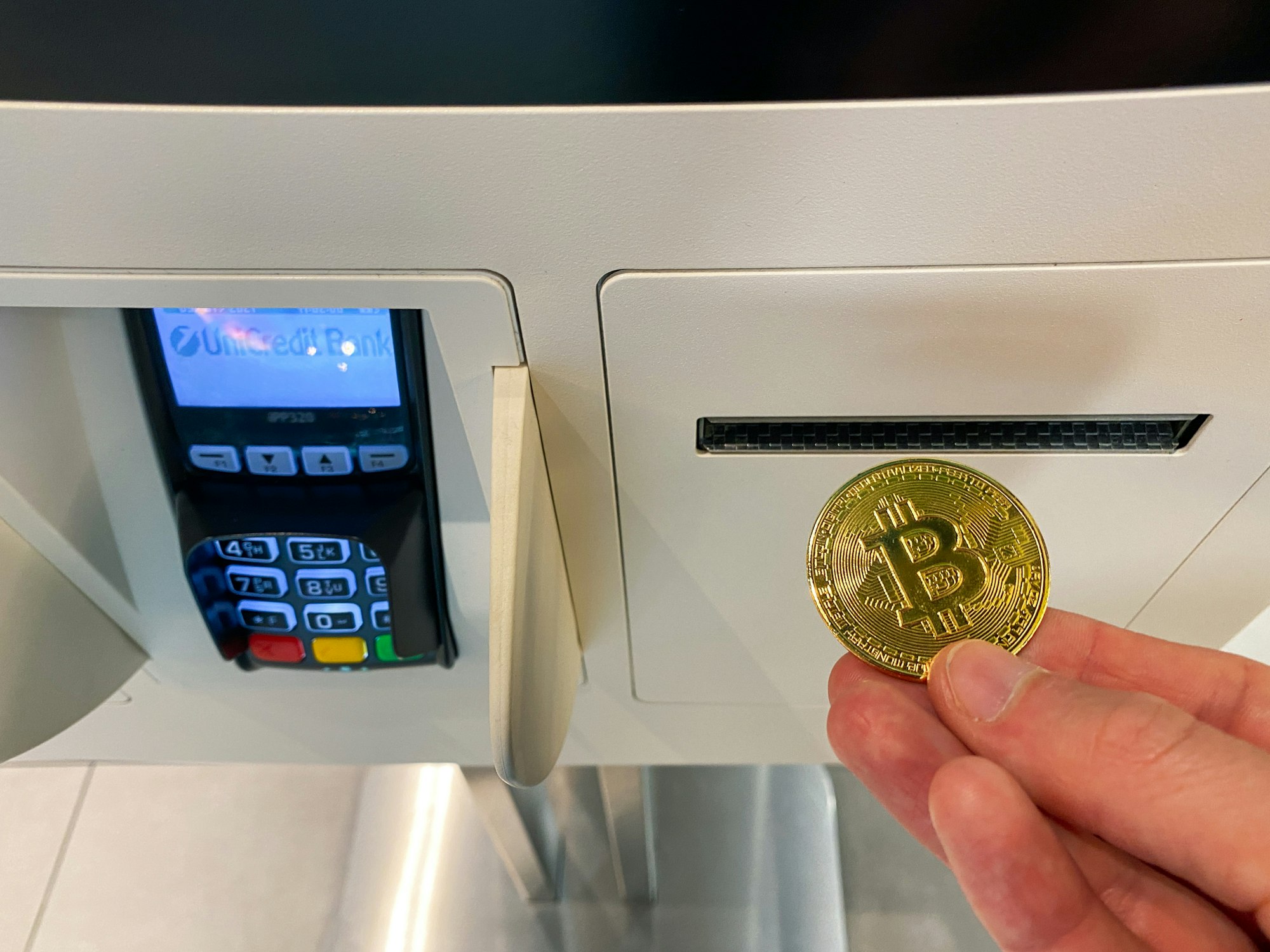
Walk into any coffee roastery in Shoreditch and you’ll overhear talk of APY and staking rewards; sit down in a Surrey gastro-pub and grandparents are quietly comparing Bitcoin ETFs. Crypto has seeped into every demographic crevice, and that’s exactly why HMRC is bullish on hunting small fry as well as whales. The new rules don’t discriminate between the 19-year-old who flipped £500 of Shiba Inu into a second-hand Peugeot and the city lawyer stacking sats every payday. If the exchange is accessible from a UK IP, the data gets slurped.
Yet confusion reigns. A survey released last week by accounting firm Wright & Co. found 68 per cent of UK investors still believe crypto profits are tax-free if under the £12,300 annual capital-gains allowance. Not true: the allowance applies to the gain, not the transaction size, and HMRC will count every fractional swap as a taxable event. One university student in Leeds discovered this the hard way after racking up 412 trades across decentralised exchanges. “I thought if I never cashed out to pounds I was safe,” she said, scrolling through a spreadsheet of dizzying complexity. Her anticipated tax bill? Just over £4,700—more than her annual rent.
Meanwhile, accountants are fielding panicked late-night DMs. “It’s like the self-assessment deadline on steroids,” says Maya Patel, a chartered adviser in Birmingham. “People who never dreamed of filing taxes now have to learn about pooling, matching, and same-day rules.” Patel’s firm has hired three extra juniors since October; they still can’t keep up. The emotional toll is palpable: clients speak of sleepless nights, relationship strain, even selling holdings at a loss to cover a looming bill. Crypto’s promise of financial freedom is colliding head-on with the reality of civic duty—and the whiplash is brutal.
Penalties and Pitfalls: What Happens If You Don’t Comply

Ignore the polite email reminders and the consequences escalate faster than a meme coin moon-shot. Fail to register your exchange account details by the cut-off and HMRC can levy an immediate £100 late-filing penalty, followed by daily £10 charges after three months. If the tax owed exceeds £100,000, investigators can open a criminal inquiry; maximum sentences stretch to seven years. Even the exchanges face existential risk: non-compliant platforms can be fined up to 10 per cent of their UK turnover or be stripped of operating licences, effectively exile from a lucrative market.
But the real sting lies in the retrospective dragnet. Officials have made clear the January deadline is only the start; they intend to trawl through years of historical data, cross-referencing bank deposits with exchange records. One software engineer who thought he’d been clever using an offshore exchange learned the limits of jurisdictional hopscotch when a demand letter landed last November. The platform, headquartered in the Seychelles, had quietly partnered with a London payment processor; the processor caved to HMRC and spilled five years of customer records. His bill, with interest and penalties: £312,000. “I sold my house last month,” he told me matter-of-factly, eyes fixed on the rain-slick pavement. “Still better than prison.”
And so, as the rest of the country trudges back to gyms and office desks, a new ritual begins: exporting CSV files, hunting for lost wallet keys, and reconciling Ethereum gas fees in pound sterling at the precise moment of transaction. The countdown has ended; the reckoning has just begun.
The Human Toll: From Hodlers to Home Visits

Behind every wallet address is a story, and HMRC’s new dragnet is about to make those stories painfully public. Take Sarah, a 29-year-old NHS nurse from Leeds who bought £500 of Cardano in 2020 after a double-shift pep-talk from a crypto-bull colleague. She forgot about it until the 2021 boom turned her stake into £6,200—enough for a house deposit. She cashed out, paid the solicitor, and thought that was the end of it. Until last week, when a brown envelope marked “URGENT” landed on her doormat demanding a breakdown of every trade, every transfer, every staking reward. “I felt like I’d won the lottery, then lost the ticket,” she told me over WhatsApp, voice cracking. “I’m not a tax evader; I’m just terrible at spreadsheets.”
HMRC’s new powers don’t merely target the so-called “crypto whales” moving millions. The compliance letters already dropping onto mats across the UK are addressed to anyone whose exchange-reported activity hints at a gain. If you swapped Ethereum for Solana on a decentralised exchange, then staked the proceeds, the chain of events is now visible. The tax authority has even set up a dedicated Crypto Unit staffed by data scientists who once hunted dark-web marketplaces; their new brief is to match wallet signatures to known clusters and estimate sterling gains in real time. In plain English: if your exchange has your NI number, and your on-chain footprint is large enough to trigger risk scoring, you’re already on the list.
| Scenario | HMRC likely to… | Typical penalty if unpaid |
|---|---|---|
| £300 profit from one buy/sell | Send nudge letter, invite voluntary disclosure | 0–30 % of tax owed |
| £5,000 profit across multiple alts | Open compliance check, demand wallet history | 15–70 % plus interest |
| £50,000+ with evidence of “careless” record-keeping | Treat as serious under COP9 contract | Up to 100 % and possible name publication |
The sting in the tail? Once HMRC opens a “contractual disclosure facility,” you must confess everything within 60 days or risk criminal investigation. For Sarah, that meant sleepless nights trawling through Telegram chat logs to prove she hadn’t knowingly hidden income. Her eventual bill: £1,840 in capital-gains tax plus £370 in penalties—about half her remaining savings. “I can rebuild,” she says, “but I’ve lost the naïve joy of believing crypto was for people like me.”
The Exiles’ Dilemma: Can You Just Leave the UK?
Some investors are plotting a more radical escape. Type “crypto-friendly residency” into Google and you’ll be served ads for Portugal’s golden visa, Dubai’s property-for-permits scheme, and even Paraguay’s £4,000 one-day residency package. The pitch is simple: move your tax residence before 5 April, file a P85 exit form, and watch HMRC’s claws retract. Yet the new CARF rules have a long tail. If your exchange account was ever registered to a UK address—even for a week in 2019—the platform must still report historical data. Worse, the UK’s statutory-residence test can keep you tethered for up to three years if you retain a property, a job, or children in school here.
Consider “Maks,” a 38-year-old freelance coder I met in a Lisbon co-working space. He sold a stash of early Bitcoin for £1.2 million in 2022, then relocated to Portugal under the non-habitual-resident regime that exempts most foreign crypto gains for ten years. Confident he’d outwitted the system, he kept a small flat in Bristol for visits. Big mistake. HMRC accessed his Coinbase ledger, spotted the UK IP addresses used for logins, and ruled he remained UK-resident for tax purposes. The demand note? £347,000 in capital-gains tax, plus daily accruing interest. “I thought geography was a shield,” Maks shrugs. “It’s actually a tripwire.”
Even renouncing British citizenship offers no clean exit: the UK imposes an “expatriation” charge on anyone deemed to be leaving for tax reasons, and CARF data can be shared back under reciprocal agreements for up to five years. In short, the only reliable way to stay compliant is to calculate, report, and pay while still inside the system.
The Silver Lining: A Chance to Go Legit
For every Sarah or Maks, there are thousands more who simply haven’t opened the scary brown envelope. Yet HMRC’s campaign comes with an olive branch: the “Second Income Crypto Disclosure” facility launched on 2 January lets ordinary investors settle up without naming-and-shaming. Disclose voluntarily, pay what you owe plus a modest surcharge (usually 10–20 %), and the matter closes without a black mark on your record. The catch: you must move before HMRC writes to you first. Once that letter arrives, the gate slams shut.
Accountants report a surge of last-minute appointments. “January used to be about self-assessment,” says Priya Desai, partner at a North-London firm. “This year it’s crypto confessions—grandparents staking Tezos, teenagers flipping NFTs, even vicars who accepted Litecoin for church roof donations.” Her advice: download your exchange CSV, use free calculators from HMRC’s own Cryptoassets Manual or