



Title: Breaking: K-Pop Achieves Unprecedented Global Success in 2025
The year 2025 marked a seismic shift for K-pop, as the genre burst onto the global scene with unprecedented fervor. Record-breaking achievements, chart-topping soundtracks, and sold-out tours underscored K-pop’s status as a cultural phenomenon, captivating audiences worldwide and transcending borders. The genre’s influence extended far beyond Seoul, with new localized ecosystems emerging in markets around the globe.
K-Pop’s Global Ascendancy
K-pop’s global evolution in 2025 was punctuated by a series of impressive milestones. One of the most notable achievements was the animated film “KPop Demon Hunters,” which topped various Billboard charts and became Netflix’s most-watched film of all time, with 300 million views. The film’s soundtrack also made history, with four songs simultaneously ranking in the Billboard Hot 100 Top 10, a feat never before achieved by any soundtrack. The film’s impact on Netflix’s revenue was significant, with a 17% increase in October, a testament to K-pop’s growing influence on the global entertainment industry.
The film’s success can be attributed to its innovative blend of K-pop and animation, which appealed to a broad audience. By featuring real K-pop hitmakers, including seasoned producers, writers, and musicians, the film showcased the genre’s creative depth and versatility. The film’s critical acclaim was evident in its near 100% “fresh” rating on Rotten Tomatoes, with both critics and audiences praising its unique blend of music, action, and storytelling.
Chart-Topping Success and Crossover Collaborations
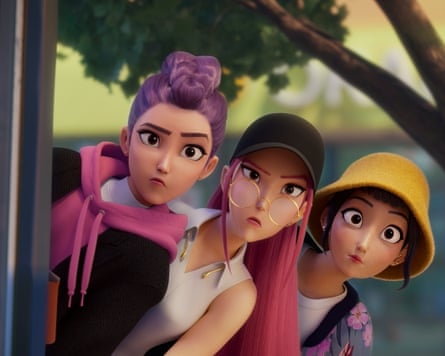
K-pop’s chart-topping success in 2025 was not limited to the film’s soundtrack. Several K-pop groups and artists achieved impressive milestones on the Billboard charts. Stray Kids extended their record as the only musical act to debut their first eight albums at No. 1 on the Billboard 200 with their album “DO IT”. Meanwhile, HUNTR/X’s “Golden” spent an impressive 11 consecutive weeks at No. 1 on the Billboard Global 200 chart, and ROSÉ’s “APT.” dominated the Billboard Global Excl. U.S. chart for 19 weeks, garnering nearly 4.9 billion views and streaming counts.
Crossover collaborations played a significant role in K-pop’s global success in 2025. The collaboration between ROSÉ and Bruno Mars on the song “APT.” exemplified the widening acceptance and increased tolerance for musical risk in K-pop. Such collaborations not only expanded K-pop’s sonic landscape but also introduced the genre to new audiences. The success of these crossovers highlighted K-pop’s adaptability and its ability to evolve while staying true to its roots.
The Rise of New Sounds and Girl Power
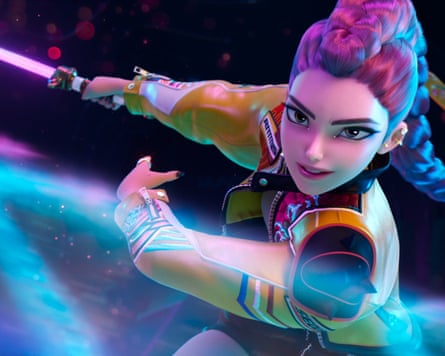
The year 2025 also saw the emergence of new sounds and trends in K-pop. Girl groups had a standout year, with notable releases from NMIXX, Jennie, and WJSN. These groups experimented with their sound, pushing the boundaries of traditional K-pop and exploring new styles. Boy groups like SHINee, ATEEZ, Boynextdoor, and Cortis also made significant contributions, showcasing the genre’s diversity and creative depth.
The rise of new sounds and trends in K-pop was accompanied by a growing emphasis on localized ecosystems. New markets emerged, and existing ones expanded, as K-pop’s global influence continued to grow. This expansion was evident in the formation of new K-pop communities, the launch of K-pop-focused events, and the increasing presence of K-pop on social media platforms.
The Rise of Localized K-Pop Ecosystems

As K-pop continues to expand its global reach, localized K-pop ecosystems have begun to flourish. These ecosystems refer to the growth of K-pop-inspired communities, industries, and cultures in markets around the world, often with their own unique characteristics and flavors. From Tokyo to Los Angeles, and from São Paulo to Mumbai, K-pop has inspired a new generation of fans, artists, and entrepreneurs to create their own K-pop-infused content.
| Country | Localized K-Pop Ecosystem |
|---|---|
| Japan | Tokyo’s K-pop-inspired fashion trends, with many local designers incorporating K-pop elements into their designs. |
| United States | Los Angeles’ K-pop-influenced music scene, with many local artists incorporating K-pop elements into their music. |
| Brazil | São Paulo’s K-pop-inspired dance communities, with many local dance groups performing K-pop choreography. |
| India | Mumbai’s K-pop-infused film industry, with many local filmmakers incorporating K-pop elements into their movies. |
These localized ecosystems are not only fostering a deeper connection to K-pop but also creating new opportunities for cultural exchange and collaboration. For instance, the Tokyo-based K-pop group, KANJANI Eight, has collaborated with Korean artists on several projects, showcasing the potential for cross-cultural exchange.
Crossover Collaborations and the Blurring of Genre Lines
The rise of crossover collaborations is one of the most significant trends in K-pop’s global evolution. Artists like ROSÉ, who teamed up with Bruno Mars on the hit single “APT.”, have demonstrated the widening acceptance and increased tolerance for musical risk in K-pop. This trend is not limited to music; K-pop’s influence can be seen in various forms of media, from film to television.
The collaboration between K-pop and other genres has resulted in the creation of new sounds and styles. For example, the fusion of K-pop and Latin music has given birth to a new genre, often referred to as “K-Latino.” This genre has gained immense popularity in countries like Mexico and Brazil, where K-pop fans are eager to experiment with new sounds.
The Future of K-Pop: Trends, Challenges, and Opportunities
As K-pop continues to evolve and expand its global reach, several trends, challenges, and opportunities emerge. One of the most significant challenges facing K-pop is the need to balance cultural authenticity with global appeal. As K-pop becomes more mainstream, there is a risk that its unique cultural identity may be lost in translation.
However, this challenge also presents an opportunity for K-pop to innovate and adapt to changing global tastes. With the rise of new technologies, such as virtual reality and artificial intelligence, K-pop can explore new formats and platforms to engage with fans.
According to a report by the Korea Creative Content Agency (KOCCA), K-pop’s global popularity is expected to continue growing, with an estimated 10% increase in global fans by 2027.
In conclusion, K-pop’s unprecedented global success in 2025 is a testament to the genre’s adaptability, creativity, and resilience. As K-pop continues to evolve and expand its reach, it is likely to remain a cultural phenomenon, shaping the music industry and beyond. With its unique blend of music, fashion, and performance, K-pop has captured the hearts of fans around the world, and its influence will only continue to grow.
The K-pop industry’s future looks bright, with many opportunities for growth, innovation, and cultural exchange. As the genre continues to break boundaries and push limits, one thing is certain: K-pop will remain a major force in shaping the global entertainment industry for years to come.