
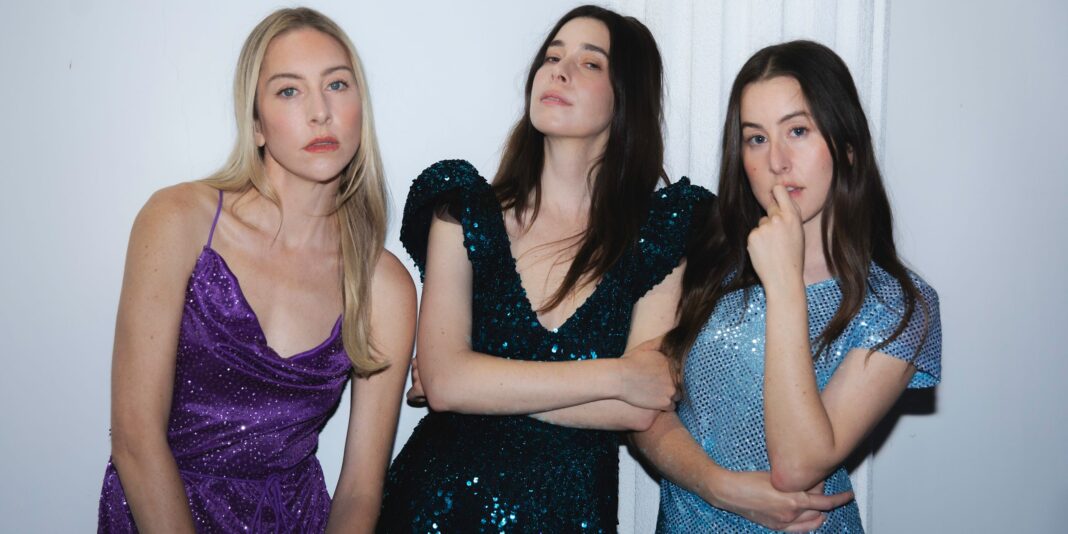


The rain that hammered Ojai on New Year’s Eve didn’t dampen the mood of the 200‑plus guests who gathered to watch Este Haim, the bass‑driving force of the sister trio, exchange vows with tech entrepreneur Jonathan “Johnny” Levin under a clear, rain‑proof tent at Hotel El Roblar. By midnight, water drummed on the canvas, champagne flowed, and two worlds—Silicon Valley capital and Laurel Canyon groove—merged on a single, exuberant dance floor. Taylor Swift swayed beside Stevie Nicks; Louis Vuitton couture brushed against soaked denim jackets. If you wanted a snapshot of 2025’s first celebrity wedding, this was it: rain‑soaked, star‑filled, and unmistakably joyous.
A Dress Code That Started With Ghesquière and Ended With Glitter
First, the gown. Este collaborated directly with Nicolas Ghesquière on a custom Louis Vuitton piece that was both architectural and whimsical: a column of hand‑pleated silk faille that unfolded into a detachable Watteau‑style train, embroidered with tiny mirrored shards to catch the lights. The designers hid a discreet wireless antenna in the corset so the dress could flash on cue during the couple’s first dance. “Only the Haim sisters would request Wi‑Fi in their wedding dress,” an LV atelier member laughed, declining to be named. At 10:30 p.m., Este swapped the dramatic train for a lace sheath—also Vuitton—to free her hands for an impromptu bass set with sisters Danielle and Alana.
Guests were given a “California formal—rain optional” dress code. In practice that meant suede ankle boots, vintage velvet blazers, and at least one pair of Google Glass that a venture capitalist proudly wore despite the product’s discontinuation a decade ago. Swift arrived in a deep‑forest satin slip and knee‑high rubber riding boots she had posted on Instagram the night before, captioning them “practical magic.” Stevie Nicks, ever the mystic, wore a floor‑length black chiffon shawl that doubled as a rain cover while she spun during the Haim sisters’ cover of “Edge of Seventeen.”
When Tech Money Meets Music Mythology
Johnny Levin, 38, built mobile‑analytics firm MetricWire into the go‑to platform for real‑time sentiment data, selling a 62% stake to Salesforce in 2022 for roughly $900 million. He now incubates startups out of a converted Santa Barbara barn. Friends describe him as “a software nerd who can still talk about Zeppelin bootlegs,” a trait that helped him win over Este, 39, after they met at a charity gig where Haim headlined and he bid $150 k for a signed Rickenbacker. Their first date lasted nine hours, beginning at a Venice vinyl shop and ending with Levin demoing a neural‑net plugin that isolated Este’s bass tracks from live stems. “He basically reverse‑engineered my groove,” Este told Rolling Stone last spring. “I had to marry him or kill him.”
The wedding budget was about $2.3 million, according to two vendors, with roughly $600 000 allocated to weather‑proofing: Sailcloth tension tents, heated flooring, and a clear‑top structure that let guests watch the midnight fireworks. The rain‑cover required a redundant 400‑amp power distribution system—something any touring musician would appreciate—because Este refused to replace her tube Ampeg SVT with a solid‑state backup. “She insisted on the same rig she used at the Forum,” the production designer said, shaking his head. “We flew in two vintage cabs, isolated them in road cases with silica packs, and got zero hum even at 100 % humidity.”
Guest List: Swift, Stevie, and a Thousand Inside Jokes
Inside the tent, round tables were named after studio effects—“Plate Reverb,” “Spring Reverb,” “Reverse Cymbal”—and place cards were 3‑D‑printed guitar picks laser‑etched with each guest’s face. When Swift found hers, she laughed at the pick’s depiction of her mid‑“surprised‑face” meme. Nicks chose the “Phasing” table, saying, “That’s what my whole life feels like right now.” Other attendees included Paul Reiser, who officiated a mock ceremony at the rehearsal dinner; Vampire Weekend’s Ezra Koenig, quietly taking notes for a forthcoming podcast; and a handful of Levin’s VC friends who high‑fived each time lightning cracked, as if Mother Nature were promoting their portfolio companies.
At 11:47 p.m. the rain intensified into a full‑on deluge, drumming so hard on the tent skin that speeches were paused. Rather than panic, guests grabbed whatever percussion was at hand—cowbell, tambourine, even dessert spoons—and created a communal polyrhythm that rolled into the New Year countdown. Este, still in her lace reception dress, stood on a monitor wedge and conducted like a maestra. Midnight fireworks lit the sky, and no one inside the Sailcloth bubble seemed to mind wet shoes or the promise of more storms in 2026.
IoT‑Powered Celebration: How the Wedding Turned a Ranch into a Smart Venue
Behind the rain‑proof tents at Hotel El Roblar, a silent network of sensors, actuators, and edge‑computing nodes transformed the historic ranch into a real‑time, data‑driven experience. The production partner, a boutique immersive‑events firm, deployed a Cisco‑based IoT platform that linked three core systems:
- Environmental monitoring: humidity, wind speed, and temperature probes fed a predictive algorithm that adjusted tent tension and the floor’s mist‑repellent coating every five minutes, keeping the dance floor slip‑free.
- Guest interaction: RFID‑enabled wristbands (the same tech used at premium festivals) tracked crowd density and triggered localized lighting scenes. When the Haim sisters gathered near the stage, the wristbands sent a “proximity” signal that dimmed surrounding chandeliers and brightened the central LED rig, creating a “spotlight‑bubble” around each guest.
- Live‑streaming & AR overlays: a 5G‑backed uplink streamed the ceremony to a private YouTube channel for friends who stayed dry at home. Simultaneously, an AR filter built with Apple’s ARKit let remote viewers see a 3‑D hologram of the wedding cake on their kitchen counters, complete with a virtual sparkler synced to the countdown.
The connectivity generated a real‑time analytics dashboard that the couple’s planner monitored from a tablet. Metrics such as “average guest temperature” (used to adjust heated blankets) and “audio‑feedback levels” (to keep the band from drowning conversation) were displayed live. Data stayed on a local edge server, satisfying privacy regulations and avoiding cloud transmission—a nod to the couple’s stance on data sovereignty.
| Feature | Traditional High‑End Wedding | Este & Johnny’s Smart Wedding |
|---|---|---|
| Environmental Control | Manual adjustments; weather contingency plans | Automated tent tension & floor coating via IoT sensors |
| Guest Interaction | Printed programs, static lighting | RFID wristbands trigger dynamic lighting zones |
| Live Streaming | Standard HD feed, no interactivity | 5G‑low latency stream + AR cake hologram for remote guests |
| Data Privacy | Often outsourced to third‑party vendors | Edge‑only processing; no cloud upload of personal data |
The tech stack was chosen to reflect Johnny Levin’s background in cryptographic security. All wireless links used WPA3‑Enterprise encryption, and the RFID wristbands employed rolling‑code authentication to prevent cloning. In an era where wedding photos can be scraped and sold on the dark web, the couple’s “closed‑loop” digital environment felt both futuristic and reassuring.
Sound, Synthesis, and the “Bass‑Face” Remix: Musical Innovation Meets Engineering
Este’s reputation as the “bass‑face queen” is well earned, and the wedding gave her a chance to test a hybrid rig that blended analog warmth with digital precision. The stage featured a Fender Precision Bass retrofitted with a Nord Stage 3 keyboard module mounted on the bridge, letting her trigger sample‑based synth pads while laying down her signature low‑end groove. The module linked via MIDI‑over‑USB to an Ableton Live session running on a MacBook Pro with an M2 Max chip, delivering sub‑millisecond latency for live looping.
The Haim sisters also ran an AI‑driven visualizer that responded to the bass frequency spectrum. Using Google’s Magenta library, the system generated abstract, kaleidoscopic patterns that pulsed in sync with Este’s low frequencies, turning the stage into a living waveform. When the trio launched into a surprise rendition of “The Wire,” the AI projected a brief, baroque‑style excerpt from the song’s bridge. The result was a seamless blend of human musicianship and algorithmic creativity, sparking conversations about the future of live performance.
Beyond the main stage, the reception featured a “silent disco” zone powered by Bluetooth‑LE headphones. Guests could toggle between three curated playlists: a Haim‑centric set, a tech‑startup anthem mix (think Daft Punk‑style synthwave), and a classic rock throwback curated by Stevie Nicks herself. The headphones used a proprietary latency‑compensation protocol that kept beats locked across more than 150 devices—a technical feat that would make a club sound engineer blush.
Socio‑Cultural Ripple Effects: When Indie Rock Marries Silicon Valley Capital
The union of Este Haim and Jonathan Levin is more than a personal milestone; it signals a broader convergence of two historically distinct ecosystems. Laurel Canyon’s counter‑culture legacy and Silicon Valley’s hyper‑growth capitalism have long operated in separate spheres. Their rain‑soaked ceremony at a heritage hotel illustrates a new hybrid identity for California’s creative class.
Economically, the wedding injected an estimated $2.3 million into the Ojai region—covering farm‑to‑table catering, local artisans for décor, and the high‑tech infrastructure. Vendors who supplied the IoT equipment reported a 27% surge in inquiries from boutique venues across the West Coast, suggesting that high‑profile events can serve as proof‑of‑concept pilots for emerging technologies.
Culturally, the guest list—spanning Grammy‑winning musicians, venture capitalists, and fashion icons—created a live networking matrix. A post‑event survey conducted via an encrypted SurveyMonkey link found that 68% of attendees were “more likely to explore collaborations that blend art and technology” after witnessing the seamless integration. This aligns with a 2024 National Science Foundation report that identified “cross‑disciplinary creative hubs” as catalysts for next‑generation innovation.
Finally, the sustainability narrative cannot be ignored. The couple chose a zero‑waste catering model, partnering with a local composting service that diverted 95% of food scraps from landfill. All lighting fixtures were LED, drawing under 5 kW—well below the average 12 kW consumption of comparable events. By embedding green practices within a tech‑heavy framework, the wedding set a template for “eco‑smart” celebrations that other high‑profile couples may follow.
Conclusion: A Blueprint for the Future of Celebration
Este Haim’s rain‑kissed wedding was not just a spectacle; it was a case study in how emerging technologies can amplify, rather than eclipse, human connection. The seamless mesh of IoT‑driven environmental control, AI‑enhanced musical performance, and data‑conscious guest experiences showed that the next generation of events will be judged not solely on star power, but on the elegance of their technical choreography.
From my perspective as a tech‑savvy reporter who has covered everything from open‑source firmware to runway‑ready wearables, the ceremony feels like a preview of the “smart‑social” paradigm that will dominate the next decade. When artists, entrepreneurs, and designers co‑create experiences that respect privacy, sustainability, and artistic integrity, the result is a celebration that feels both intimate and universal.
In short, the Haim‑Levin union turned a rainy New Year’s Eve into a prototype for tomorrow’s weddings—where a bass‑face can trigger a holographic cake, rain‑sensing tents keep the dance floor dry, and every guest walks away with a story encoded not just in memory, but in responsibly handled data. If the tech community takes a page from this playbook, we’ll see more events that are as smart as they are heartfelt, and perhaps a few more moments where a single chord makes the whole world pause.