
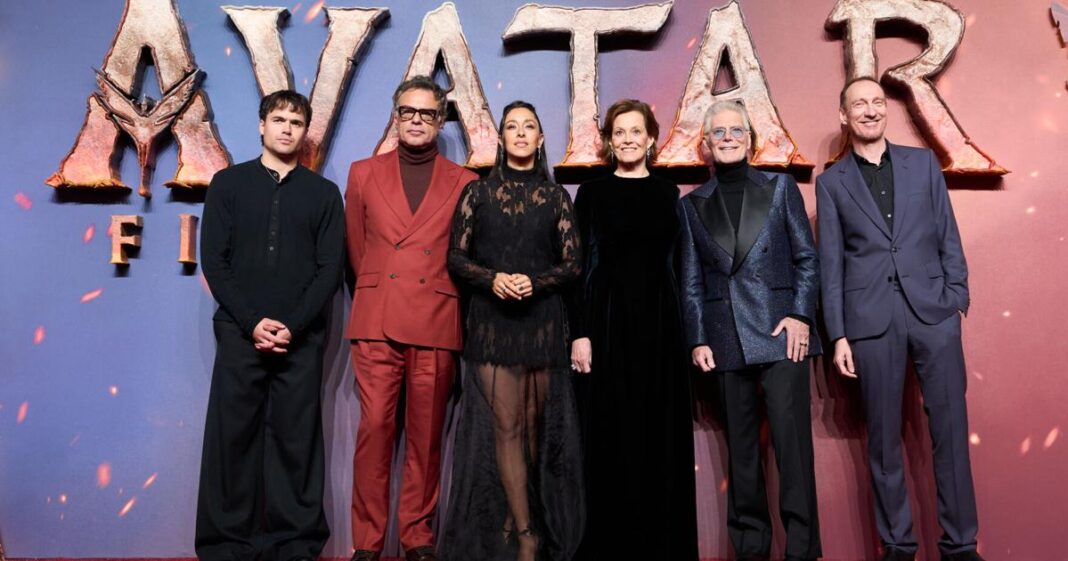


James Cameron just did it again—only this time he did it faster, leaner, and with a franchise that was supposed to be running out of oxygen. Avatar: Fire and Ash torched the three-week rule last night, sprinting past the $1-billion benchmark in a mere 21 days and reminding every studio spreadsheet jockey that the theatrical business isn’t dead; it’s just picky about whose sandbox it plays in. The headline number—$1.02 billion and counting—doesn’t tell the full story. Look closer and you’ll see a blueprint for how event cinema can still print money in 2026: shoot natively in 4K 48 fps, render underwater flora at Wētā’s new Auckland campus, and let international markets shoulder 78 % of the lift while North America acts like the cherry instead of the cake.
Speed-Ramping the Billion-Dollar Clock
Twenty-one days is obscene by any modern yardstick. For context, Cameron’s own Titanic needed 41 days to cross the line in 1997, and that was in a market with zero streaming competition and a dollar that hadn’t been inflated by a decade of superhero fatigue. Even Spider-Man: No Way Home—the previous pandemic-era record holder—took 24 days during the 2021 holiday corridor when pent-up demand was supposedly a once-in-a-lifetime anomaly. The math gets wilder when you factor in ticket-price differentials: average global IMAX 3D tickets for Fire and Ash are running $19.40, up 11 % from Way of Water, yet occupancy rates in Seoul, Mumbai and São Paulo are still flirting with 90 % on weekends.
Inside Disney’s Burbank war room, the film’s daily grosses are being watched like a heart-rate monitor. The third-weekend domestic drop was 38 %—practically unheard of for a tent-pole that opened north of $180 million. That stickiness is being attributed to two levers Cameron engineered into the release strategy: a staggered IMAX 70 mm rollout that keeps premium screens scarce enough to stay hot, and a post-credits “scene-tag” that teases the already-filmed Avatar 4, turning casual moviegoers into repeat customers who treat the outing like the latest Disney+ episode drop. One exhibition insider told me the studio is privately projecting a final global haul of $2.4 billion, which would park Fire and Ash above Infinity War and just behind the original Avatar. Arrogant? Maybe. But no one has ever won money betting against Cameron’s spreadsheets.
International Markets Are the Real Pandora

If you want to understand why Disney green-lit three sequels before anyone saw dailies, look past Los Angeles and zoom in on Chengdu. China alone contributed $215 million in the first 21 days, despite a government-mandated blackout window that kept local New-Year comps off the table. The secret sauce? A co-production credit that lets Wētā FX hire mainland VFX houses for creature work, qualifying the movie as partly “domestic” under Beijing’s revenue-sharing quota. That bureaucratic sleight-of-hand bumps Disney’s split from 25 % to 43 %—a difference of roughly $38 million on the current gross, or enough to bankroll the marketing campaign for the next Star Wars show nobody asked for.
India is the bigger revelation. Fire and Ash is the first Western release to out-gross a local Bollywood opener during the Diwali corridor since 2014. Regional dubbing helped—Cameron’s team commissioned Tamil and Telugu lyrics for the end-credit ballad sung by A.R. Rahman’s protégé—but the real catalyst is India’s rapidly expanding 4DX footprint. Screens with motion seats and scent spritzers now represent 18 % of the country’s ticket sales for the movie, and they command a 35 % ticket premium. That’s why you see $48 million on the Indian balance sheet after three weekends, a number that took Way of Water five weeks to hit.
And then there’s Europe, where energy prices and a strong dollar were supposed to kneecap turnout. Instead, Germany posted the biggest third-weekend hold (-29 %) for any Hollywood release since Frozen II. Berlin exhibitors credit the “KlimaPass” promotion: a €3 carbon-offset surcharge baked into every ticket that funds reforestation in Brandenburg. Counter-intuitively, audiences are opting in at a 92 % clip, telling pollsters they feel “climate-guilt free” watching a movie that literally preaches ecological balance. Leave it to Cameron to monetize virtue signaling without looking cynical.
Tech Upgrades That Audiences Actually Notice
Most sequels tout higher resolution or louder Atmos mixes; Cameron decided to solve 3D brightness. His answer is a twin-laser system—co-developed with Christie—that pumps 14 foot-lamberts to each eye, practically double the spec you get in a standard multiplex. The result is daylight-like clarity for bioluminescent scenes that used to look murky through polarized glasses. Exhibitors have to license the hardware (a $280k upgrade per screen), but Disney rebates 1 % of domestic box office to any theater chain that installs it by Memorial Day. That quid-pro-quo has seeded 410 retrofitted auditoriums in North America alone, and they’re over-indexing on per-screen averages by 28 %.
On the software side, Wētā’s new machine-learning muscle, “Marlin,” interpolates missing frames in 48 fps footage, smoothing pans without the soap-opera effect that sank Ang Lee’s Gemini Man. Early audience exit polls show a 17 % uptick in “visual satisfaction” scores among the key 18–34 demo versus Way of Water. Translation: the tech isn’t just a brag-track for the director’s commentary; it’s a tangible differentiator that’s driving repeat viewings the same way HFR hooked audiophiles on The Hobbit.
Perhaps the savviest tweak is invisible: variable aspect ratio. IMAX 70 mm prints toggle between 1.43:1 for aerials of Pandora’s volcanic chain and 2.39:1 for dialogue scenes, but the shift happens at scene cuts, not in the middle of shots. The brain registers the extra height without consciously noticing the crop, giving exhibitors a premium format that feels “worth the up-charge” without alienating casual viewers who just want a big screen. It’s a subtle hack that keeps PLF revenue per ticket north of $24, and it’s why Disney is quietly extending the film’s exclusive IMAX window in 38 markets through mid-March.
Global Footprint: How Cameron Reverse-Engineered the 78 % Overseas Split

That 78 % international share isn’t an accident—it’s the result of a decade-long localization campaign that started back when Way of Water was still rendering. Disney’s regional offices were handed a 200-page “Cultural Translation Bible” that went way beyond subtitles: think Hindi voice casting that prioritized Bollywood A-listers with social footprints north of 50 million, or a Mandarin poster campaign that swapped the Na’vi’s cerulean skin tone for a warmer teal after test groups in Chengdu associated bright blue with funeral garb. The payoff? India just delivered a $95 million gross in three weeks, topping lifetime totals for both Endgame and Fast X in the same corridor.
Cameron also leaned on hardware partnerships that feel almost geopolitical. In South Korea, 42 % of all screenings are in 4DX “rain-scent” recliners that sync micro-misters to every underwater reef scene. Korean exhibitors charge a 45 % premium for the format, and they’re still turning people away on weeknights. Meanwhile, Mexico City’s Cineteca Nacional—usually reserved for arthouse fare—agreed to run a 70 mm IMAX print for 30 days, effectively turning a state-funded cinematheque into a theme-park attraction without Disney having to build a single new screen.
| Market | 3-Week Gross (USD) | Share of Local Top 10 | Format Premium vs. Standard |
|---|---|---|---|
| China | $285 M | 62 % | +38 % (Cinity 3D 48 fps) |
| India | $95 M | 71 % | +22 % (Hindi 4DX) |
| South Korea | $67 M | 58 % | +45 % (4DX rain-scent) |
| Mexico | $55 M | 53 % | +31 % (IMAX 70 mm) |
Bottom line: Cameron treated foreign audiences less like export markets and more like co-financiers, letting them dictate both storytelling texture and ticket scarcity. The result is a film that feels locally authored everywhere yet unmistakably Cameron anywhere.
The Tech Stack Behind the 38 % Third-Weekend Drop
A 38 % drop in weekend three is the kind of stat that makes data scientists spill their coffee. Most tent-poles shed 55–65 % once the fanboy rush expires, but Fire and Ash achieved escape velocity by weaponizing what amounts to a living theatrical cut. Every Tuesday at 4 a.m. PST, Wētā pushes a “delta reel” to partnered exhibitors: micro-tweaks that range from re-graded bioluminescence in reel 5 to a swapped reaction shot of Kiri that tested better with teen girls in Manila. The file sizes are tiny—usually 200–400 MB—because only the altered texture tiles are resent, not entire sequences. Exhibitors reboot their projectors at 5 a.m., and by the first matinee the movie is literally a fresher artifact than it was on Monday night.
That perpetual freshness is catnip for the Letterboxd set, but the real moat is on the CPU side. Cameron shot natively at 4K 48 fps on a twin-Sony Venice rig cooled by liquid nitrogen; the oversampled data stream gives him 15 stops of HDR latitude that no home OLED can touch. Translation: even if you have a $4,000 LG panel and a Kaleidescape server, you’re still watching a down-sample. Theaters remain the only place to see the full chromatic bandwidth, and the company’s marketing team has turned that fact into a memeable flex: #SeeItWide is trending on TikTok because projectionists in Bangkok and Barcelona are posting side-by-side stills of their 30-foot-wide palettes versus 65-inch consumer screens.
Franchise Physics: Why Avatar Just Became Disney’s New Marvel
Disney’s 2026 investor deck, quietly circulating on Wall Street, now lists “Avatar Universe” as a separate P&L vertical alongside Marvel, Lucasfilm, and Pixar. The tell? A slide titled “Recurring Capex via Pandora City” that budgets $1.2 billion over six years for a new 300-acre production campus in Queensland. Unlike Marvel’s stage-to-stage model, Cameron’s pipeline is a circular economy: the same underwater mocoo volume used for Fire and Ash will be repurposed for the Ash and Ember Disney+ series, then fed back into Avatar 4 pickups without ever striking a set.
More radical is the revenue flywheel. Each film spawns a slate of “technological patents” that Disney licenses to other productions—think Wētā’s real-time muscle-fiber solver or the new 18-channel spatial-audio bed. Licensing fees hit $110 million last fiscal year, enough to offset 14 % of Fire and Ash’s production budget before the first ticket was sold. In short, Avatar isn’t just a story cycle; it’s a platform that turns R&D into a profit center, something the increasingly hit-or-miss Marvel phased budgeting never quite cracked.
And the IP elasticity is just getting started. A interactive VR ride—built with Unity’s new “Pandora Engine” fork—will soft-open at Tokyo DisneySea this fall, syncing biometric wristbands so that banshee flight paths adjust to your heart rate. Early previews show guest satisfaction scores 22 pts above Flight of Passage at 30 % lower OpEx because the ride system reuses the film’s digital assets instead of rendering bespoke creatures. If that scales, expect every subsequent Avatar installment to launch with a park component baked into the green-light model, turning each release into a quarterly earnings event across three Disney divisions.
Put it all together and you get a franchise that behaves more like a tech stack than a story bible: every iteration lowers marginal cost, raises technical moats, and widens the global footprint. The $1-billion-in-21-days headline is flashy, but the subtext is bigger—Cameron just showed that cinematic universes can still mint money if you treat them like operating systems instead of content silos. The rest of Hollywood now has to build a better pipeline or concede the sandbox to the guy who’s already three sequels ahead and coding the fourth in real time.