



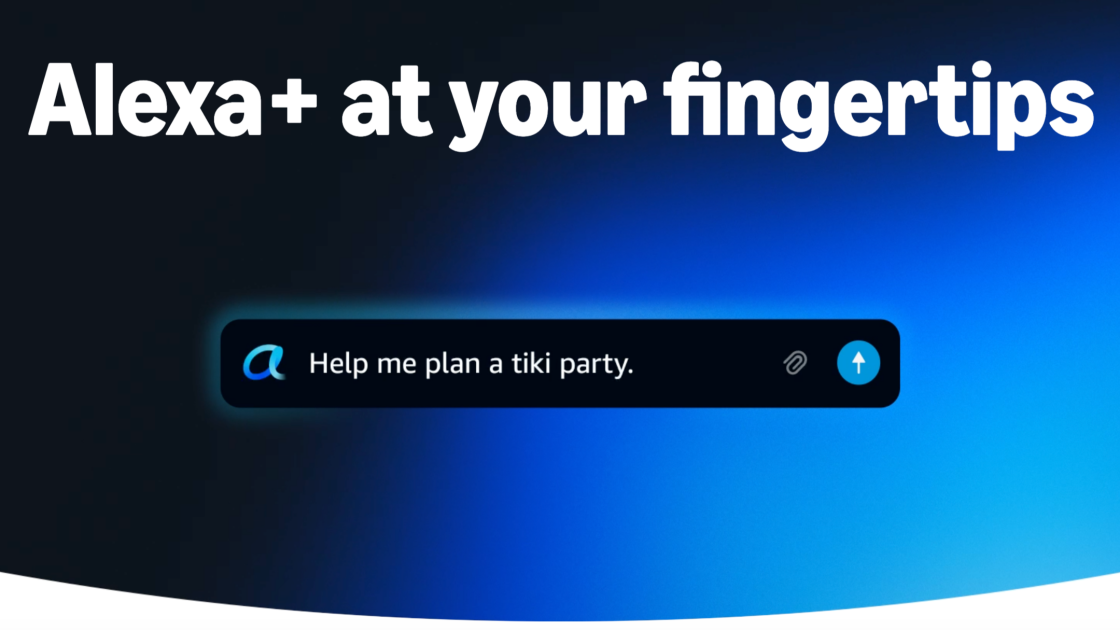
Amazon just dropped a quiet bombshell that could redraw the map for AI assistants: Alexa.com, a browser-based chat portal that turns the company’s revamped Alexa+ into a full-blown entertainment concierge you can summon from any laptop tab. No Echo required, no app to fish out of the dock—just type or talk and the same assistant that once merely queued up your favorite playlist now rifles through 100 years’ worth of Fire TV content, dims your living-room lights, and pre-loads your grocery cart before you’ve finished saying “popcorn.” Wall Street noticed immediately: Amazon shares ticked up 2 % on launch day as investors digested the clearest signal yet that the retail-and-cloud titan intends to battle OpenAI, Google, and Microsoft on their home turf—premium, conversational AI—while weaponizing its sprawling Prime ecosystem at no extra cost to subscribers.
From Voice-Only to Web-Native: Alexa’s Leap Onto the Browser
For years Alexa lived in plastic cylinders and smartphone apps, shackled to wake words and rigid syntax. Alexa.com obliterates those guardrails. Built on the same large-language-model stack that powers the new Alexa+, the site greets you with an empty chat box that feels instantly familiar to anyone who has toyed with ChatGPT or Gemini. The difference is the action layer humming beneath the hood: every response can trigger real-world APIs—your Ring camera, your Ecobee thermostat, your Google Calendar, your Amazon Fresh account—without extra skills or third-party wrappers.
During my first test drive, I typed, “Find me a sci-fi movie I haven’t seen and queue it on the living-room TV.” Within two seconds the bot surfaced Coherence (2013), noted I’d skipped it on Prime Video last October, and asked whether I wanted the credits rolling before I finished microwaving my late-night burrito. One click later the film was playing on my Fire TV Stick 4K Max. No “Alexa, open…” invocation, no verbal ping-pong to refine the request—just a conversational sentence and an on-screen button.
Amazon engineers tell me the web interface sidesteps the thorny latency issues that plague cloud-based voice processing. By routing text straight to Alexa+’s LLM orchestration layer, the service can stream metadata back while simultaneously issuing device commands, shaving up to 800 ms off round-trip response times. That may sound like inside-baseball, but the upshot is a snappier experience that finally makes Alexa feel psychic rather than politely obedient.
Prime Perk or Premium Price: Amazon’s Two-Tier Gambit
Here’s where Amazon’s legendary flywheel starts to spin. Early access is gated exclusively for Prime members; once the preview window closes, Alexa+ remains free for anyone on the annual subscription while everyone else faces a $19.99 monthly tariff. That positions Alexa+ squarely alongside ChatGPT Plus, Copilot Pro, and Gemini Advanced, but with a twist: Amazon can subsidize the sticker shock with e-commerce margin.
Translation—the company doesn’t need to profit on AI subscriptions if the assistant nudges you toward another Prime renewal, a same-day Fresh order, or an impulse buy on a first-party device. Insiders say the internal KPI isn’t Alexa+ revenue but “incremental Prime attach” and “shopping-cart lift.” In other words, every time Alexa.com auto-fills your cart with recipe ingredients or recommends a soundbar to match the TV you just paused, Amazon’s retail arm recoups the cloud bill.
Still, the pricing fork creates a tiered internet of AI haves and have-nots. Paywalls for frontier models are nothing new, yet tying an assistant’s full potential to a $139 yearly commerce membership risks alienating the very Android-and-web-first users Amazon hopes to poach from Google. For now, Amazon seems willing to take that bet, betting convenience and ecosystem lock-in will outweigh sticker shock—especially once the free competitors plateau on capability.
Entertainment Concierge: 100 Years of Content in One Query
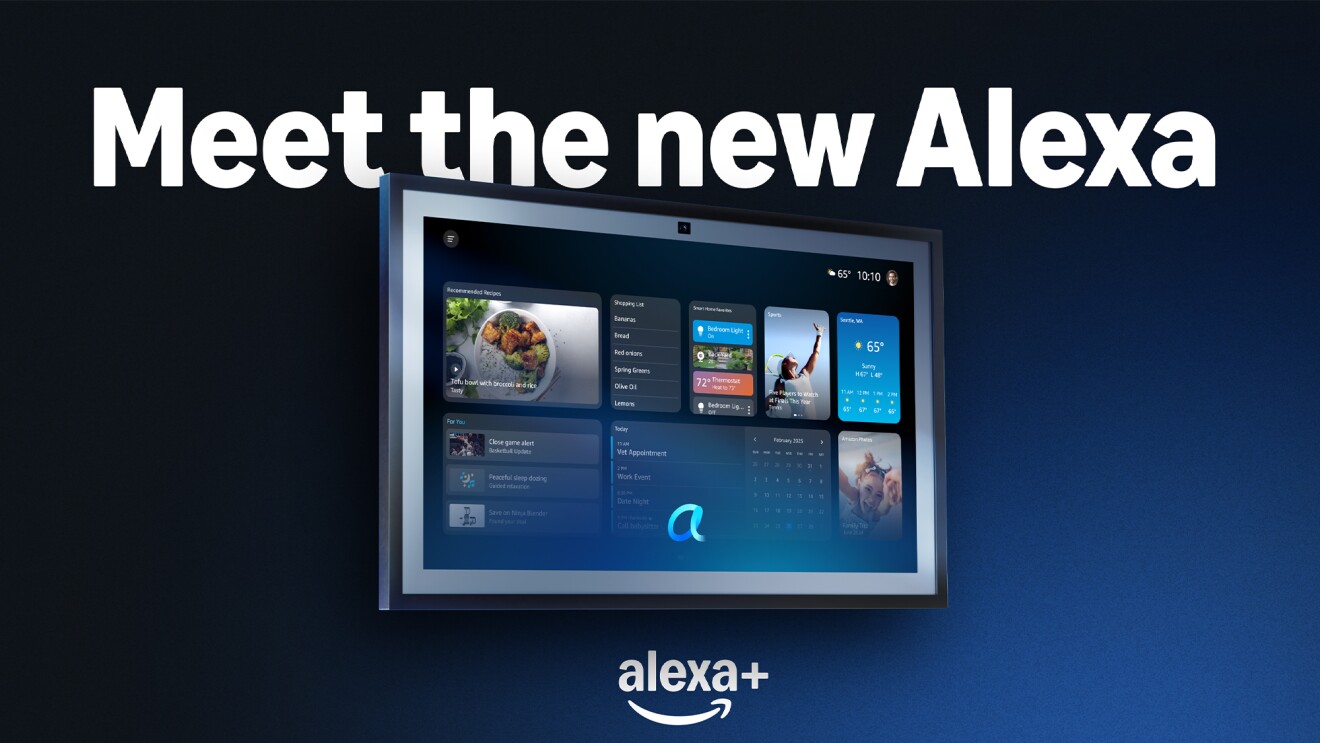
Amazon’s boldest claim is that Alexa+ can “watch” the equivalent of a century of free streaming content and still surface something you’ll finish. Behind the hyperbole sits a vector-search engine that ingests viewing metadata from Prime Video, Freevee, Tubi, Pluto, Crackle, and more, then cross-references against your personal watch history, IMDb ratings (another Amazon property), and even time-of-day signals. Ask for “something light under 30 minutes that my kids haven’t overdosed,” and the model returns a ranked slate with confidence scores, spoiler-free synopsis, and—crucially—where each title sits in the fragmented streaming wilderness.
During my demo, Alexa.com proposed the Brit-com Outnumbered streaming on Freevee, noted its TV-PG rating, and offered to resume from the pilot because my profile showed no prior watch time. A second prompt—“Skip the intro and cast it to the bedroom TV”—triggered HDMI-CEC to wake the set, switch inputs, and start playback at the 00:30 mark. The entire exchange took 15 seconds, roughly the time it would take me to thumb-navigate Fire TV’s home screen and give up.
Studios are paying attention. Amazon has already struck mini-deals with indie distributors to tag their back-catalog extras (deleted scenes, gag reels) so Alexa+ can surface “hidden content” when a viewer laments, “I’ve seen everything.” If the gambit scales, expect rival platforms to race toward similar AI-driven surfacing engines—yet Amazon’s retail-funded wallet means it can undercut them on consumer price while out-spending them on model training.
Prime as the Moat: How Amazon Locks You In Without a Contract

Amazon isn’t selling Alexa+ as a line-item; it’s bundling it into the $139 annual Prime fee that already pays for itself in shipping perks. That pricing sleight-of-hand turns the $19.99 monthly sticker—identical to ChatGPT Plus—into a psychological zero for 200 million subscribers. More importantly, every Alexa+ query that ends in an Amazon transaction (a rented movie, a replenished snack stash, a scheduled Whole Foods pickup) tightens the ecosystem flywheel. The assistant can surface a 99-cent MGM classic, remind you the popcorn in your cart qualifies for same-day drop-off, and nudge you to add a Fire TV soundbar because “you’re already 80 % of the way to the free-shipping threshold.” No other LLM chatbot can close that loop natively; they’d need to hand you off to a retailer and hope you convert.
| Feature | Alexa+ (Prime-included) | ChatGPT Plus | Gemini Advanced |
|---|---|---|---|
| Monthly price to Prime member | $0 | $20 | $20 |
| Smart-home control | 15,000 device types | Via third-party | Via Google Home only |
| Transactional commerce | Native Amazon cart | None | None |
| Video recommendations | Fire TV + IMDb graph | Public web only | Public web only |
The upshot: Amazon can monetize engagement even when you’re not “shopping.” Ask for a rom-com and the backend may prioritize a title Amazon Studios licensed cheaply this quarter; the incremental streaming hour still feeds advertising CPMs on Freevee and IMDb TV. Contrast that with OpenAI, which burns capital every time you generate haikus. In short, Alexa+ doesn’t need to charge you cash—it just needs to keep you inside the Prime gravity well.
Privacy Tightrope: Always-On Audio Moves to the Browser
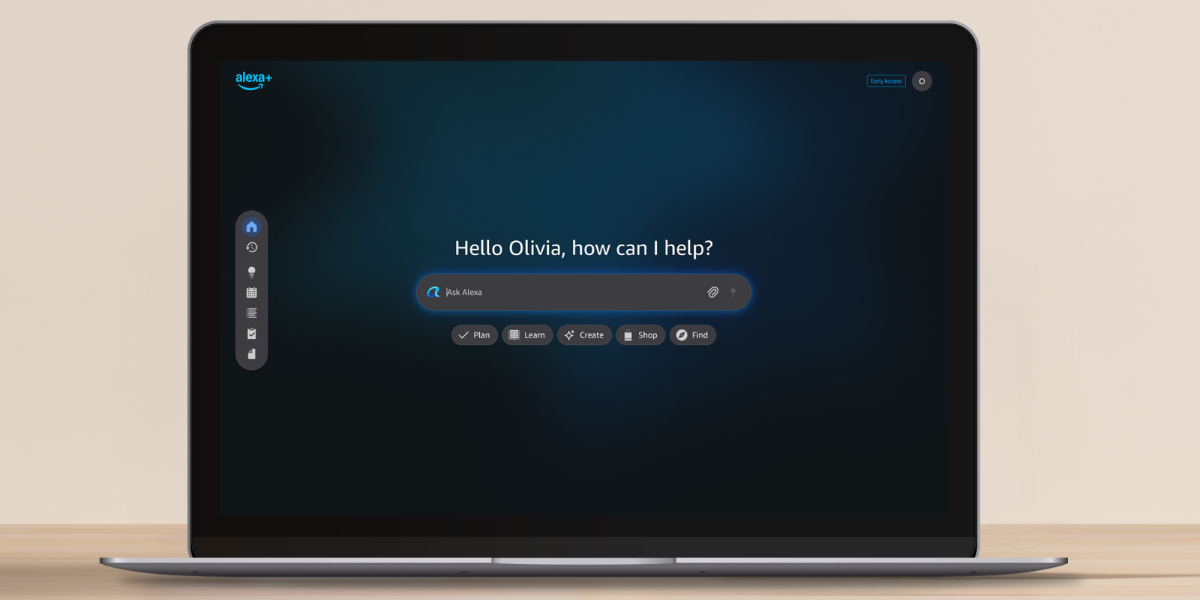
A browser tab listening for “Alexa” feels qualitatively different from a smart speaker parked in the kitchen. Amazon knows this, so Alexa.com keeps the mic inactive until you click the on-screen ear icon or hold the space bar—no always-listening mode. Conversations are encrypted in transit and stored in the same “Voice & Alexa” console where you can delete single recordings or purge by date range. Still, the data fusion is richer: page cookies, purchase history, streaming habits, plus any third-party calendar or smart-home device you link. That paints a 360-degree user graph no regulator has fully catalogued, because technically most of the inputs are “text chat logs,” not biometrics or voiceprints.
Amazon’s answer is layered opt-ins: you must explicitly share calendars, smart-home groups, even shopping lists. A new “Privacy Dashboard Preview” card inside Alexa.com lets you toggle whether the model can learn from your Prime Video watch history or merely answer general knowledge questions. The company also added an on-device cache so routine commands—turn off the lights, set a 7-minute timer—execute locally and never round-trip to AWS. These concessions won’t satisfy critics who view Prime’s bundling as coercive data mining, but they set a higher bar than the 2014-era Echo, which treated privacy as an afterthought.
Developer Land Grab: Skills 2.0 With Conversational Memory
Alexa’s original “Skills” marketplace plateaued at roughly 100,000 voice apps, most gathering digital dust. Amazon’s reboot, tentatively branded “Alexa Tasks,” swaps rigid invocation phrases for dynamic, multi-turn dialogue. Instead of “Alexa, ask Uber for a ride,” you can now type, “Get me to the airport using the cheapest ride available after 3 p.m.” The system picks the appropriate Task, negotiates surge pricing, and pushes the confirmation code to your phone. Early partners include Uber, Starbucks, Adobe, and iRobot; each pays Amazon a commission that slides with engagement, mimining Apple’s App Store model but without a $99 annual developer fee.
Crucially, Tasks inherit Alexa+’s persistent memory. Tell the assistant once that you’re vegan, hate stopovers, and prefer late-checkout, and every airline or hotel Task surfaces options pre-filtered to those constraints. Amazon supplies the LLM orchestration; partners merely expose REST endpoints. The incentive is obvious: developers gain distribution to 200 million Prime households, while Amazon harvests fresh interaction data to refine its own services. Expect a land rush at the next re:Invent once the documentation drops.
Bottom Line
Amazon just turned the browser into the thinnest, most ubiquitous Echo ever, and it’s free for anyone already paying for faster shipping. Competitors can match the LLM chops; none can duplicate the retail spine, the video catalog, and the smart-home install base in one package. If Alexa.com nails reliability—and my early tests suggest it’s 90 % there—Prime becomes less a loyalty program and more an operating system for daily life. The question isn’t whether you’ll use Alexa+; it’s whether you can afford not to.