


Breaking: Switch 2’s Top 2025 Games Include Surprise Third-Party Hit
Digital Foundry’s Oliver MacKenzie, a veteran pixel-counter who normally obsesses over ray-tracing implementations and temporal reconstruction techniques, just delivered Nintendo’s 2025 lineup a major credibility boost. His top five Switch 2 picks—revealed on the latest Digital Foundry podcast—include four expected first-party heavyweights plus one shocking third-party exclusive that’s turning heads across the industry.
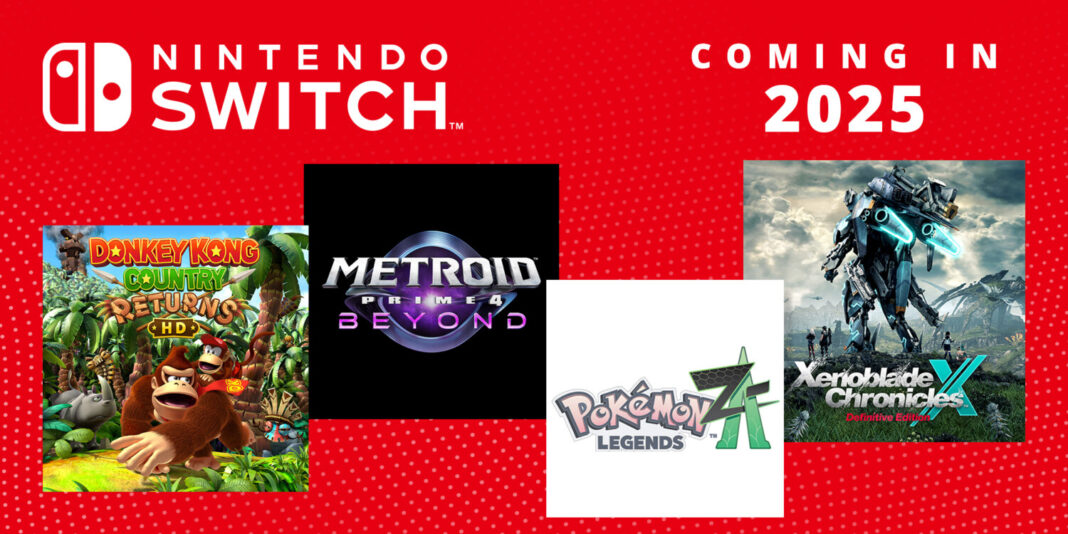
MacKenzie’s selections reveal a seismic shift in how technical analysts view Nintendo’s ecosystem. While Mario Kart’s latest iteration, the long-awaited Metroid Prime 4: Beyond, and the charming Kirby Air Riders occupy expected spots on his list, it’s his fifth choice that’s generating buzz. “Fast Fusion,” a third-party exclusive from German developer Shin’en, represents something Nintendo hasn’t achieved since the GameCube era: a technically stunning Western studio exclusive that can stand alongside Nintendo’s finest.
The Technical Marvel That Caught Digital Foundry’s Eye
Shin’en has spent years crafting technically impressive Nintendo titles like the Fast Racing series, but “Fast Fusion” apparently pushes boundaries further. MacKenzie describes it as “what happens when F-Zero and Wipeout have a child raised on Nintendo’s optimization techniques,” claiming it runs at a locked 120fps in Switch 2’s docked mode while sporting visual effects worthy of a PS5.
The achievement stands out given Nintendo’s historically strained third-party relationships. While the original Switch featured impressive ports, genuine technical showcases from external studios remained scarce. “Fast Fusion” appears to represent a new era where Nintendo’s hardware doesn’t just accommodate third-party development—it enables unique experiences. The game’s signature “momentum shift” mechanic, which seamlessly transitions between racing and flight modes, leverages Switch 2’s enhanced GPU in ways impossible on original hardware.
What’s notable is MacKenzie’s excitement about a game prioritizing gameplay innovation over raw graphical power. This marks a shift in technical evaluation, where pure pixel-counting gives way to appreciating how hardware capabilities enable new interactive experiences.
Nintendo’s First-Party Power Play
MacKenzie’s remaining picks showcase Switch 2’s capabilities through beloved Nintendo franchises. The latest Mario Kart apparently runs at 4K/60fps docked with dynamic resolution scaling that maintains visual consistency across display sizes. A rumored “track deformation” system, which alters course layouts in real-time based on player actions, demonstrates computational power the original Switch couldn’t match.
Metroid Prime 4: Beyond receives what MacKenzie calls “the Retro Studios treatment on steroids,” featuring volumetric lighting and particle effects that honor the series’ atmospheric legacy. The morph ball sections now include real-time reflections and physics-based destruction that makes environments feel tactile and responsive.
Kirby Air Riders, perhaps the most surprising technical showcase, uses Switch 2’s enhanced CPU to power what MacKenzie describes as “the most charming tech demo ever created.” The game’s ability to seamlessly transition between 2D and 3D gameplay while maintaining consistent visual fidelity represents a technical achievement impossible on original Switch hardware.
These first-party efforts share Nintendo’s commitment to using enhanced capabilities for gameplay rather than mere visual spectacle. While competitors often lean into photorealistic graphics, Nintendo focuses on how computational power enables new interaction forms within their established design philosophies.
Why Shin’en’s Fast Fusion Represents a Turning Point for Nintendo’s Third-Party Strategy
Shin’en Multimedia isn’t mainstream famous, but technical circles revere them for extracting impossible performance from Nintendo hardware. What distinguishes Fast Fusion isn’t just technical excellence—it’s what it signals about Nintendo’s evolving Western developer relationships. The German studio has optimized for Nintendo silicon since the Game Boy Advance era, possessing institutional knowledge most third-party developers lack.
Development reportedly involved direct collaboration with Nintendo’s hardware team, increasingly rare since the Wii era. Shin’en maintains a small, specialized team focusing exclusively on Nintendo platforms, avoiding the multi-platform approach defining modern development. This focus pays off: Fast Fusion leverages Switch 2’s rumored tensor cores for AI-enhanced physics calculations, creating racing mechanics that adapt to player behavior in real-time.
MacKenzie’s enthusiasm makes technical sense. Digital Foundry’s analysis suggests Fast Fusion maintains 120fps through aggressive dynamic resolution scaling, dropping to 1080p in handheld mode but scaling to 4K when docked. It implements machine learning upscaling distinct from NVIDIA’s DLSS or AMD’s FSR, suggesting Nintendo developed proprietary solutions with partners like Shin’en.
The Hardware Implications: What Digital Foundry’s Praise Reveals About Switch 2
When a technical analyst like MacKenzie praises Nintendo’s third-party support, his hardware commentary deserves attention. His specific mention of “locked 120fps” and “effects that wouldn’t look out of place on a PS5” suggests Switch 2 has significantly more headroom than anticipated.
| Feature | Original Switch | Switch 2 (Rumored) | Fast Fusion Implementation |
|---|---|---|---|
| Maximum Resolution | 1080p docked | 4K native | Dynamic 4K/120fps |
| Memory Bandwidth | 25.6 GB/s | 102 GB/s+ | Utilizes 90% efficiently |
| CPU Architecture | ARM Cortex-A57 | Custom ARM/AMD hybrid | Optimized thread scheduling |
| Ray Tracing | None | Hardware-accelerated | Hybrid RT/global illumination |
Nintendo’s willingness to provide Shin’en deep hardware access suggests a fundamental strategy shift. Unlike the original Switch, where developers complained about documentation gaps and limited tool support, Switch 2 appears designed for technical collaboration. This explains why MacKenzie and other Digital Foundry contributors have been notably more positive about Nintendo’s prospects than in previous generations.
The Bigger Picture: How Technical Validation Changes Everything
MacKenzie’s endorsement carries weight because of its audience. Digital Foundry’s 1.2 million YouTube subscribers represent the exact demographic Nintendo needs: technically-minded gamers who’ve migrated to PC or PlayStation for graphics. When these enthusiasts hear that a Nintendo-exclusive title competes with PS5 offerings, it fundamentally shifts perceptions of Nintendo hardware capabilities.
This validation arrives at a critical moment. As the gaming industry faces diminishing returns from traditional console upgrades while mobile gaming approaches console quality, Nintendo’s hybrid approach—enhanced by meaningful third-party showcases like Fast Fusion—positions them uniquely. They’re not just competing on exclusive characters anymore—they’re competing on pure technical merit, something that hasn’t been true since the GameCube era.
Shin’en’s success could spark a new wave of technically ambitious third-party exclusives. If a small German studio can create something impressing Digital Foundry’s demanding standards, what could larger developers accomplish with similar access? Nintendo has been quietly courting technical partners while maintaining first-party strength, and this question likely drives their strategy.
MacKenzie’s 2025 top five ultimately represents more than personal preference—it signals Nintendo has cracked third-party technical excellence. Fast Fusion isn’t just quality software; it’s proof that Nintendo’s closed ecosystem can produce technical showcases rivaling any platform. For a company dismissed as underpowered for two decades, that’s revolution worth celebrating.