
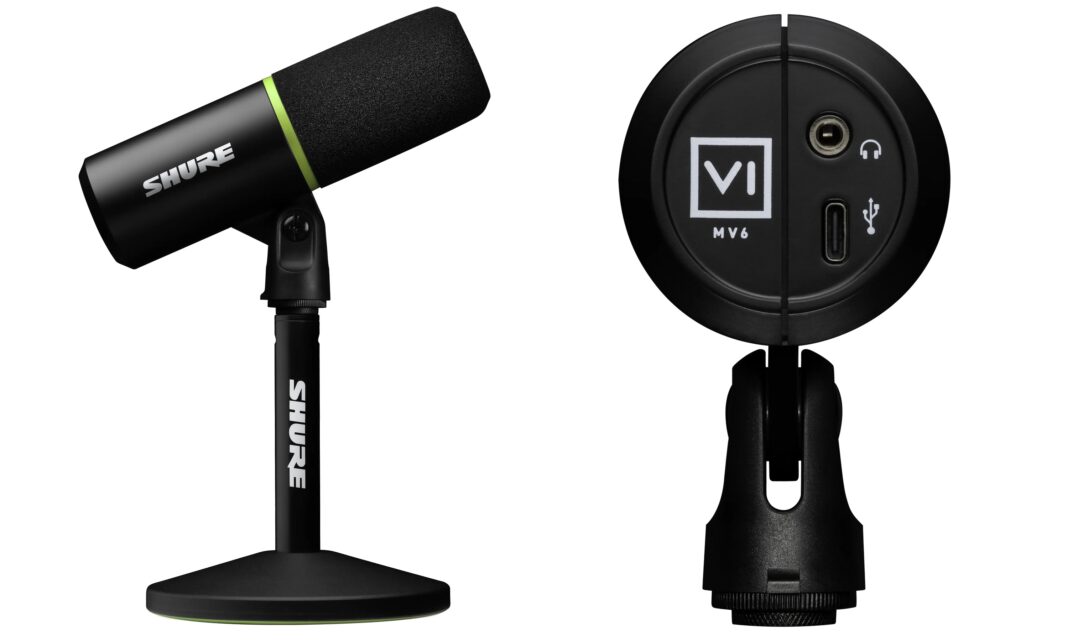


Shure’s new MV88 USB-C microphone turns your phone into a legitimate recording studio that fits in your pocket. After watching content creators cobble together elaborate setups with XLR cables, audio interfaces, and battery packs, Shure compressed an entire recording chain into something smaller than your car keys. At $159, this isn’t just another smartphone accessory—it’s a statement that quality audio recording has officially gone mainstream, and your next hit podcast or viral video might be recorded on the device already in your pocket.
Lightning’s Out, USB-C’s In: The Universal Audio Revolution
Remember when every mobile microphone was either Lightning-only or required a dongle collection that looked like a tech-themed keychain? Those days are mercifully over. Shure’s decision to pivot from Lightning to USB-C with the MV88 isn’t just about keeping up with Apple’s port changes—it’s a calculated move to embrace the universal standard that’s finally uniting Android and iOS devices. The original MV88 was essentially an iPhone-exclusive product, which always felt like leaving money on the table in our increasingly platform-agnostic world.
What makes this transition particularly clever is how Shure maintained the same compact form factor while future-proofing their hardware. The USB-C connector slides directly into any compatible device with satisfying precision, even accommodating most phone cases without requiring removal. No cables, no batteries, no Bluetooth pairing headaches—just pure plug-and-play simplicity that actually works every single time. The mic draws power directly from your device while simultaneously transmitting audio, eliminating the classic mobile recording dilemma of managing multiple power sources.
For Android users who’ve been watching iPhone-toting creators dominate the mobile content space, this levels the playing field dramatically. Your Galaxy S23, Pixel 8, or even that OnePlus gathering dust in your drawer just became a legitimate recording device. The same goes for iPhone 15 users who’ve been wondering if Lightning microphone investments would become expensive paperweights.
Four Polar Patterns, Zero Compromises
Here’s where Shure’s audio engineering heritage really shines through. The MV88 USB-C packs four distinct polar patterns into its diminutive frame: stereo, mono cardioid, mono bidirectional, and raw mid-side. If you’re not an audio engineer, this essentially means you can optimize the microphone’s pickup pattern for virtually any recording scenario without buying multiple microphones.
The stereo mode captures immersive, three-dimensional audio perfect for live concerts or ambient soundscapes. Switch to mono cardioid for focused voice recording that rejects background noise—the mode most podcasters will live in. The bidirectional pattern captures audio from front and back while rejecting side noise, ideal for two-person interviews across a table. The raw mid-side option provides maximum flexibility for post-production, though it requires some audio editing knowledge to fully exploit.
What’s particularly impressive is how these patterns aren’t just marketing bullet points—they genuinely deliver professional-quality results. The stereo imaging in wide mode creates genuine spatial separation, while the cardioid pattern provides excellent off-axis rejection that keeps your voice front and center. For a microphone that weighs less than your phone’s charging cable, this versatility is almost absurd.
Smart Features That Actually Make Sense
Shure’s companion MOTIV apps—Video, Audio, and Mix—transform the MV88 from a simple microphone into a sophisticated recording ecosystem. Auto Level Mode eliminates the classic recording nightmare of setting gain incorrectly, automatically adjusting sensitivity to prevent clipping while maintaining optimal signal strength. It’s like having a tiny audio engineer living inside your phone, constantly tweaking settings so you can focus on creating content instead of watching meters.
The Real-time Denoiser deserves special mention because it actually works as advertised. Rather than applying heavy-handed noise reduction that makes voices sound robotic, Shure’s algorithm intelligently identifies and removes background noise while preserving vocal clarity. Coffee shop recordings suddenly sound like they were made in a treated studio, and that air conditioner humming in the background becomes virtually inaudible.
The five-band EQ, limiter, compressor, and high-pass filter provide granular control for users who want to dive deep into audio processing. These aren’t toy versions of professional tools—they’re legitimate implementations that can dramatically improve recording quality when used correctly. The limiter prevents sudden volume spikes from ruining takes, while the high-pass filter removes low-frequency rumble that can muddy recordings.
The App Ecosystem That Turns Amateurs Into Engineers
Hardware is only half the story. What separates the MV88 USB-C from the sea of plug-and-pray microphones is Shure’s MOTIV app suite—a trio of free downloads that give you the kind of granular control normally reserved for $1,000+ field recorders. MOTIV Audio, MOTIV Video, and MOTIV Mix each serve distinct workflows, but together they form a cohesive ecosystem that feels suspiciously like professional audio workstation software compressed into a mobile interface.
The real magic happens when you toggle off Auto Level Mode and dive into manual controls. Suddenly you’re looking at a five-band parametric EQ, adjustable limiter, compressor with three presets, and a high-pass filter that actually works at the frequency you set—not the fixed 80 Hz cutoff that most consumer mics impose. The stereo width control lets you narrow the field from 135 degrees down to a laser-focused cardioid pattern, perfect for isolating a single speaker in a noisy environment. It’s the kind of flexibility that makes field reporters and indie filmmakers genuinely reconsider their $500+ XLR setups.
| Feature | Auto Mode | Manual Mode |
|---|---|---|
| Gain Control | Automatic adjustment | -12 dB to +36 dB |
| Polar Patterns | Stereo default | 4 selectable patterns |
| EQ | Flat response | 5-band parametric |
| Denoiser | Always on | Adjustable or off |
Most impressive is the Real-time Denoiser algorithm, which uses machine learning to identify and suppress ambient noise without turning voices into robotic artifacts. In practice, it strips out HVAC hum and traffic rumble while preserving the natural character of speech—something that even dedicated audio plugins struggle with in post-production.
The Death of the Mobile Audio Interface Market
Let’s be honest: the mobile audio interface market has been living on borrowed time. Products like the Zoom U-22 and IK Multimedia iRig were necessary evils—clunky boxes that turned your phone into a semi-professional recording device, but at the cost of portability and simplicity. The MV88 USB-C doesn’t just make these products obsolete; it makes them look like technological fossils from a bygone era.
Consider the typical podcaster’s mobile rig circa 2023: an audio interface ($150), a decent condenser mic ($200), batteries or phantom power supply ($50), cables ($30), and a shock mount ($40). That’s $470 and a backpack full of gear that requires five minutes of setup and constant vigilance against battery failure. The MV88 USB-C replaces all of it with a single device that fits in your pocket and sets up in under five seconds.
This isn’t incremental improvement—it’s category destruction. Shure has essentially compressed the entire signal chain into a device that costs less than most entry-level audio interfaces alone. The implications stretch far beyond convenience; it’s democratizing professional audio production in the same way smartphone cameras killed the consumer camcorder market.
Conclusion: The Professional Audio Industry Just Got Disrupted
The MV88 USB-C represents more than just a product refresh—it’s a watershed moment that signals the complete convergence of mobile and professional audio. When a $159 microphone can deliver broadcast-quality recordings while drawing power from a device you already carry, the traditional barriers between “consumer” and “professional” equipment cease to exist.
What makes this particularly disruptive is Shure’s refusal to compromise on quality for the sake of convenience. The mid-side recording capability, typically found in microphones costing five times as much, gives content creators the flexibility to adjust stereo width in post-production—something that was impossible with previous mobile solutions. Combined with the Real-time Denoiser and manual controls, it’s essentially putting a professional field recorder in every creator’s pocket.
The ripple effects will be felt across the industry. Traditional audio interface manufacturers now face an existential question: how do you compete when your entire product category has been rendered obsolete by something smaller than a car key? Meanwhile, content creators who’ve been intimidated by the complexity of professional audio equipment now have no excuse for poor sound quality.
Most importantly, the MV88 USB-C proves that the future of audio recording isn’t about bigger rigs or more complex setups—it’s about intelligent design that embraces the devices we already use. Your next favorite podcast, viral video, or indie film might not be recorded in a professional studio, but it’ll sound like it was. And that’s a revolution worth listening to.