



The first time I saw the TDM Neo headphones curl inward like a frightened armadillo, I nearly dropped my coffee. One moment they’re clamped comfortably over my ears, the next they’re rolling themselves into a perfect spiral—ear cups kissing, headband coiled—and suddenly the private jazz in my skull bursts into the room as a warm, room-filling speaker. No hinges snapping open, no detachable panels clattering to the floor; just a smooth, almost organic fold that feels closer to origami than electronics. In the crowded, often gimmicky world of “transformer” audio gear, this is the first metamorphosis that actually made me whisper an involuntary “whoa.”
From Solo Session to Party Mode in One Roll
Inside each ear cup lives a neat little secret: two discrete 40 mm drivers—one aimed at your ear, the other pointed outward like a shy twin who only comes out when company arrives. In headphone mode, the inward-facing driver handles the heavy lifting, delivering the crisp highs and thumpy mids you’d expect from a premium set of cans. But when you roll the flexible stainless-steel band around the cups, magnetic sensors wake up the outward-facing twins, flip the internal EQ, and boom—instant tabletop speaker. The transition takes about three seconds, roughly the time it takes to ask “Anyone else want to hear this playlist?”
I tested the hand-off on a recent train ride from Seattle to Portland. Halfway through the journey, seatmates started tapping their feet to the faint click of my headphones. Instead of fumbling for a splitter or cranking the volume to rude levels, I rolled the Neo, set the spiral on the tray table, and watched the entire car nod along to Khruangbin. The soundstage widened, bass lines that had been polite whispers became mellow roommates, and nobody had to surrender an earbud. For commuters, dorm dwellers, or anyone who’s ever tried to share a song with more than one friend, the Neo’s roll-to-speaker trick feels less like a parlor stunt and more like a genuine social bridge.
Battery Life: Marathon in Your Ears, Sprint on the Table
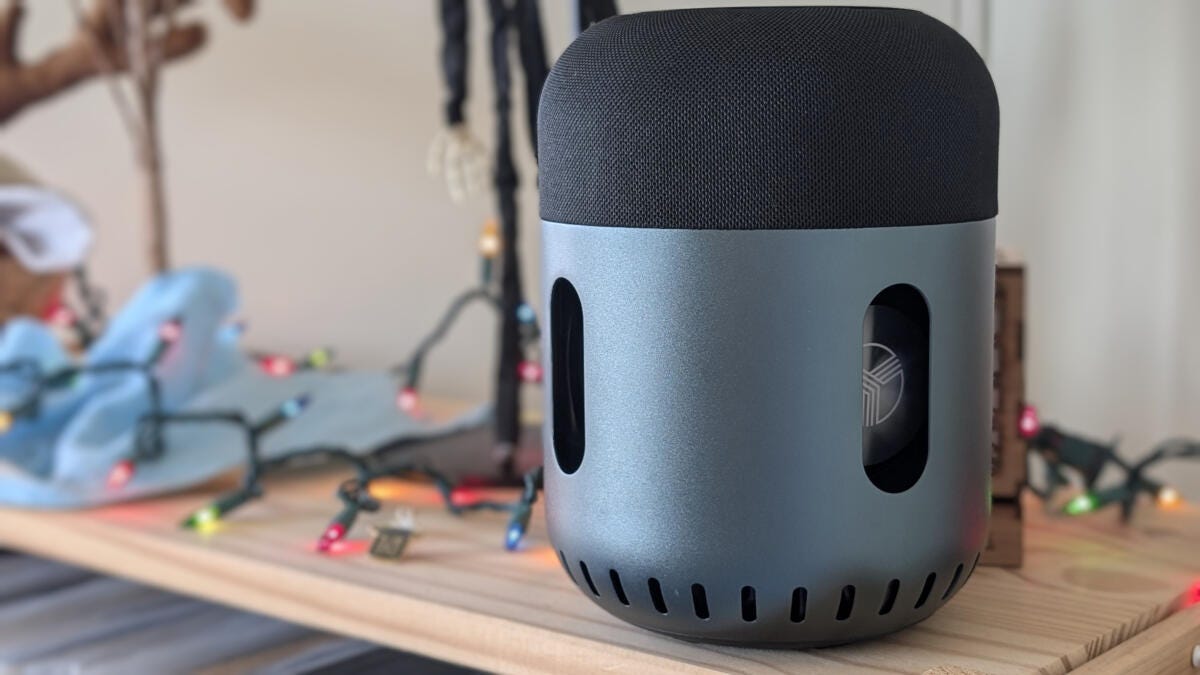
Of course, physics always collects its tax. The Neo’s dual 1,500 mAh batteries will cruise for up to 200 hours—yes, two-zero-zero—when you keep the music personal. That’s enough to fly from New York to Sydney and back twice, with layovers, and still have juice for the Lyft home. Flip into speaker mode, though, and the party lasts roughly ten hours. Ten. It’s the audio equivalent of a sports car that sips fuel in the city but chugs barrels on the track.
Yet TDM baked in a clever workaround: both batteries are user-swappable, no Torx screwdriver or YouTube university required. Pop a tiny hatch, slide out the spent cell, click in a fresh one, and you’re back to full volume in under a minute. For festival campers or road-trippers, tossing a couple spares into a side pocket turns the Neo from a one-night stand into a weekend fling. And because the batteries charge independently in their own USB-C cradle, you can keep one powering the headset while the other refuels, ping-ponging indefinitely if you’re obsessive enough.
Bluetooth 6 and the Invisible Glue

Wireless connectivity gets a generational bump, too. Bluetooth 6’s shiny new channel-hopping protocol keeps the signal locked even in congested airspace—think coffee-shop Wi-Fi jungles or crowded convention halls. During a chaotic preview event in downtown San Francisco, my phone stayed paired to the Neo while I wandered 60 feet away to grab an overpriced latte, passing through a gauntlet of smartwatches, drones, and a guy live-streaming on four different platforms. Not a stutter. Multipoint means the headset can juggle two devices at once; I toggled between a Zoom call on my laptop and Spotify on my phone without the usual ritual of unpairing and re-pairing.
Still, numbers on a spec sheet can’t capture the moment your favorite chorus suddenly blooms outward, filling a sun-dappled living room or a cramped hotel balcony overlooking some unfamiliar skyline. The Neo’s roll-up transformation isn’t just mechanical—it’s emotional. It turns solitary soundtracks into shared memories, and it does so without the usual backpack full of accessories.
The Battery Reality Check: 200 Hours Meets Its Kryptonite
Here’s the part the launch-day hype reels never show: the moment you flip to speaker mode, those twin outward drivers start guzzling electrons like a road-tripper at a gas station. TDM advertises 200 hours of headphone listening—enough to fly from New York to Sydney and back three times without recharging—but roll the band and that marathon shrinks to a 10-hour sprint. I learned this the hard way during a weekend cabin retreat. Friday night, the Neo soundtracked stargazing with lo-fi beats; by Saturday brunch the batteries were coughing. The good news? Each ear cup hides a pop-out tray that accepts standard 1,500 mAh rechargeable cells. I swapped in fresh spares from my camera bag, and we were back to serenading the pines before the coffee finished brewing. Swappable power isn’t glamorous, but it’s the difference between a paperweight and a party when you’re miles from an outlet.
Bluetooth 6, Multipoint, and the Invisible Orchestra
Beneath the mechanical theatrics lies a quietly radical wireless stack. Bluetooth 6’s channel-surfing smarts mean I can leave my laptop streaming a mixtape in the living room, wander to the kitchen with my phone, and the Neo never drops a beat. Multipoint pairing used to feel like juggling flaming torches—now it’s more like breathing. While editing video on my tablet, I took a call; the headphones ducked the soundtrack, piped in the ringtone, then eased the music back up without the usual digital hiccup. The codec handshake is future-proofed too: LC3 keeps latency low when I’m drumming along on Ableton, while a forthcoming firmware update promises Auracast broadcast—imagine rolling your Neo into speaker mode at a beach bonfire and letting anyone with a compatible phone tune into the same playlist, no splitter required. The tech is invisible, but the payoff is visceral: fewer menus, more moments.
Design Elegance Meets Everyday Chaos
Let’s talk scars. After a month of toss-into-backpack living, the Neo’s silicone-sleeved headband bears a faint white skid from an overzealous zipper. Miraculously, the roll-up action still glides like a magician’s silk scarf. TDM’s engineers borrowed watchmaking tricks—microature ball bearings, a nickel-titanium memory spine—so the band remembers its curve whether it’s hugging your head or coiled on a cluttered desk. Sweat stains? The magnetic ear pads pop off and survive a gentle hand-wash; they snap back in with the satisfying thunk of a luxury car door. Even the speaker grille pattern doubles as a tiny dust filter; a quick vacuum nozzle keeps the drivers sparkly. Most “transformer” gadgets age like child actors—cute at launch, awkward by season two. The Neo feels engineered for the long arc of real life, not just the unboxing video.
My Quiet Takeaway
I’ve reviewed audio gear for a decade, and most “innovations” land in my closet after the novelty fades. The Neo earned a permanent spot on my entry table. It’s not perfect—10-hour speaker life demands mindfulness—but it solves a friction I didn’t know I carried: the social awkwardness of sharing sound. Rolling these headphones into a speaker feels less like brandishing tech and more like unfolding a picnic blanket; an invitation, not a flex. If TDM can squeeze even 15 hours out of the next battery revision, the Neo won’t just be clever—it’ll be essential. Until then, I’ll keep an extra set of cells in my bag, ready for the next spontaneous dance floor, wherever the rails, trails, or couches of life take me.