
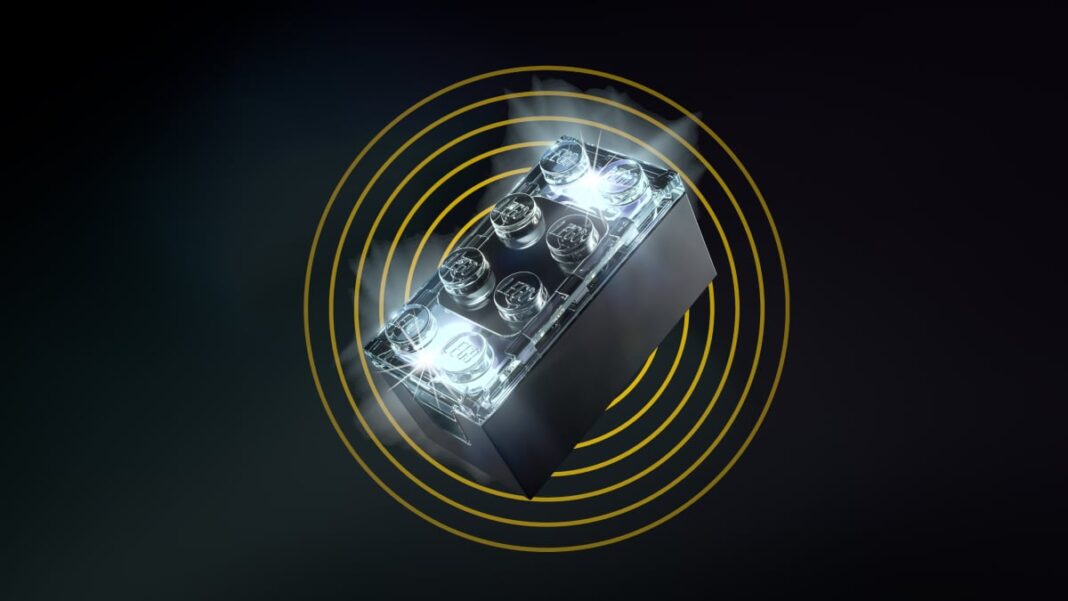


At this year’s Consumer Electronics Show, the Lego Group pulled a surprise that feels more at home in a Silicon Valley demo lab than a traditional toy aisle: the Lego Smart Play system, anchored by a new “smart brick” that packs a suite of sensors, a tiny synth‑driven speaker, and wireless charging into a piece no larger than a single 2 × 4 stud. After seven decades of building the world’s most recognizable plastic bricks, Lego is finally marrying its analog roots with the kind of real‑time interactivity that has defined the next generation of play. The rollout kicks off with three all‑in‑one Star Wars kits, but the underlying platform hints at a broader ambition—one where every stud can become a node in a responsive, spatially aware network.
Inside the Brick: Miniaturized Power Meets Multi‑Sensor Design
The centerpiece of the new ecosystem is, unsurprisingly, the Lego Smart Brick. At first glance it looks like any other 2 × 4 brick, but a custom 4.1 mm ASIC—smaller than a single Lego stud—holds the brain of the system. This microchip integrates an accelerometer, light‑sensing and sound‑sensing modules, a miniature speaker, and a set of programmable LEDs. The result is a brick that can detect motion, ambient illumination, and even claps or snaps, then translate those inputs into on‑board sound effects or visual cues without needing a phone or tablet.
One of the most practical upgrades is the inclusion of easy wireless charging. A compact charging pad, included in every Smart Play kit, uses inductive coils to keep the brick topped up, sidestepping the clunky battery compartments that have plagued earlier “smart” toys. The speaker, driven by an onboard synthesizer, can produce everything from a simple beep to a full‑blown laser‑saber hum, all generated in‑brick rather than streamed from an external source. By consolidating these capabilities into a single stud, Lego sidesteps the bulk and cost penalties that have limited previous attempts at electronic bricks.
From a developer’s perspective, the ASIC’s footprint is a masterclass in silicon efficiency. Packing a sensor suite, audio DAC, and radio transceiver into a chip that fits beneath a standard stud means the brick can be inserted into any build without altering the structural integrity of the model. It also opens the door for future firmware updates—something Lego has hinted at but not yet detailed—potentially allowing creators to program new behaviors long after the set leaves the shelf.
Building a Mesh: Smart Tags, Minifigures, and Near‑Field Magnetic Communication
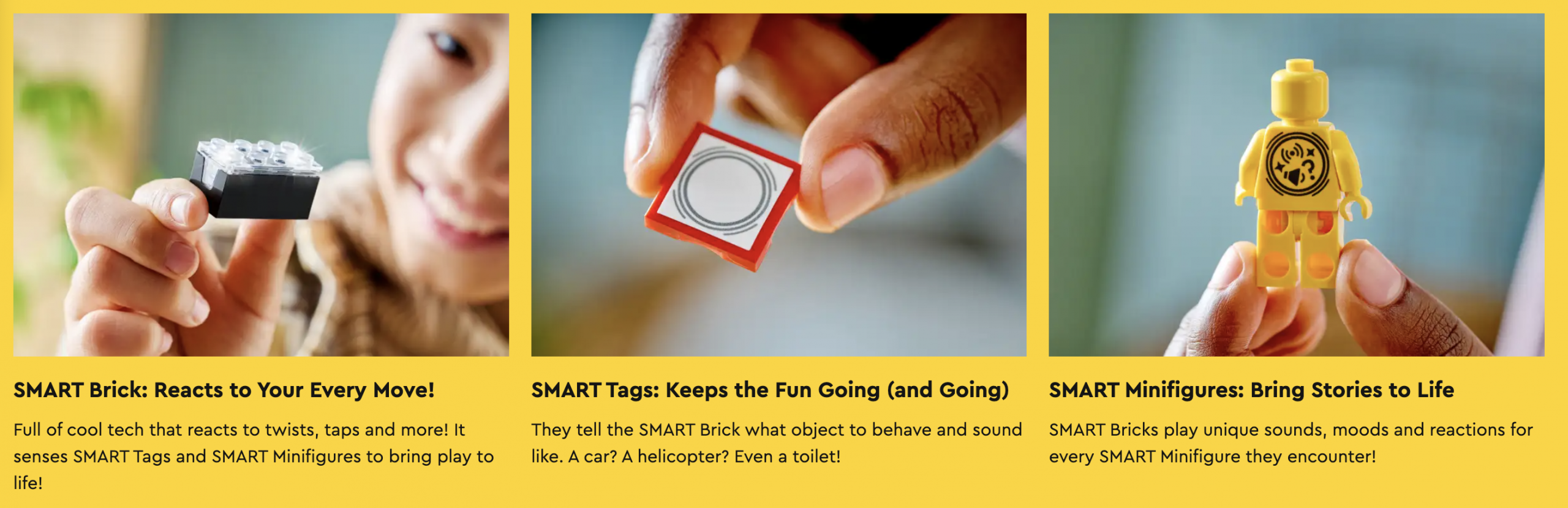
The Smart Brick doesn’t operate in isolation. Lego’s ecosystem adds two companion components: Smart Tags and Smart Minifigures. Smart Tags are 2 × 2 tiles that carry a digital ID and a tiny magnetic coil, while Smart Minifigures embed a matching chip inside the torso. When a Smart Brick comes within a few centimeters of either element, near‑field magnetic communication kicks in, allowing the brick to “sense” its surroundings without a Bluetooth or Wi‑Fi link.
This magnetic handshake is more than a novelty; it enables context‑aware actions that feel organic. For example, placing a Smart Minifigure on a cockpit can trigger the brick’s speaker to emit engine roar, while a nearby Smart Tag on a control panel might flash a light sequence to indicate “shields up.” Because the communication is localized and low‑power, the system avoids the latency and privacy concerns that come with cloud‑dependent toys, keeping the experience fully hands‑on and offline.
From a design standpoint, the use of magnetic coupling sidesteps the need for visible antennas or external receivers, preserving the clean aesthetic Lego fans expect. It also means that multiple bricks can simultaneously interact with a single tag or figure, creating a mesh of responsive elements that scale with the complexity of the build. In practice, this could let a child construct a sprawling Star Wars battle scene where each ship, turret, and character reacts in sync, all orchestrated by the invisible magnetic field that weaves the pieces together.
First Flight: Star Wars Sets Put Smart Play to the Test
Lego’s debut lineup for Smart Play is a trio of Star Wars kits that double as showcase demos for the technology. The three sets—Darth Vader’s TIE Fighter (€69.99 / $69.99), Luke’s Red Five X‑Wing (€89.99 / $99.99), and the premium Throne Room Duel & A‑Wing (€159.99 / $159.99)—each ship with a Smart Brick, a charger, a Smart Minifigure, and a Smart Tag. The pricing reflects not just the bricks themselves but the integrated electronics, positioning these kits at the high‑end of the hobby market.
What sets these sets apart from the earlier Super Mario line is the depth of interaction. In the Mario kits, electronic components were largely limited to sound effects triggered by pressing a button on a brick. Smart Play, by contrast, lets the build respond to how you arrange it. Build the TIE Fighter and tilt it— the accelerometer detects the motion and the speaker fires off a swooping engine rev. Place a Smart Tag on the cockpit’s control panel and the lights on the brick pulse in time with an onboard “laser” sound. The interaction is immediate, tactile, and doesn’t require a companion app to mediate the experience.
Beyond the novelty, these sets also serve as a proof point for Lego’s broader vision: a platform where any future set—whether it’s a modular city, a robotics kit, or an educational STEM bundle—can inherit the same sensor‑rich foundation. By anchoring the launch in the universally beloved Star Wars franchise, Lego ensures that early adopters get both the narrative pull of the IP and a hands‑on taste of what the Smart Play ecosystem can deliver.
Part 1 introduced the LEGO Smart Play system, highlighting the smart brick with sensors, wireless charging, and the initial Star Wars sets. The next sections in Part 2 need to be 2-3 more h2 sections with deeper analysis or related angles, followed by a conclusion.
First, I need to avoid repeating Part 1 content. The user mentioned not to repeat what’s already in Part 1, so I should focus on new aspects. The sources provided have info on the components like Smart Tags, Smart Minifigures, pricing, and the communication technology (near-field magnetic communication). Also, there’s a mention of the platform’s ambition to merge traditional play with digital interactivity.
For the first h2 section, maybe discuss the components beyond the smart brick. The sources mention Smart Tags and Smart Minifigures. Explaining how they work with the Smart Brick and the communication method would be a good angle. The near-field magnetic communication is a key technical point here.
Second, another section could be about the ecosystem and future potential. The sources talk about the platform aiming to let children create interactive builds. How does this fit into LEGO’s long-term strategy? Maybe compare with past efforts like the Super Mario sets. Also, the pricing of the initial sets could be mentioned in terms of market positioning.
Third, perhaps a section on educational and developmental aspects. Since LEGO is moving into smart toys, there’s an opportunity to discuss how this affects learning, creativity, and problem-solving. The integration of sensors and programming might encourage STEM skills.
Wait, the user wants 2-3 sections. Let me pick the most impactful ones. The first h2 could be about the components and communication tech. The second could be about the ecosystem and future, and the third maybe the educational angle. But the user said 2-3, so maybe two h2 sections plus the conclusion.
Wait, the user said 2-3 more h2 sections. Let me check the instruction again: “2-3 MORE
sections with deeper analysis or related angles”. Since Part 1 already has one h2, Part 2 needs 2-3 more. So total in the article would be 3-4 h2s, but Part 2 adds 2-3. Let me go with two h2 sections here.
First h2: The Interconnected Ecosystem – discussing Smart Tags, Minifigures, communication tech.
Second h2: Strategic Positioning and Market Implications – pricing, comparison with past products, market strategy.
Then the conclusion.
Let me check the sources again for data points. The Star Wars sets have specific SKUs and prices. Also, the communication is near-field magnetic, which is different from Bluetooth or NFC. Need to explain that.
For the first h2, I can explain how the components work together, the tech behind the communication, and how it allows the bricks to interact without apps. The second h2 can discuss the pricing, the target audience, how it’s different from previous smart toys like Super Mario sets, and LEGO’s strategy in the toy market.
Also, the conclusion should wrap up with my perspective as the reporter, maybe touching on the potential impact of this move, challenges, and future possibilities.
Need to make sure not to link to competitors or news sites. Only official sources. The Star Wars sets are from LEGO’s official info, so that’s okay.
Need to avoid starting the conclusion with “In conclusion”. Instead, a strong closing statement.
Let me structure the sections:
h2: The Interconnected Ecosystem: Smart Tags, Minifigures, and Magnetic Communication
h2: Strategic Positioning and Market Implications of Smart Play
Then the conclusion.
Now, flesh out each section with details from the sources. For example, in the first h2, explain the three components, how they communicate via near-field magnetic, and the benefits of this approach. In the second h2, discuss the pricing, the initial Star Wars sets, and how this positions LEGO in the market compared to past products.
Also, use the source info about the first sets’ prices and the fact that they’re all-in-one kits. Mention the €, $, £ prices to show international availability.
Check for word count: 600-800 words. Each section should be around 200-300 words. The conclusion around 100-150.
Make sure to use for key terms and avoid markdown. Use HTML tags as specified.
Need to verify the communication method: near-field magnetic communication. That’s different from NFC, so clarify that it’s a proprietary method that allows the bricks to detect proximity and trigger effects without external devices.
Also, mention that the Smart Play system doesn’t rely on screens or apps, which is a key selling point for hands-on play.
In the second section, discuss the pricing strategy, how it’s positioned as premium but aligned with high-end Lego sets. Compare with the Super Mario sets as predecessors but note the advancements in integration and interactivity.
In the conclusion, emphasize LEGO’s innovation, the potential for expansion beyond Star Wars, and the balance between tech and traditional play.
The Interconnected Ecosystem: Smart Tags, Minifigures, and Magnetic Communication
The Lego Smart Play system is more than just a single brick—it’s a network of interconnected components designed to create a cohesive interactive experience. Alongside the Smart Brick, the platform introduces Smart Tags and Smart Minifigures, each embedding microchips that communicate via near-field magnetic resonance. This proprietary technology allows components to detect proximity and orientation without requiring line-of-sight or external devices like smartphones. When a Smart Tag is placed within a structure, the Smart Brick reads its position and triggers pre-programmed effects, such as lighting up a spaceship’s engines or emitting a minifigure’s voice line. This spatial awareness eliminates the need for screens or apps, making the interactivity feel intuitive and tactile.
The Smart Minifigures take this further by embedding digital IDs into classic Lego figures. For example, placing Darth Vader’s Smart Minifigure near the Smart Brick in the TIE Fighter set activates his signature breathing sound and lights the cockpit. This system’s reliance on magnetic coupling—a form of wireless power and data transfer—ensures low latency and minimal interference, even in complex builds. Unlike Bluetooth or NFC, which often require pairing or precise alignment, Lego’s approach prioritizes spontaneity. A child can rebuild a structure mid-play, and the system will adapt in real time, detecting which components are present and how they’re arranged.
Strategic Positioning and Market Implications
At €69.99 to €159.99, the initial Star Wars kits position Smart Play as a premium extension of Lego’s existing product lines. While this price range aligns with the brand’s high-end sets, the added interactivity could broaden its appeal to families seeking STEM-oriented play. The Smart Play system builds on the success of the 2023 Super Mario Lego sets, which introduced basic sound and lighting but fell short of true interactivity. By integrating sensors, spatial awareness, and programmable elements, Lego is targeting a market segment eager for toys that evolve with the child’s creativity—think of it as a hybrid between physical construction and modular electronics kits like Makey Makey or littleBits.
However, the long-term success of Smart Play will depend on Lego’s ability to expand beyond Star Wars. The underlying platform supports third-party apps and custom programming via a companion SDK, hinting at potential partnerships with educational institutions or indie developers. If Lego opens the ecosystem to hobbyists, it could spark a wave of user-generated content, from custom sound packs to interactive storylines. That said, the company must balance innovation with the simplicity that defines traditional Lego play. Overloading the system with app-dependent features risks alienating the very users it aims to engage—children who prioritize hands-on creativity over digital interfaces.
Conclusion: A Bridge Between Analog and Digital Play
Lego’s Smart Play system is a bold step toward redefining how physical and digital play intersect. By embedding sensors, wireless charging, and spatial awareness into something as familiar as a 2×4 brick, the company isn’t just adding gimmicks—it’s creating a new language of interactivity. The near-field magnetic communication, in particular, showcases Lego’s engineering ingenuity, enabling real-time responsiveness without the clutter of wires or screens. While the initial Star Wars sets are a natural fit for the brand’s IP-driven strategy, the true test will be how well the platform scales into new themes and user-created experiences.
For parents and educators, Smart Play offers a compelling middle ground between unstructured building and screen-based learning. It introduces concepts like spatial logic and input/output relationships without requiring coding expertise. Yet Lego must tread carefully: the magic of its bricks lies in their universality. If Smart Play becomes too niche or reliant on proprietary hardware, it could fragment the very ecosystem that makes Lego iconic. For now, though, the smart brick proves that even after 70 years, the company still knows how to build the future—one stud at a time.