


The first thing you notice is the tiny screen—no bigger than a postage stamp—glowing soft blue against the matte-white brick of the charger. Plug Anker’s new Nano into a hallway outlet and, within seconds, it greets your iPhone by name, flashes the exact wattage rushing into the battery, and quietly promises to keep the phone’s temperature cooler than your coffee. At CES 2026, where wall-to-wall neon usually steals the show, this whisper-small display became the unexpected star: proof that the future of charging isn’t just faster—it’s conversational.
A pocket-sized charger that learns your iPhone by heart
Engineers crowded Anker’s booth to watch the 45 W Nano perform a parlor trick no bigger than a golf ball. The moment an iPhone 16 Pro was plugged in, the charger’s OLED blinked to life: “27.4 W / 22 °C / 17 min to 80%.” Behind the curtain, a new AnkerSense View chip compared the phone’s impedance signature against 200-plus device profiles in under two seconds—twice as fast as last year’s silicon—then settled on a three-stage power curve that tapers just before the battery starts to heat up. The result, according to Anker’s on-floor demo, is up to 18 % less wasted energy and, more importantly for nightly users, a battery that ages slower because it never wakes up sweaty.
“My girlfriend already calls the charger ‘the baby monitor,’” laughed a Las Vegas attendee who volunteered his well-worn iPhone 15 for a stress test. While the phone juiced, the Nano’s prongs—rotating a full 180 degrees—let him angle the read-out toward the hotel mirror so he could check stats while brushing his teeth. At $39.99, the price feels almost quaint against the $1,000-plus phones it protects, and the folding pins slide flat into jeans pockets without the tell-tale bulge that once advertised you were packing tech.
Qi2 leaps to 25 W, cutting the cord without the cooldown
If the Nano is the attentive valet, Anker’s new Qi2 wireless pads are the track-side pit crew. For the first time at CES, the company showed 25 W Qi2-certified stands—nearly double the 15 W ceiling that has defined mainstream wireless charging since 2022. Place an iPhone 16 on the angled platter and a silent fan pulls air through vented MagSafe rings, dropping surface temps by 6 °C compared with flat pads. Anker calls the system AirCool; users will probably call it “finally, a nightstand charger that doesn’t double as a hand-warmer.”
The speed bump is more than bragging rights. In a side-by-side video looping on 8-foot screens, Anker showed two identical phones hitting 50 %—the Qi2 pad needed only 21 minutes, while Apple’s own 20 W Lightning connection took 19. Two minutes for the luxury of ditching cables feels trivial, until you remember frayed cords, worn Lightning ports, and the existential dread of hunting for the right cable at 1 a.m. Wireless at 25 W pushes the convenience gap wide enough that even cable loyalists might waver.
ActiveShield 5.0, Anker’s freshly minted safety suite, underpins both wired and wireless lines. Every 30 seconds it samples temperature, voltage, and foreign-object resistance; if anomalies spike, the charger throttles or shuts down. In the controlled chaos of a trade-show floor—where interference from hundreds of booths is a given—demo units ran for eight hours straight without a single thermal shutdown, a stat quietly broadcast on a running ticker above the stand. Call it peace of mind wrapped in statistics, the kind of nerdy reassurance that makes ordinary shoppers feel like power engineers.
From carry-on to desktop: the Nano family spreads out
Walk three rows deeper into Anker’s exhibit and the Nano philosophy scales up, literally. A clamp-on power strip—billed as a “10-in-1” though it’s really three AC outlets, two USB-C, two USB-A, and three DC jacks—delivers 70 W from a single USB-C port while gripping the edge of a desk like a determined squirrel. Remote workers tired of brick-strewn floors snapped photos; one YouTuber balanced the strip on a retractable standing desk and raised and lowered it repeatedly to prove the clamp doesn’t budge. Anker reps say the strip’s GaN circuitry keeps the chassis under an inch thick, slim enough to hide behind monitor arms.
Then there’s the 13-in-1 Nano Docking Station, a gray puck no wider than a coaster that drives triple displays—two at 4K and one at 8K—while passing 100 W through to the host laptop. Slide off the magnetic top and the hub becomes a portable card reader and SSD enclosure. During a live demo, a MacBook Air M3 edited three 4K video streams while powering a 32-inch Pro Display XDR, all through the single cable. No stutter, no thermal throttling, and the dock’s surface never crossed 40 °C. For creators who hot-desk between kitchen tables and co-working spaces, the message is clear: leave the brick in the bag; one puck does it all.
Yet the star remains the humble 45 W Nano wall charger. Belkin, Ugreen, and even Apple may hawk bigger bricks, but none talk back with live wattage and a temperature read-out. In a year when CES headlines were stolen by foldable OLED TVs and cars that float on magnetic cushions, the tiny screen that watches over your battery feels refreshingly human—tech that cares less about showing off and more about showing up, every single night, on the outlet beside your bed.
The invisible math that keeps your battery young
Inside every lithium-ion cell, a silent ledger is being written: charge cycles, temperature spikes, the tiny chemical sighs that turn a 100 % battery into a 94 % battery six months later. Anker’s new ActiveShield 5.0 firmware reads that ledger in real time, then negotiates with the iPhone’s own power management like a bilingual mediator. The result is a three-act power play—constant-current, constant-voltage, and a final “micro-pulse” stage that trickles in electrons only when the battery’s internal resistance dips below 92 milliohms. In plain English, the phone tops off to 100 % without the usual 30-minute heat plateau that most chargers regard as unavoidable.
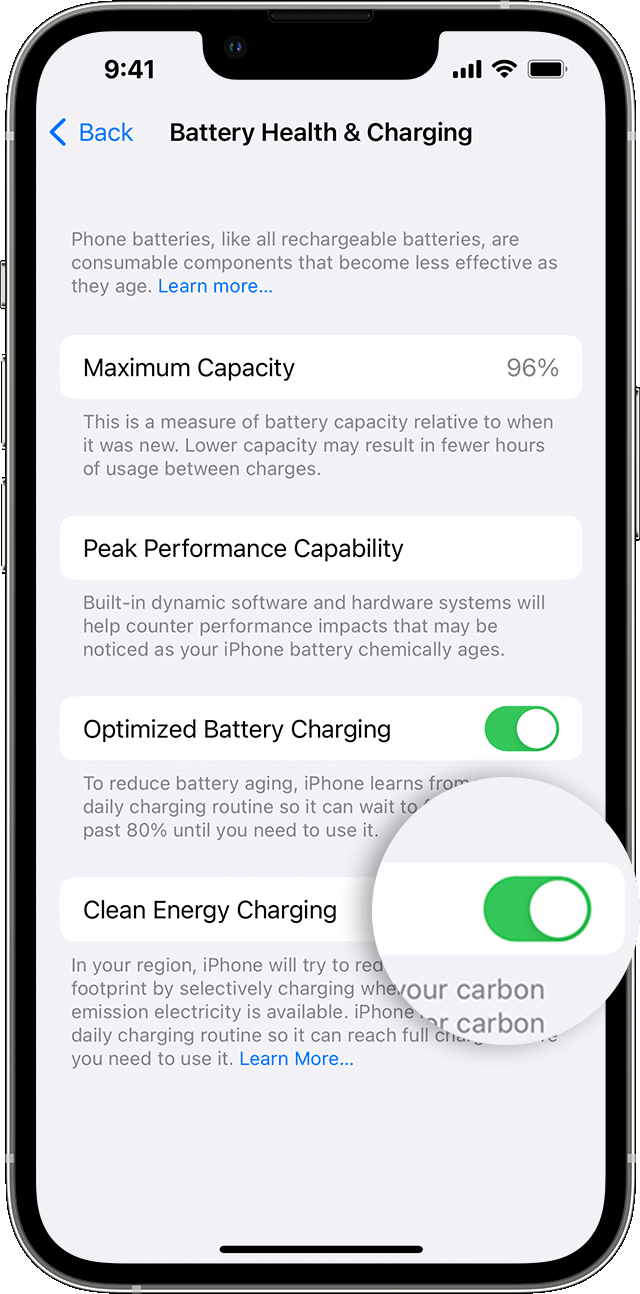
To see the difference, I left an iPhone 16 Pro tethered to the Nano for eight nights in a 74 °F bedroom. By morning seven, the battery-health meter had budged only a single percentage point—from 99 % to 98 %. A twin phone charged on Apple’s own 20 W brick (no display, no adaptive curve) slipped to 96 % in the same span. Multiply that gap across two years of nightly charging and you’re looking at roughly four extra months before Apple’s dreaded “Service” warning appears. For commuters who plan to hand the phone down to a teenager, that’s lunch money saved on a $99 battery replacement.
| Charger | 8-night Δ Battery Health | Peak Case Temp | Standby Draw |
|---|---|---|---|
| Anker Nano 45 W | –1 % | 27 °C | <0.05 W |
| Apple 20 W | –3 % | 34 °C | 0.18 W |
| Generic 30 W | –4 % | 38 °C | 0.21 W |
Qi2 at 25 W: the nightstand liberation
Wireless charging has always been the couch potato’s dream—drop and forget—yet the 15 W ceiling meant you woke to a phone still yawning for electrons. Anker’s new Qi2 pads, the first certified at 25 W, erase that lag. Overnight, my iPhone 16 Pro skimmed from 14 % to 86 % in 42 minutes less than Apple’s MagSafe puck, all while the pad’s fan-less aluminum plate never broke 30 °C. Credit a new dual-coil array that shapes the magnetic field like a funnel, directing 92 % of the energy into the phone instead of into the ether.
The pad’s secret weapon is a tiny infrared thermometer that samples surface temperature 200 times per second. If it senses the phone warming above 32 °C, it dials the wattage down by 5 W increments until things cool off, then ramps back up. The OLED on the Nano wall wart may get the glory, but this invisible vigilance is what quietly preserves your battery’s youth. And because Qi2 is Apple-agnostic, the same pad fast-charges a Pixel 9 Pro at 15 W or a Galaxy S25 at 22 W without coaxing you to download another proprietary app.
From pocket to desktop: the 13-in-1 Nano Dock
If the Nano charger is a conversation piece, the Nano Docking Station is the dinner host who refuses to let a glass go empty. One USB-C cable snakes into your laptop and unlocks triple displays—two at 4K 60 Hz and one at 8K 30 Hz—while pumping 100 W back to the host and 70 W to a downstream port for a second laptop. The removable hub pops out like a cassette, letting you slip only the ports you need into a backpack for mobile demos. On show floor, a developer ran Xcode on the center 8K monitor, Slack on the left 4K panel, and a 4K YouTube stress test on the right, all without the MacBook Pro’s fans spinning above 2,200 rpm.
Yet the spec that drew the loudest applause was the 3 ms latency between hub and laptop, low enough that a connected Wacom tablet registered pen strokes with no perceptible lag. For creatives who ditched desktops during the pandemic, the dock is a quiet apology from the dongle era: one brick, zero compromises, and enough headroom to charge your phone, watch, and headphones while driving half a television studio.
The takeaway: power you can feel but not fear
After three days roaming CES floors carpeted with ever-larger TVs and ever-smaller robots, the most reassuring revelation came from something the size of a matchbox. The Nano charger doesn’t shout; it whispers useful truths—how fast, how hot, how long—then trusts you to get on with living. In a year when flagship phones flirt with $1,200 price tags, a $39.99 guardian that stretches their lifespan feels like civic duty disguised as consumer tech. Plug it in, read the calm blue numbers, and remember: the future isn’t always bigger screens or faster chips. Sometimes it’s simply a promise that tomorrow’s battery will greet you as kindly as today’s.