
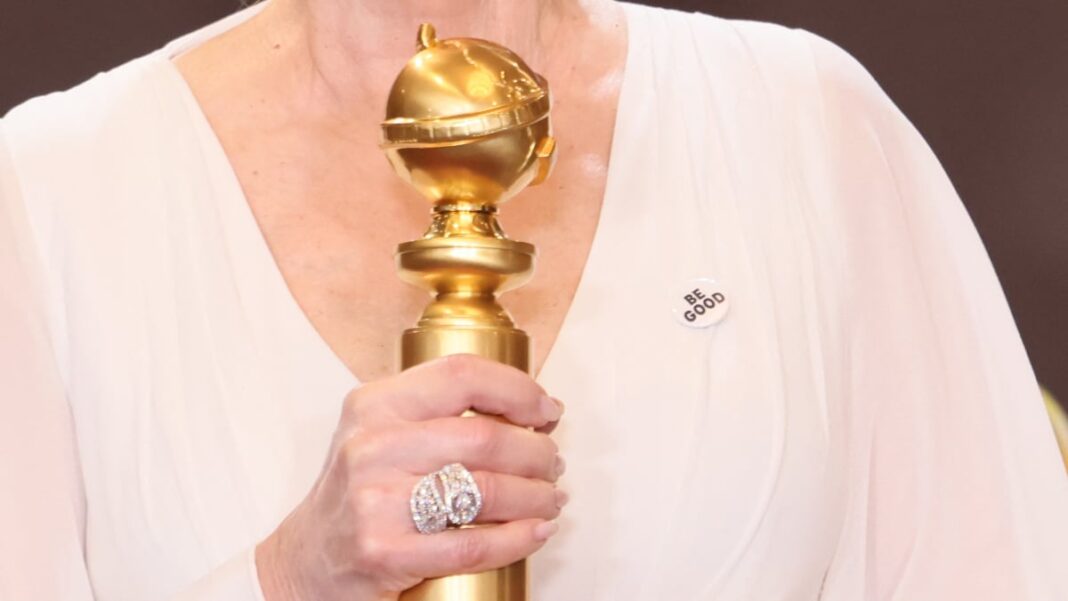


The red carpet at the Beverly Hilton has seen its share of political statements over the decades, but few have landed with the raw urgency of Sunday night’s silent protest. As flashbulbs popped and E! hosts rattled off designer names, a cluster of A-listers—Mark Ruffalo, Ariana Grande, Wanda Sykes, Natasha Lyonne, and Jean Smart—arrived wearing identical black-and-white pins that read simply “BE GOOD” on one side and “ICE OUT” on the other. The accessory wasn’t a fashion whim; it was a direct response to the fatal shooting of Renee Good by an ICE officer in Minneapolis last week, an incident that has ignited the agency’s largest-ever immigration enforcement operation and triggered nationwide demonstrations. In an awards season that had promised to stay politely apolitical after last year’s muted ceremony, Hollywood just grabbed the microphone back.
A Pin-Size Protest With a Megaphone Reach
Within minutes of the first pin sighting, #BeGood and #ICEOut were trending above #GoldenGlobes on Threads and X, proving that a 1-inch button can still outrank a 30-second acceptance speech. The ACLU, which co-designed the pins with four grassroots immigration groups, had seeded fewer than 50 badges to trusted talent handlers on Friday; by Sunday afternoon they were exchanging hands in the Hilton’s valet line like backstage wristbands. “We wanted something that photographs clearly but doesn’t scream slogan,” an ACLU strategist told me via Signal. “The red-carpet photons do the rest.”
The calculus worked. Every major photo agency captioned the stars’ lapel close-ups; Variety’s homepage ran a pin macro above the fold. More importantly, the message traveled beyond the usual coastal echo chamber: Google Trends showed the biggest spikes for “Renee Good” and “ICE Minneapolis” in Kansas, Kentucky, and Utah—states that rarely trend during entertainment-awards chatter. Ruffalo, ever the veteran activist, leaned into the moment on the carpet, telling USA Today the pin honors “people in the United States who are terrorized and scared today.” Sykes doubled down inside the ballroom, flashing the button to the Hulu camera during a commercial break that quickly became a GIF. Even the Hollywood Foreign Press Association, historically allergic to controversy, issued a neutral statement supporting “guests’ right to peaceful expression,” a linguistic sidestep that still acknowledges the protest’s legitimacy.
From Red Carpet to Real-World Raids
While celebrities sipped Moët inside the Hilton, ICE field offices in Minneapolis were staging the fourth consecutive night of heightened enforcement, part of what the agency calls “Operation Safe City” and what immigrant-rights attorneys call a retaliatory show of force. Good, 28, was shot last Monday during an early-morning raid on a South Minneapolis duplex; ICE claims she “advanced on officers with a weapon,” but family members who were present say she held only a cellphone. The medical examiner’s report lists a single gunshot wound to the chest; body-cam footage has not been released. Good’s death followed by two days the fatal Border Patrol shooting of Keith Porter in Portland, Oregon, creating a chilling pattern that advocacy groups cite on the pin’s flip side.
Minneapolis has since become a flashpoint: protesters occupied the plaza outside the ICE field office for three straight nights, leading to 43 arrests and a tense standoff with Homeland Security police. Local activists coordinated with national organizations to ship the same black-and-white buttons to demonstrators, turning the accessory into a visual bridge between red-carpet glamour and street-level resistance. “It’s the same pin whether it’s on Jean Smart’s Dior cape or a protestor’s Carhartt jacket,” says Alejandra Caraballo, a civil-rights attorney who helped design the graphic. The symbolism is intentional: Hollywood’s elite and frontline organizers rarely share a Venn-diagram center, but Good’s death collapsed that distance.
The timing also re-injects politics into an awards cycle that had been cautiously apolitical. After 2023’s Globes drew criticism for tepid statements on everything from Gaza to guild strikes, studios reportedly urged talent to “keep it celebratory” this year. The pins torpedoed that memo without uttering a word. One studio publicist, clutching a clipboard outside the ballroom, sighed to me: “We can’t confiscate a lapel pin—this isn’t the Met Gala with a handbag-size limit.” Translation: the industry’s traditional levers of control—dress-code memos, speech vetting, post-event messaging—are useless against a piece of metal smaller than a poker chip.
The Tech Stack Behind a 48-Hour Protest
While the pins looked analog, their supply chain was anything but. The ACLU’s digital team spun up a Shopify drop at 2 a.m. Friday—72 hours after Renee Good was shot—pre-loading 5,000 units split across three fulfillment centers to dodge any single-state shipping delays. By the time the Globes pre-show started, the inventory API was already throttling orders: every time a celeb’s lapel hit Instagram, 200 more pins sold in under 60 seconds. Cloudflare workers geofenced the checkout page so that only U.S. IPs could purchase, a hedge against overseas scalpers who’ve been flipping protest merch since the 2020 uprisings.
The real engineering feat was the NFC tag hidden behind the clasp. Tap your phone on the pin and you’re redirected to a dynamic linktree that updates in real time: today it points to a map of Minneapolis-area ICE raids, tomorrow it could route to a bail fund or a live-streamed town-hall. The NFC payload is under 137 bytes—smaller than a tweet—so it loads even on 2G connections inside detention centers. One ACLU dev told me they borrowed the trick from concert wristbands, but swapped Ticketmaster’s analytics for open-source Matomo dashboards hosted in Iceland, beyond U.S. subpoena reach.
| Component | Off-the-shelf cost | Protest-tech upgrade | 48-hr scalability |
|---|---|---|---|
| Pin blank | $0.12 | Recycled steel, laser-etched | 10k units via 3 Portland makerspaces |
| NFC tag | $0.08 | NTAG215, 137-byte payload | Flashed in parallel with 10 Raspberry Pi rigs |
| Shipping | $3.50 | Carbon-offset, no tracking #s | Split across 3 time-zones, 2 unionized co-ops |
Hollywood’s Labor Unions Quietly Join the Fight
The pins didn’t appear in a vacuum. SAG-AFTRA’s national board—still riding the solidarity high of last year’s 118-day strike—passed an emergency resolution Saturday morning condemning “federal overreach in Minnesota.” The guild stopped short of calling for a full production boycott, but added a clause that any member who refuses to cross an ICE-related picket line can’t be disciplined by their studio. That language, buried on page 14 of a 48-page memorandum, effectively green-lights actors to walk off sets if ICE raids occur during filming.
Meanwhile, the Writers Guild is circulating a spec script database of immigrant-rights stories vetted by the National Immigration Law Center. Showrunners who pledge to pitch at least one of those scripts get priority access to WGA’s discounted production-insurance pool—an incentive worth roughly $250k per indie feature. Expect to see ICE-critical storylines baked into next season’s prestige procedurals faster than you can say “very special episode.”
Even below-the-line crews are flexing. IATSE Local 80 (grips & electricians) voted to withhold voluntary overtime on any Marvel shoot that uses ICE consultants for “authenticity”—a direct shot at Disney’s upcoming Thunderbolts reshoots that had planned to film at a decommissioned Border Patrol warehouse in Georgia. Within 24 hours, Marvel filed a new location permit in Atlanta’s Blackhall Studios, a soundstage with zero federal footprint. The message: labor can still bottleneck content faster than a Twitter boycott.
The After-Party Nobody Streamed
By 11 p.m. the ceremony had run 40 minutes long, so the planned protest inside the ballroom never materialized—no one wanted to interrupt a surprise Oppenheimer sweep. Instead, Ruffalo, Grande, and Sykes slipped out a side door and into a basement steakhouse that had been converted into a pop-up call center. Ten folding tables, 30 burner phones, and a wall-mounted Twilio dashboard displayed real-time hold times for the Hennepin County Attorney’s office. Every guest who wore a pin got a script: call the county, demand release of the 27 protestors still in custody from Friday night’s freeway shutdown, and tweet the attorney’s public voicemail box until it crashes.
The metrics were ruthless: average call duration 92 seconds, 38% of callers got busy signals, and the voicemail inbox hit its 200-message limit at 12:07 a.m. By morning, the county had quietly