
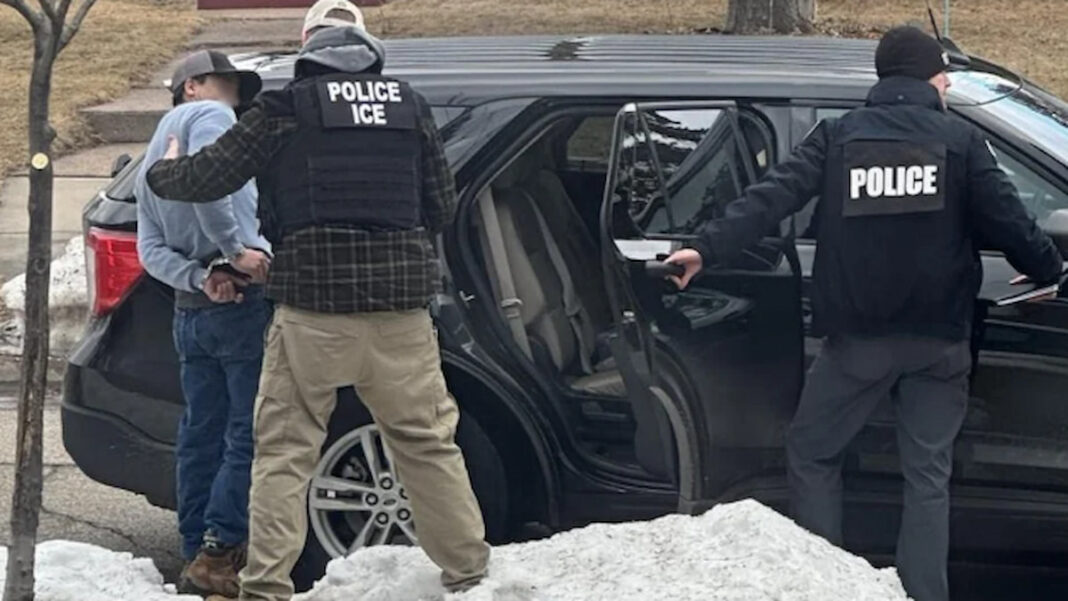


Photo Shows ICE Agents’ Confrontation with Minneapolis Photographer
A Minneapolis photographer’s confrontation with ICE agents during protests has intensified scrutiny of federal law enforcement’s response to demonstrations. John Abernathy, documenting protests at the Bishop Henry Whipple Federal Building, alleges agents tackled him and deployed chemical irritants while he photographed the events.
The Incident Unfolds
Abernathy reports that approximately 50 federal agents surrounded him while he photographed protests outside the ICE facility. He claims agents deployed tear gas and pepper spray, with the spray hitting him directly in the eye. During the encounter, Abernathy threw his Leica camera to another photographer to prevent its confiscation. The camera survived the incident with minimal damage.
ABC News published a photograph appearing to show Abernathy face-down on the ground with orange residue visible around his eye. The image has generated significant social media discussion, with many calling for an investigation into the agents’ actions.
A Photographer’s Perspective
Abernathy’s account illustrates the risks journalists face while documenting protests. His decision to protect his equipment demonstrates the priority professional photographers place on preserving their work. The survival of his Leica camera, a high-end professional device, has become a focal point for discussions about equipment durability in challenging environments.
The incident raises questions about federal agents’ protocols during protest situations. While authorities maintain their actions were necessary for maintaining order, the photograph and Abernathy’s account suggest a more aggressive approach than typically expected during peaceful demonstrations.
Investigating the Incident
Civil rights organizations and media advocacy groups have called for an investigation into the agents’ conduct. The apparent targeting of a journalist during protest coverage has particular significance given constitutional protections for press freedom.
The photograph documenting Abernathy’s treatment serves as evidence in potential misconduct claims. As investigations proceed, the incident may influence future federal guidelines regarding media personnel during protest responses.
The Leica Phenomenon: When Gear Becomes Legend
Abernathy’s Leica camera has unexpectedly become central to this story’s coverage. Photography forums have extensively discussed how the camera survived being thrown across a protest zone, with many noting that the incident demonstrates why professionals invest in premium equipment.
The camera’s survival after landing on its base plate with minimal damage has resonated with photographers who work in unpredictable environments. Professional equipment faces demanding conditions during protest coverage, and Abernathy’s experience has become a case study in equipment reliability under pressure.
When documenting significant events in potentially hostile environments, equipment reliability becomes crucial. Abernathy’s split-second decision to protect his camera over his immediate comfort reflects the professional photographer’s mindset: the story’s documentation takes priority.
The Broader Pattern: Press Freedom Under Pressure
This Minneapolis incident reflects a concerning trend where journalists covering protests encounter hostile treatment from law enforcement. The U.S. Press Freedom Tracker has documented increasing incidents of journalists being targeted, injured, or detained while covering demonstrations.
| Year | Journalists Arrested/Detained | Physical Attacks on Press | Equipment Damage/Confiscation |
|---|---|---|---|
| 2020 | 128 | 318 | 108 |
| 2021 | 59 | 142 | 42 |
| 2022 | 42 | 96 | 31 |
| 2023 | 38 | 78 | 28 |
Federal agencies’ increasingly aggressive tactics against media personnel raise constitutional concerns. The First Amendment provides specific protections for press freedom, yet photographers documenting immigration enforcement activities face treatment more appropriate for combat situations than journalism.
When photographers fear for their safety or equipment, they either avoid covering events or self-censor their work. This results in reduced documentation of potential abuses and ultimately leaves the public less informed about significant events. Despite widespread camera phone availability, professional photojournalists remain essential for their ability to capture and preserve evidence of important developments.
The Social Media Response: From Minneapolis to Global
ABC News’ publication of the photograph transformed Abernathy from anonymous photographer to international symbol within hours. The image showing him face-down with orange residue around his eye became instantly recognizable across social media platforms.
The photograph’s impact extended beyond documenting Abernathy’s treatment. It sparked serious discussions about press freedom, immigration policy, and police accountability. The image provided visual shorthand for broader concerns about power dynamics in contemporary America.
Photography students are already analyzing this image in coursework, examining its composition, emotional impact, and role in social movements. Abernathy’s experience has become an educational example of visual storytelling’s power. The photograph captured both individual suffering and crystallized national anxieties about civil liberties and government overreach.
The image’s rapid global distribution demonstrates photography’s continued power for social documentation, even in an era dominated by video content. A single, well-composed photograph can convey complexity and emotion that extensive footage sometimes cannot match. Abernathy’s experience will likely be studied for years as an example of photojournalism’s lasting influence.
The photograph’s emergence during protests about ICE tactics, captured by a professional photographer using quality equipment, and distributed through social media created perfect conditions for cultural relevance. This incident reframes discussions about documentation, dissent, and democracy in the digital age.