
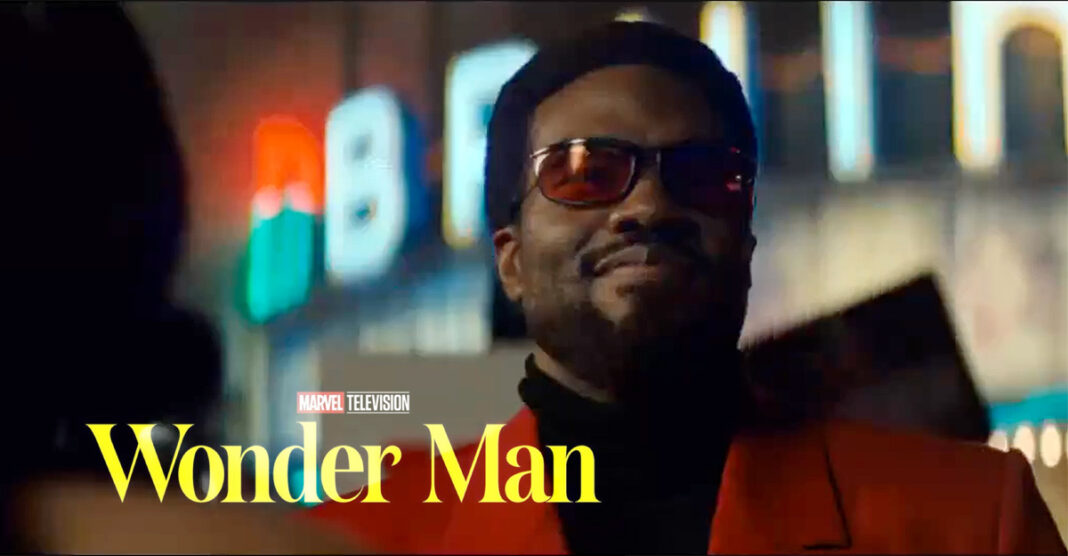


Marvel’s “Wonder Man” series arrives with unexpected relevance for anyone tracking technology’s collision with pop culture. The show dissects celebrity, identity, and the porous border between real and manufactured personas—issues that mirror today’s debates over AI-generated media and algorithmic fame. The result is a six-episode case study on how Marvel is retooling its narrative playbook while quietly commenting on Silicon Valley’s creations.
The Evolution of Marvel’s Storytelling
Until now, Simon Williams was a C-list Avenger known mainly to readers who remembered his ionic-energy resurrection arcs. Marvel Studios bets that obscure back-catalog characters can carry a Disney+ slot if the tone is sharp enough. “Wonder Man” leans hard on meta-comedy—characters reference box-office fatigue and superhero saturation—while using Hollywood satire to ask why anyone courts fame in 2024. The gamble parallels the tech sector’s habit of spinning niche IP into must-watch product through packaging and platform placement rather than household-name recognition.
Each episode cycles through stunt-heavy action, industry farce, and existential satire, a cocktail that feels closer to “Atlanta” than “Avengers.” Kevin Feige’s team is clearly stress-testing how elastic the Marvel brand can become before it snaps, the same way cloud providers roll out experimental tiers to see which workloads stick.
The Intersection of Celebrity Culture and Technology
Williams starts as a failed actor whose super-powered résumé is manufactured by a studio algorithm desperate for fresh intellectual property. The plot point lands because TikTok and YouTube already mint influencers whose personas are focus-grouped in real time. The writers’ room turns Los Angeles into a feedback loop where clout is currency and cancellation is liquidity—an economy any social-media manager will recognize.
Marvel doesn’t lecture; it embeds. When Wonder Man’s crisis actor training is crowdsourced via deep-fake tutorials, the show illustrates how generative AI can commodify identity without uttering the phrase “responsible innovation.” The sequence plays like a dramatized white paper on synthetic media risk, delivered through sight gags and property damage.
Marvel’s Approach to Representation and Diversity
Director Destin Daniel Cretton fills the call sheet with below-the-line talent that looks like contemporary California: nonbinary grips, Afro-Latina stunt coordinators, Korean-American cinematographers. That hiring strategy isn’t window dressing; it shapes jokes about casting quotas and pay gaps that land differently when spoken by the people historically excluded from both.
The tech analogue is obvious: homogeneous teams ship biased models. Marvel’s refusal to treat inclusion as a post-production overlay—scripts are punched up by writers who have lived the punch lines—mirrors the push inside AI labs for participatory data governance. The studio is effectively running its own adversarial-collaboration experiment, betting that authentic voices inoculate the franchise against cultural drift the way diverse training data reduces algorithmic bias.
The Impact of Social Media on Identity
Simon Williams can’t keep his origin story straight because the public keeps rewriting it for him: one viral clip brands him a hero, the next frames him a fraud. The instability echoes how Instagram and X flatten three-dimensional people into reaction-gif archetypes. A recurring gag sees Williams discover new hashtags defining his motivation seconds before a rescue; he adjusts the mission mid-fight to stay on brand, a literalization of influencers who pivot charity streams when engagement dips.
Marvel extends the bit to merchandising. In-episode ads hawk Wonder Man energy drinks with flavors that change weekly based on sentiment scraping. The universe’s residents consume the same real-time focus-grouped identity that viewers experience when algorithmic feeds curate their self-image.
The Business of Marvel’s Universe
Phase Five’s economics depend on keeping Disney+ subscribers from churning after credits roll. “Wonder Man” experiments with a hybrid release: three episodes drop weekly, followed by an interactive special where viewers vote via the app on which stunt sequence gets expanded into a behind-the-scenes documentary. The mechanic turns audience data into instant bonus content, a streaming twist on early-access game launches.
The table below tracks Marvel’s output acceleration and its correlation with Disney’s share of domestic box-office receipts:
| Year | MCU Titles Released | Est. Disney Box-Office Share |
|---|---|---|
| 2016 | 2 | 18 % |
| 2019 | 3 | 33 % |
| 2022 | 4 | 25 % |
| 2024 (proj.) | 6 | 28 % |
The numbers show Marvel increasing volume even as theatrical dominance fluctuates, a hedge that treats films as loss leaders for streaming retention—much like cloud providers offering cheap compute to lock enterprises into ecosystems.
The Future of Marvel’s Storytelling
Upcoming slate leaks suggest Marvel will double down on genre mash-ups: a noir thriller starring Werewolf by Night, a Bollywood musical for Ms. Marvel season two, and an animated anthology written entirely by story-generation models with human show-runners acting as editors. The approach mirrors software pipelines where large-language models draft code that senior engineers refactor into production.
Whether audiences embrace AI-assisted scripts remains uncertain, but “Wonder Man” proves Marvel is willing to risk brand equity to stay ahead of culture’s next left turn. In that sense the studio behaves less like a century-old entertainment house and more like a venture-backed platform—shipping minimum viable episodes, iterating via telemetry, and sunsetting characters that fail to scale.