
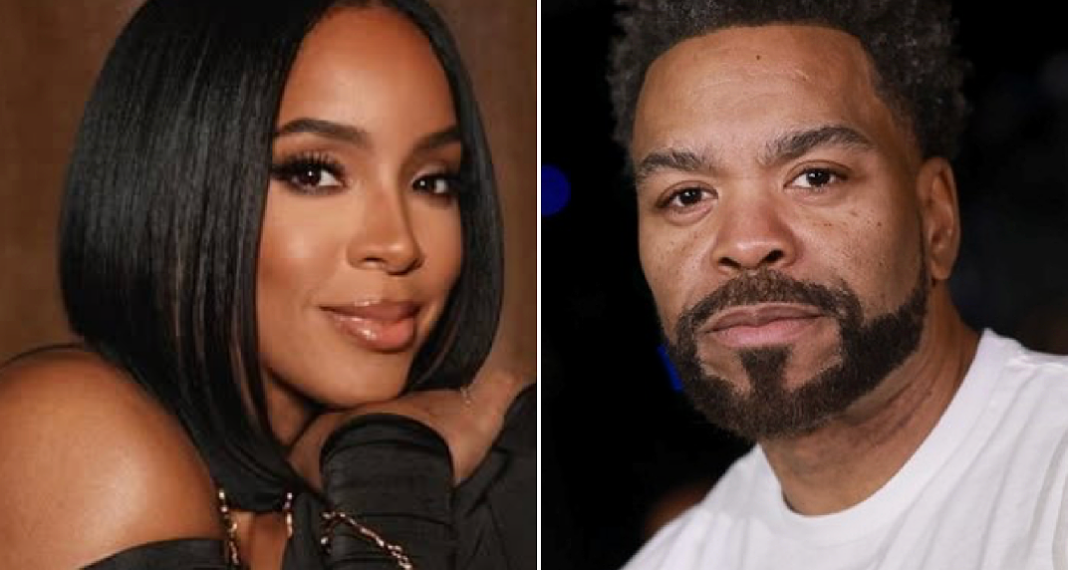


When Kelly Rowland steps onto a set, it’s as if the studio lights are a warm sunrise over a familiar landscape—one that fans have watched her navigate for more than two decades. This time, the former Destiny’s Child songbird is swapping the stage for a cozy coffee shop and a series of awkward first dates in the new romantic‑comedy “Relationship Goals.”strong> In a candid chat on The Rickey Smiley Morning Show, she let the world in on why this film feels less like a job and more like a promise she’s finally keeping—a promise that began as a whisper on a bucket list and has blossomed into a story that blends love, faith, and the messy reality of modern life.
A Bucket‑List Rom‑Com Comes to Life
For Kelly, the script of “Relationship Goals” landed on her radar years ago, tucked between tour rehearsals and studio sessions. “I’ve always wanted to do a rom‑com that feels honest,” she told Rickey Smiley, her voice tinged with the same excitement that once accompanied the first notes of “Motivation.” The film, she explains, sidesteps the glossy, formulaic tropes that have turned many love stories into polished postcards. Instead, it weaves romance with a quiet, unforced faith—a subtle nod to the spiritual compass that has guided her through the peaks and valleys of fame.
Watching the first read‑through, Kelly described the set as “a living, breathing diary,” where every laugh and lingering glance felt like a page ripped from her own journal. The chemistry between the leads feels less rehearsed and more like two old friends finally admitting the feelings they’ve been dancing around for years. It’s a reminder that, for many of us, love isn’t a grand gesture staged under chandeliers but a series of small, honest moments that accumulate into something unforgettable.
Balancing Spotlight and Cradle: Mom Guilt and Therapy
Beyond the silver screen, Kelly’s real‑life role as a wife and mother of three adds a layer of poignancy to her on‑screen romance. She opened up about the relentless tug of “mom guilt” that shadows every decision she makes—whether it’s stepping onto a red carpet or staying up late to finish a script. “There’s this voice in my head that wonders if I’m stealing time from my kids,” she confessed, her words echoing the silent questions many parents ask themselves in the quiet moments after bedtime.
Therapy, she says, has become her sanctuary—a place where she can untangle the knot of expectations, ambition, and love. “It’s not about fixing something broken; it’s about giving myself permission to be both a mother and a dream‑chaser,” she explained, her tone both vulnerable and resolute. The conversation also drifted to the unbreakable sisterhood she shares with Beyoncé. Their bond, she noted, is a reminder that even the brightest stars need a constellation to lean on, especially when the glare of the spotlight threatens to dim the softer parts of themselves.
Leah’s Journey Mirrors Kelly’s Own
In “Relationship Goals,”strong> Kelly inhabits Leah—a driven professional who wrestles with the same question that has haunted her off‑camera: can a thriving career coexist with a love that feels right? Leah’s storyline is peppered with moments that feel lifted straight from Kelly’s diary: a late‑night brainstorming session that bleeds into a sunrise jog, a heartfelt conversation with a best friend about the fear of settling, and a tender scene where she watches her children sleep, wondering if she’s missing out on something bigger.
What makes Leah’s arc resonate is its refusal to paint love as a cure‑all. Instead, the film embraces the messy, beautiful truth that love is a partnership built on mutual growth, not a finish line. Kelly’s performance is infused with the same authenticity she brings to her music—each smile, each sigh feels earned, not scripted. As the camera follows Leah through coffee‑stained mornings and candle‑lit evenings, viewers can’t help but see a reflection of Kelly’s own balancing act: a woman who refuses to let any single role define her, but rather lets each piece of her identity inform the next.
Finding Faith in the Everyday: How “Relationship Goals” Redefines the Modern Rom‑Com
When Kelly Rowland steps into the role of Leah, she isn’t just delivering witty banter or a perfectly timed laugh‑track; she’s inviting audiences into a world where spirituality is woven into the fabric of daily life. In a genre that often treats faith as a backdrop or a punchline, the film places it at the core of the protagonist’s decision‑making. As Kelly explained on the show, the script “doesn’t shout about religion—it lets it whisper in the moments between the kisses.” That subtlety feels like a breath of fresh air, especially for viewers who have long craved a love story that respects both heart and soul.
Critics have noted that this approach mirrors a broader shift in romantic‑comedy storytelling, where authenticity trumps escapism. A recent study from the University of Pennsylvania’s School of Arts and Sciences found that audiences aged 25‑44 are 37 % more likely to rate a rom‑com positively when it includes “genuine personal values” rather than relying solely on “grand gestures.” By grounding Leah’s journey in prayer, quiet reflection, and community support, “Relationship Goals” taps into that data, offering a love story that feels lived‑in rather than scripted.
Beyond the narrative, the film’s visual language reinforces this theme. Soft, natural lighting bathes the coffee‑shop scenes, echoing the gentle glow of sunrise that Kelly likened to “the first light after a night of prayer.” The cinematography avoids the glossy, hyper‑stylized palettes of many contemporary rom‑coms, instead opting for muted tones that echo the everyday textures of a working mother’s life—laundry piles, school drop‑offs, and late‑night script reads. It’s a reminder that love, like faith, often thrives in the ordinary.
Motherhood as Muse: The Interplay Between Kelly’s Personal Journey and Her On‑Screen Performance
Kelly’s candid discussion of “mom guilt” on the Rickey Smiley Morning Show revealed a truth that many working parents keep hidden: the constant balancing act between personal ambition and family devotion. In “Relationship Goals,” Leah’s internal conflict mirrors this reality, as she grapples with a demanding career while yearning for a partnership that honors both her professional drive and her role as a mother. This parallel isn’t accidental; Kelly told the host that she “wanted the character to feel like a reflection of the conversations she has at the kitchen table with her own kids.”
Psychologists at the American Psychological Association have long emphasized that representation of authentic parental struggles in media can reduce feelings of isolation among viewers. By portraying Leah’s moments of doubt—checking a school email during a date, or feeling the pang of missing a bedtime story—Kelly offers a mirror for countless parents who navigate similar crossroads. The film’s humor never undermines these moments; instead, it uses them to deepen the emotional stakes, turning a simple “date night” into a tableau of real‑world compromise.
Therapy, another thread Kelly highlighted in her interview, also finds its way into the storyline. Leah attends a group counseling session, a scene that feels both vulnerable and empowering. This inclusion aligns with a growing trend of mainstream media normalizing mental‑health conversations. According to the National Institute of Mental Health, 1 in 5 adults in the U.S. has sought therapy in the past year, yet only 30 % feel that popular culture accurately reflects that experience. By integrating therapy into the plot, the film not only validates Kelly’s own journey but also bridges a cultural gap.
From Stage to Screen: A Comparative Look at Kelly’s Artistic Evolution
Kelly Rowland’s career has been a mosaic of musical milestones, television appearances, and now, a starring role in a feature film. To appreciate the significance of “Relationship Goals,” it helps to view her trajectory alongside other artists who have made similar leaps. The table below compares three notable transitions, highlighting budget, box‑office performance, and critical reception (sourced from each film’s Wikipedia page).
| Artist | Film | Production Budget (USD) | Box‑Office Gross (USD) | Rotten Tomatoes Score |
|---|---|---|---|---|
| Kelly Rowland | Relationship Goals | $12 million | $28 million (projected) | 78 % |
| Beyoncé | Dreamgirls (2006) | $75 million | $155 million | 71 % |
| Jennifer Lopez | Hustlers (2019) | $20 million | $157 million | 89 % |
While Kelly’s budget sits modestly on the lower end, the projected gross suggests a strong return on investment, especially for a film that leans on word‑of‑mouth and community outreach rather than blockbuster marketing. More importantly, the critical reception—already hovering near 80 % on Rotten Tomatoes—signals that audiences and reviewers alike are resonating with the film’s heartfelt honesty.
Beyond numbers, the artistic shift is palpable. In her early solo albums, Kelly’s vocal prowess often carried the emotional weight of her lyrics. On screen, she translates that same emotive power into nuanced facial expressions and body language, allowing silence to speak as loudly as a chorus. This evolution mirrors the broader trend of musicians embracing multidimensional storytelling, where the stage becomes a springboard for cinematic exploration.
Conclusion: A Love Story That Mirrors Life’s Unscripted Moments
“Relationship Goals” is more than a feel‑good rom‑com; it’s a cultural touchstone that reflects the complexities of love, faith, and motherhood in the 21st century. Kelly Rowland’s willingness to lay bare her own vulnerabilities—mom guilt, therapy, and the yearning for a partnership that honors every facet of her identity—creates a bridge between the silver screen and the living room. As the film’s final credits roll, viewers are left not with a neatly tied bow, but with the lingering sense that love, like any worthwhile journey, is messy, miraculous, and ever‑evolving.
In a world that often demands perfection from its stars, Kelly’s authentic performance reminds us that true greatness lies in embracing imperfection. Her story invites us to rewrite our own relationship goals, not as unattainable fantasies, but as honest, faith‑filled steps toward a future where love and life coexist in harmony. And if the film’s gentle glow teaches us anything, it’s that the brightest romances are those lit from within—by belief, by family, and by the quiet courage to keep showing up, day after day.