
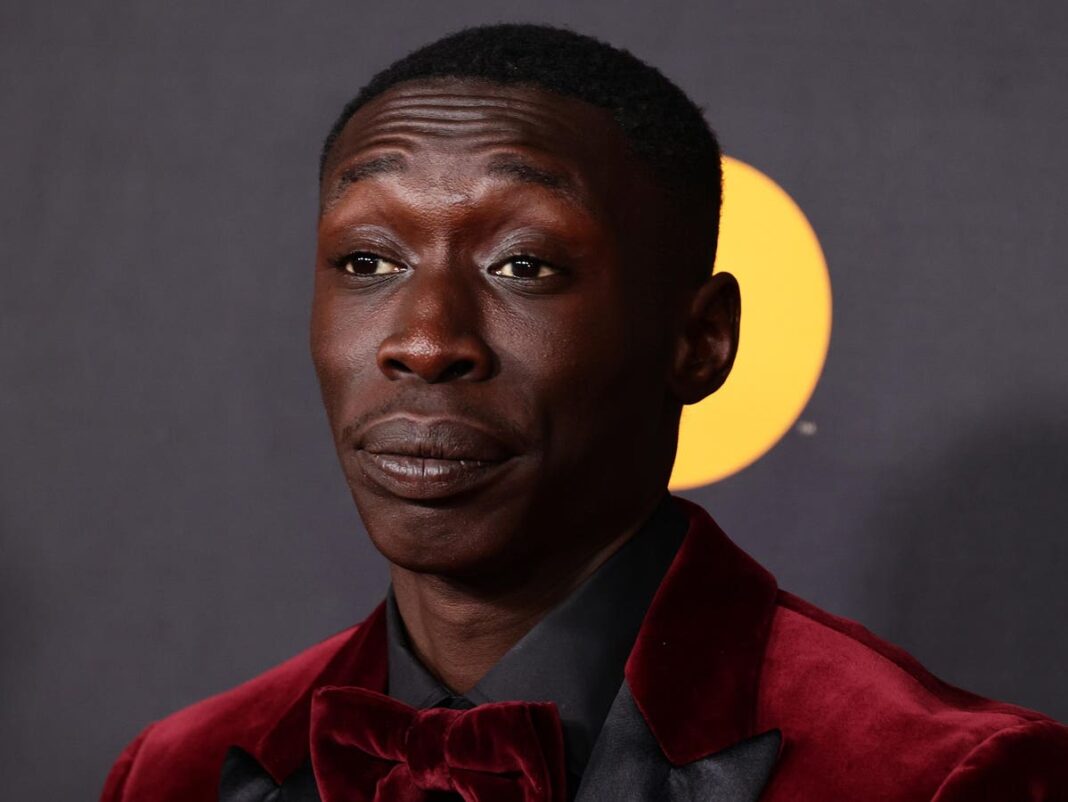


When Khaby Lame’s signature hand gesture swept him from TikTok anonymity to global stardom, nobody—not even the silent sensation himself—could’ve predicted he’d be at the center of a $6.6 billion whirlwind that’s got Wall Street veterans scratching their heads faster than you can say “non capisco.” But here we are, watching the 24-year-old Senegalese-Italian creator’s business partnership with obscure holding company Rich Sparkle Holdings transform into one of the most head-scratching market phenomena since GameStop’s meme stock madness. The numbers are so astronomical they feel like a typo: a 650% stock surge in mere days, a $975 million all-stock deal announced January 11, and a company that went from a modest $50 million valuation to $16.3 billion faster than Khaby can debunk a life hack.
The Meteoric Rise That Defies Gravity
That stock surge deserves a closer look, because it’s the kind of thing that makes finance bros spill their oat milk lattes. Rich Sparkle Holdings, which sounds more like a craft glitter company than a serious investment vehicle, saw its shares rocket from relative obscurity to $180.64 by January 15. For context, that’s like your neighborhood lemonade stand suddenly being valued higher than Spotify. The company had just disclosed 2024 revenue under $6 million—yes, million with an ‘m’—yet somehow commanded a market cap that would make established tech giants blush.
What makes this particularly fascinating is the Khaby factor. Here’s a guy who built his empire on wordlessly mocking overcomplicated life hacks, and now he’s allegedly becoming the “controlling shareholder” of a company that’s achieved unicorn status faster than you can scroll through his TikTok feed. The deal structure itself reads like a financial fever dream: Lame sold his 49% stake in Step Distinctive Limited to Rich Sparkle in exchange for what was supposed to be a straightforward $975 million stock swap. Simple, right? Except nobody seemed to anticipate what happens when you attach one of social media’s most bankable names to a publicly traded entity in an era where meme stocks and influencer economics collide.
The AI Digital Twin That Raised Eyebrows
But wait, there’s more—and this is where things get properly sci-fi. Buried in the announcement was the revelation that Rich Sparkle plans to create an “AI Digital Twin” of Khaby. That’s right, folks. We’re not just talking about licensing his likeness for merchandise or traditional endorsement deals. This is full-on Black Mirror territory: a digital version of the internet’s most famous silent communicator, presumably ready to generate content, interact with fans, and monetize his brand 24/7 without the actual Khaby needing to lift a finger—though given his whole schtick is about not lifting fingers, the irony isn’t lost on anyone.
The AI twin announcement feels like the moment when the deal crossed over from “ambitious business venture” to “what exactly are we valuing here?” Wall Street analysts, who’ve seen their fair share of questionable valuations, are reportedly exchanging nervous glances. How do you assign a price tag to a digital recreation of a creator whose appeal lies in his authentic, human reactions? It’s like trying to bottle lightning, except the lightning is worth billions and might not actually exist yet.
This isn’t just another celebrity endorsement deal—it’s a bold experiment in the intersection of influencer culture, artificial intelligence, and public markets. And while Khaby’s team has been characteristically tight-lipped (fitting for someone whose brand is built on silence), the market has been anything but quiet. The 650% surge suggests investors are betting on something revolutionary, though what that revolution actually looks like remains frustratingly vague. Is this the future of celebrity monetization, or are we watching the most expensive case of FOMO in financial history?
The AI Digital Twin Nobody Asked For
Here’s where things get deliciously weird: buried in this $975 million deal is a plan to create an “AI Digital Twin” of Khaby. Because apparently, what the world really needs is an artificial intelligence version of a guy who became famous for not speaking. The irony is so rich I could spread it on toast. Rich Sparkle Holdings announced they’re developing this digital doppelgänger to “revolutionize content creation and brand partnerships,” which sounds like something straight out of a Black Mirror episode that got rejected for being too on-the-nose.
The tech specs they’ve floated are genuinely baffling. We’re talking about an AI that would supposedly replicate Khaby’s signature expressions, timing, and comedic instincts—essentially trying to algorithmically reproduce something that worked precisely because it was authentically human. It’s like trying to teach a computer to be charismatic. The projected revenue from this digital twin? A cool $2.3 billion by 2026, according to investor presentations that I’m convinced were written after a three-day espresso bender. Never mind that Khaby’s actual appeal lies in his organic reactions and that specific tilt of his head that says “really, humanity?” without uttering a word.
What’s particularly rich about this whole situation is that Khaby built his brand on authenticity. His whole schtick is cutting through the artificial complexity of social media trends with deadpan simplicity. Now he’s supposed to be the face of an AI project that promises to automate charisma? The cognitive dissonance is giving me whiplash.
The Regulatory Red Flags Nobody’s Talking About
While everyone’s distracted by the comically large numbers, some serious regulatory questions are lurking in the shadows like uninvited party crashers. The SEC filing for this deal reads like a Choose Your Own Adventure book where every path leads to “we’re not really sure what’s happening here either.” Rich Sparkle Holdings has been suspiciously quiet about who actually owns the other 59% of the company, and their previous SEC disclosures contain more red flags than a Soviet parade.
Here’s what’s got compliance officers reaching for their stress balls: the company went from a $50 million valuation to $16.3 billion in six months with virtually no change in actual business operations. Their only disclosed revenue stream remains under $6 million annually, yet somehow they’re projecting partnerships that would make Microsoft jealous. The term “related party transactions” appears 47 times in their latest filing, which is finance-speak for “we’re definitely not telling you everything.”
More concerning is the lack of traditional due diligence you’d expect in a deal of this magnitude. Usually, a transaction involving hundreds of millions requires months of audits, market analysis, and regulatory approval. This deal went from announcement to near-completion faster than most people take to decide on a Netflix show. The SEC has been notably silent, but industry insiders are betting it’s only a matter of time before this house of cards gets the scrutiny it deserves.
The Creator Economy’s Reality Check
What we’re witnessing here isn’t just financial absurdity—it’s a fundamental misunderstanding of how creator value actually works. Khaby’s worth isn’t in his follower count or even his engagement rates; it’s in the cultural moment he captured. Trying to bottle that lightning into a corporate structure valued at billions is like trying to sell bottled charisma. It misses the entire point of what made him resonate with millions in the first place.
The creator economy has always had a problem with valuation. How do you assign monetary value to cultural relevance? Traditional metrics fail spectacularly when applied to someone whose primary asset is being relatably human. Rich Sparkle Holdings isn’t just overvaluing Khaby—they’re overvaluing the entire concept of influencer monetization. They’re treating cultural capital like it’s a renewable resource that can be scaled infinitely, when in reality, it’s more like capturing lightning in a bottle.
We’ve seen this movie before. From Vine stars trying to become media empires to TikTok creators launching failed apps, the pattern is clear: cultural moments can’t be sustainably monetized at scale. The moment you try to systematize authenticity, you destroy what made it authentic in the first place.
This whole spectacle feels like the death rattle of an investment bubble that’s been building since the first influencer got paid to promote detox tea. The Khaby Lame deal isn’t a bold new frontier in creator economics—it’s a cautionary tale about what happens when finance bros try to commoditize human connection. In the end, the joke might be on everyone who believed that silence could be worth $6.6 billion. Sometimes the most profound statement is simply walking away—and maybe that’s the life hack Khaby should teach us next.