
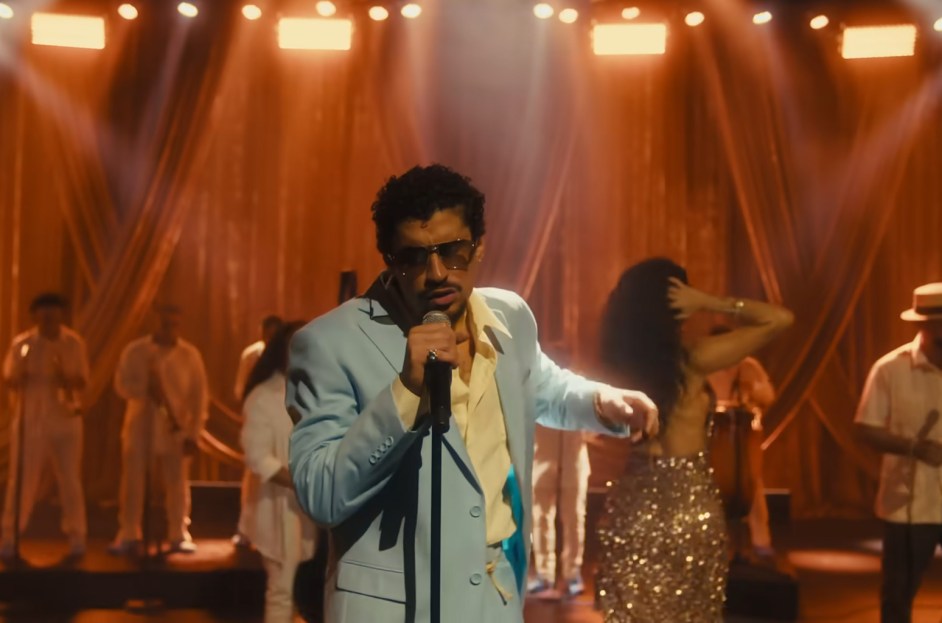


Bad Bunny has rewritten the rules of Latin music. The Puerto Rican rapper’s fusion of reggaeton and Latin trap dominates global charts, yet the real magnetism lies in his lyrics—raw diaries of barrio life, love, and resistance that turn club tracks into confessional booths. Each line delivers a snapshot of Puerto Rico’s contradictions: rooftop parties beside broken infrastructure, desire tangled with machismo, pride laced with colonial fatigue.
The Storyteller’s Art
Press play on “Dákiti” and the bassline feels like a midnight wave, but the words reveal two men negotiating fear of commitment while chasing instant pleasure. Bad Bunny lingers on details—saltwater on skin, the glow of phones in dark hotel rooms—turning a potential one-night stand into a study of modern intimacy. That cinematic zoom reappears across his catalog: in “Soy Peor” he replays an ex’s voicemail over sparse 808s, letting the static crackle like a wound that never closed.
His vocabulary is street-level Puerto Rico—perreo, gistro, bellakeo—yet he arranges slang into symmetrical couplets that hit like pop hooks. When he rhymes “bichote” with “note,” he’s not just flexing wealth; he’s mapping how drug-economy status symbols overlap with music-industry cash. The code-switching isn’t decoration—it preserves a linguistic world mainstream Spanish rarely acknowledges.
Cultural Commentary and Social Justice
Three minutes into “El Apagón,” the beat drops out for a field recording of neighbors shouting during an island-wide blackout. Over that real-time blackout audio, he indicts LUMA Energy’s privatization deal, name-checks the fiscal board, and still finds space to toast the resilience of San Juan’s nightlife. The song functions like a protest pamphlet stapled to a party flyer—anger you can dance to.
After Hurricane Maria he used WhatsApp voice notes from stranded relatives as interludes on the OYE playlist, forcing Spotify streamers in Madrid or Mexico City to hear generators humming and mothers crying. Lyrics became evidence: “They say 64 died / My barrio alone buried 24.” The government count versus his barrio math—no other commentary needed.
A Reflection of Identity
Bad Bunny inserts Caribbean rhythms inside trap drums the way salsa percussionists once layered barriles de bomba under jazz chords. In “La Nueva Mezcla” he raps over a dembow loop that suddenly pivots into a plena break, the same pivot Puerto Ricans make every December when reggaeton playlists give way to parrandas. The musical code-switch mirrors daily life: English at the call center, Spanish at the chinchorro, Spanglish with cousins in Orlando.
He flaunts acrylic nails and crop tops while referencing marquesina parties where dads still grill carne al carbón and critique “la nueva generación.” That tension—between reggaeton’s hyper-masculine roots and his gender-bending wardrobe—plays out in lyrics that defend both lipstick and pistol: “Con uñas de gel te bajito el dembow.” The line shrugs at critics who claim you can’t be queer-coded and barrio-proud, proving identity on the island has always been more mosaic than binary.
Exploring Cultural Identity through Lyrics
On “Vaina Loca” he pairs the vintage reggaeton cowbell pattern with Auto-Tuned melodies that recall late-90s Orlando Cruz. The song’s hook—”Esta vaina loca no me deja olvidarte”—uses a Dominican colloquialism, nodding to the island’s musical exchange: Puerto Rico exported reggaeton; the DR sent back slang and dembow. Bad Bunny absorbs both, the way earlier generations soaked up Cuban son and Jamaican dancehall.
His bilingual bars aren’t gratuitous; they mirror the receipt at a colmado: “Coca-Cola, pan sobao, $2.75, ‘have a nice day’.” English sneaks in via Walmart greetings and customer-service scripts, the residue of a territory that uses the dollar but can’t vote for the president. When he raps “Hoy me pagan pero el check viene en inglés,” the joke lands because every Puerto Rican has translated a pay-stub clause that denies federal benefits.
The Power of Social Commentary
“2020” opens with ambulance sirens and the line “Se murió mi abuela y no había camas.” He juxtaposes the pandemic collapse with billionaire gains: “Mientras a Bezos le sobra el dinero, en mi caserío no hay internet.” The rhyme sticks because it’s verifiable—rural barrios still run on 3G while Amazon adds Prime planes.
| Song | Social Issue | Description |
|---|---|---|
| “2020” | Health-care collapse | Contrasts private jets with lack of hospital beds |
| “Botella tras Botella” | Addiction cycles | Links unemployment to self-medication |
| “El Apagón” | Utility privatization | Names LUMA and the fiscal board |
He keeps receipts—literally. During the 2019 Telegram chat leak he sampled Governor Rosselló’s voice saying “Te abofeteé” and looped it over a skeletal trap beat, turning a scandalous quote into a summer chant. The track wasn’t distributed commercially; he dropped it on SoundCloud at 3 a.m., let it rack five million streams, then deleted it. No label, no promo—just a sonic mugshot that vanished like evidence under a new administration.
The Art of Vulnerability
On “Soy Peor” he admits cheating, then undercuts the mea culpa with “Pero ella también me falló,” capturing the messy ledger of modern breakups. The self-loathing feels lived-in because he pairs it with petty details: blocking her on Instagram but still watching her stories via a burner account. Listeners recognize the digital masochism; screenshots replace love letters, and Bad Bunny archives the humiliation in 808s.
Depression surfaces in mundane snapshots: “Tengo dinero pero no tengo quién me cocine.” The line lands harder than any luxury brand flex—Grammy-week parties end in hotel suites with cold pollo from KFC. He delivers the confession in a near-whisper, Auto-Tune cracking like voice memos recorded at 4 a.m., the hour when success feels indistinguishable from loneliness.
That willingness to appear small keeps stadium anthems human. When 60,000 fans in Mexico City shout “Yo también soy peor,” they forgive their own infidelities for three minutes, united by a Puerto Rican baritone confessing on a Houston beat. The alchemy turns private shame into collective catharsis—pop’s oldest trick, delivered here with Caribbean Spanish and a nail-polished middle finger to machismo.