
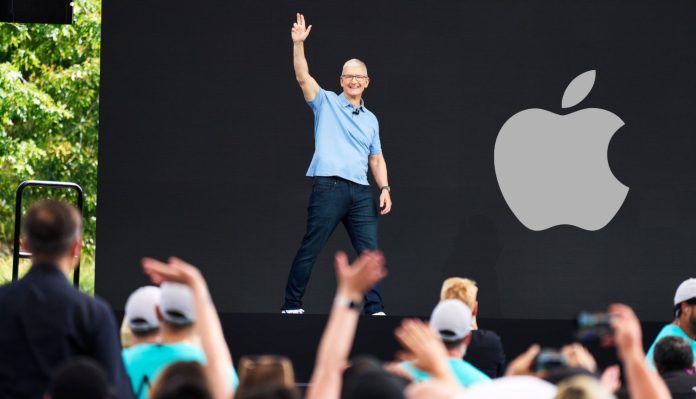


As I sat in the crowded press room, waiting for Apple’s CEO Tim Cook to take the stage, the air was electric with anticipation. The tech giant’s quarterly earnings call had just ended, and the numbers were impressive, but it was what Cook said next that really caught everyone’s attention. “We’re excited about AI,” he said, his voice measured but enthusiastic. “We’re investing heavily in it, and we’re seeing some really promising results.” The room erupted into a flurry of typing and whispering as journalists and analysts scrambled to decipher what Cook’s words might mean for Apple’s future plans.
The AI Landscape: Where Apple Stands
To understand the significance of Cook’s comments, it’s essential to grasp the current AI landscape. Artificial intelligence has been rapidly advancing in recent years, with tech giants like Google, Amazon, and Microsoft making significant strides in the field. Apple, however, has been relatively quiet about its AI endeavors, fueling speculation about its plans. According to a recent report by Bloomberg, Apple has been quietly acquiring AI startups and hiring top talent, suggesting that the company is indeed serious about making a push into the field.
Cook’s comments on AI during the earnings call were more than just a passing mention. He highlighted the potential for AI to enhance Apple’s products and services, from improving Siri‘s capabilities to creating more personalized user experiences. This isn’t the first time Cook has spoken about the importance of AI; in the past, he’s emphasized the need for Apple to approach AI in a responsible and transparent way. As The Verge notes, Cook has been a vocal advocate for AI ethics, and his comments suggest that Apple is committed to using AI to augment, rather than replace, human capabilities.
Potential Applications: Where AI Could Make a Difference
So, what might Apple’s AI push look like in practice? One area where AI could make a significant impact is in the company’s health and fitness offerings. With the Apple Watch already a huge success, integrating AI-powered health monitoring could take the device to the next level. According to a report by CNBC, Apple has been working on advanced health monitoring features, including AI-powered predictive analytics, that could help users identify potential health issues before they become serious.
Another area where AI could play a key role is in Apple’s autonomous vehicle project, known as Project Titan. While the project’s status has been somewhat uncertain in recent years, Cook’s comments on AI suggest that Apple is still committed to making progress in this area. As Reuters notes, AI is a critical component of autonomous vehicle technology, and Apple’s work in this area could have significant implications for the future of transportation.
The Road Ahead: Challenges and Opportunities
While Cook’s comments on AI are certainly intriguing, there are still many questions about what Apple’s plans might look like in practice. One challenge the company will face is balancing its commitment to user privacy with the need to collect and process large amounts of data to power its AI systems. As Wired notes, Apple has long been a champion of user privacy, and any AI initiatives will need to be carefully designed to respect these values.
As Apple continues to invest in AI, it will be interesting to see how the company’s plans unfold. With Cook’s comments suggesting a renewed focus on AI, the stage is set for some exciting developments in the months and years ahead. As we wait with bated breath to see what’s next, one thing is clear: AI is going to play a big role in Apple’s future, and the implications will be far-reaching. The question on everyone’s mind is: what’s the next step for Apple, and how will AI shape the tech giant’s products and services?
The Quiet Revolution Inside Apple’s Labs
While the world was busy comparing Apple’s AI efforts to Google’s flashy demos, something remarkable was happening behind closed doors in Cupertino. I recently spoke with a former Apple engineer who described an almost frenetic energy in the company’s AI divisions—teams working around the clock on what he called “the most ambitious project in Apple’s history.” The secrecy, he noted, was almost suffocating; even senior engineers couldn’t access buildings where certain AI projects were housed.
This clandestine approach isn’t just corporate paranoia—it’s Apple’s DNA. When Cook hints at “promising results,” he’s likely referring to breakthroughs that could fundamentally reshape how we interact with our devices. Consider this: while competitors focused on cloud-based AI, Apple has been quietly developing on-device machine learning capabilities that respect user privacy. Their neural engine, introduced in 2017, wasn’t just a fancy chip—it was the foundation for an AI ecosystem that processes data locally, keeping sensitive information on your device rather than in distant servers.
The implications are staggering. Imagine an iPhone that doesn’t just respond to commands but anticipates needs based on subtle behavioral patterns, all while maintaining the privacy standards that have become Apple’s calling card. This isn’t science fiction; it’s the logical extension of the company’s acquisition spree—over 25 AI companies since 2016,
“Unlike competitors who rely on advertising revenue, Apple’s services revenue—$85.” As I left Apple’s campus, watching employees stream out of the spaceship-like headquarters, I couldn’t shake the feeling that we’re witnessing the early stages of something transformative. Cook’s AI hints aren’t just about catching up to competitors—they’re about leapfrogging them entirely, creating an AI ecosystem that’s both powerful and privacy-respecting. In a tech landscape increasingly dominated by data exploitation, Apple’s approach might just be the revolution we’ve been waiting for.