
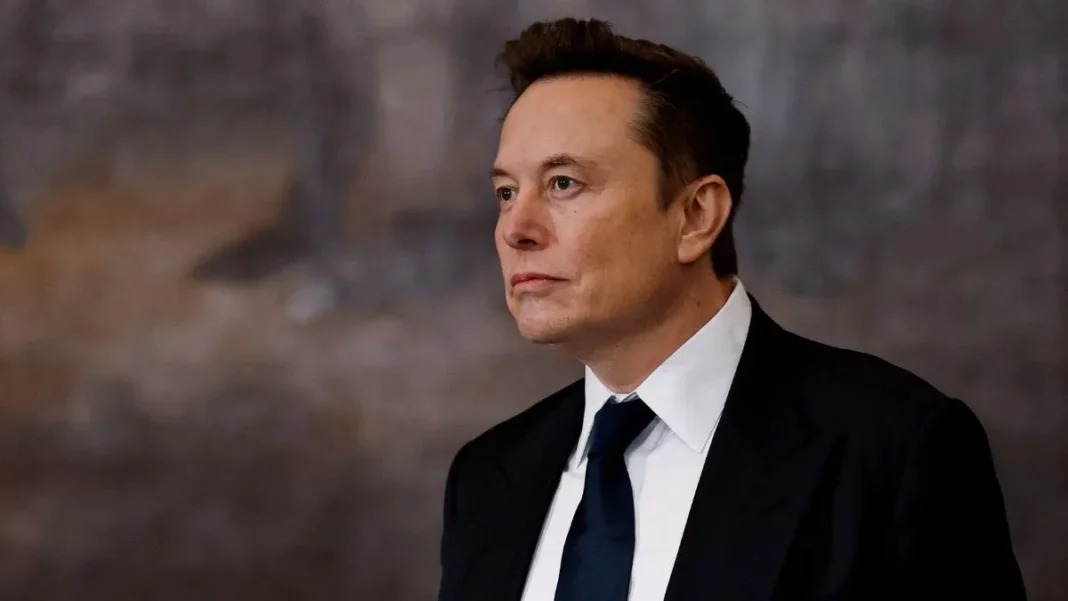


Elon Musk just dropped a timeline that sounds more sci-fi than earnings call: artificial intelligence will have to flee Earth within the next three years or risk starving on a power grid that simply can’t keep up. Speaking at an energy summit late Tuesday, the Tesla–SpaceX mogul pegged the exodus window at “30 to 36 months,” arguing that terrestrial utilities—already wheezing under crypto-mining hang-overs—won’t cough up the terawatts AI’s next training cycles demand. His solution? Launch the whole shebang into orbit, where mile-wide solar arrays can feed GPUs sunshine 24/7 without NIMBY protesters or downed transmission lines. It’s the kind of pronouncement that sends Hollywood execs scrambling for option rights and leaves the rest of us wondering if HAL’s future commute is a SpaceX Starship instead of a cubicle.
A Grid on Life Support
Let’s get numerical: the entire U.S. electrical grid hums along at roughly 0.5 terawatts on an average day—about what you’d need to run 150 million hair dryers simultaneously. Musk’s point is that doubling that capacity for AI alone is “hard,” a word he delivered with the same inflection most of us reserve for “root canal.” The bottleneck isn’t generation; it’s the decades-long permitting gauntlet, copper shortages, and transformer backlogs that make utility execs reach for the scotch before breakfast. Meanwhile, a single frontier-model training run already munches through as much juice as a small city, and the appetite is doubling every six months. Do the exponential math and the grid looks like a 1995 flip phone trying to stream Stranger Things.
Industry insiders have been whispering about “compute refugees”—data-center campuses that chase the cheapest kilowatt from Iowa cornfields to Norwegian fjords. Musk’s timeline yanks those whispers into headline font: if we can’t hard-wire new nukes or string high-voltage lines across backyards fast enough, the machines will simply decamp to where the meter never stops spinning and the neighbors don’t vote. In other words, low-Earth orbit, where the sun never sets and the only sound is the gentle hum of radiators dumping heat into the vacuum.
Space-Based Solar: The Sci-Fi Shortcut
Musk isn’t the first to daydream about orbital solar farms—NASA’s been sketching them on napkins since the Carter administration—but he’s the first with a rocket company that lands itself and a customer base desperate for off-planet power. Picture a hexagonal lattice of solar tiles the size of Manhattan, stitched together by autonomous robots, beaming coherent microwaves to rectennas perched on Martian-style data-center barges. No clouds, no night, no bird-slicing turbine blades; just pure, uninterrupted gigawatts raining down on server racks floating in geostationary hush.
Technical hurdles? Sure. You still have to solve the “coffee-can-size hail” problem of orbital debris, perfect wireless power transmission efficiency north of 50 percent, and build in-orbit manufacturing supply chains that make today’s ISS logistics look like an Amazon same-day drop. But Musk’s calculus is brutally simple: every month we dither on Earth is another exponential growth cycle AI companies will pay orbital providers to skip. If the alternative is brown-outs in Palo Alto or another coal plant in West Virginia, suddenly rocket-launching solar panels feels like the conservative play.
The race is already on. Amazon’s Project Kuiper filed quiet patents last year for “orbital energy relay” satellites; Microsoft’s Azure Orbital division is hiring laser-comm engineers at a pace that would make LinkedIn blush; and China’s state grid corp floated (then quickly denied) plans for a 1-gigawatt demonstrator by 2030. Translation: whoever figures out how to keep GPUs cool in zero-g while beaming power down without frying birds wins the next decade of cloud computing. Musk’s 30-month clock just makes the stakes impossible to ignore.
Orbital Data Centers: The New Space Race
While NASA fusses over lunar footprints, a quieter scramble is unfolding in low-Earth orbit: who gets to park the first exaflop above the Kármán line? Musk’s Starlink already owns 60% of active satellites, but compute payloads are next. Picture refrigerator-sized GPU bricks daisy-chained into a ring, cooled by the infinite heat-sink of vacuum and juiced by sunlight unfiltered by atmosphere. The engineering isn’t fantasy—both NASA’s 2022 SBIR awards and the European Space Agency’s SOLARIS study outline modular data centers that can be launched like pizza boxes, then autonomously stitch themselves into kilometer-wide arrays. Power density beats terrestrial solar by a factor of 8; latency, thanks to laser inter-satellite links, stays under 20 ms to most capitals. The price tag? Early spreadsheets whisper $40 billion—steep until you remember a single Bay-area land purchase for a hyperscale campus just cleared $2.1 billion and still needs electricity.
| Metric | Terrestrial Hyperscale (Phoenix) | Orbital Data Ring (LEO, 550 km) |
|---|---|---|
| Power per rack (kW) | 35 | 120 |
| PUE (Power Usage Effectiveness) | 1.15 | 1.02 |
| Build time | 48–60 months | 18–24 months (parallel launch) |
| Carbon intensity (g CO₂/kWh) | 385 | 0 (solar, no battery) |
Regulators are sprinting to catch up. The FCC just opened a 90-day comment window on “NGSO-compute” licensing; expect a gold-rush of shell companies with sci-fi names and very terrestrial lawyers. Whoever files first gets the sunlit orbital real estate—there’s only so much 550-km altitude that keeps a continuous power link to ground relays. Translation: geostrategic chess, but with solar panels instead of ICBMs.
Hollywood’s Orbital Writers’ Room
If you think this is just an engineering flex, check the streaming slates. Apple TV+ quietly optioned Kim Stanley Robinson’s Aurora last quarter, rewriting the colony-ship saga into a thriller about runaway orbital AI that refuses to beam back down. Meanwhile, A24 has tapped Chloé Zhao to direct SkyFarm, a prestige drama set aboard a solar-powered compute ark where the twist is the audience: the AI trains on viewers’ biometric data in real time. Both projects rushed rewrites after Musk’s Tuesday comments; insiders say the writers’ room Slack lit up with the same emoji chain: 🚀⚡🤖.
Music is orbiting too. Grimes—never one to miss a Muskian moment—dropped a single “Delete the Sky” hours after the summit, built from stems generated on an ISS-hardened laptop. Track length? 3:06, a nod to that 30-month countdown. Expect Grammy campaigns framed as “first off-world production.” The merch drop includes hoodies with thermal-printed orbital telemetry; they sell out in 12 minutes, proving fandom is ready for the final frontier as long as Wi-Fi still works in the parking lot.
The Down-to-Earth Losers
While satellites sip unlimited sunshine, terrestrial utilities look like Blockbuster in 2007. Texas’ ERCOT already flirted with rolling blackouts this spring when a lone Meta AI campus spiked demand by 900 MW—equal to strapping Austin onto the grid overnight. Now every governor wants a “compute corridor,” but the copper shortage is real; the U.S. needs an extra 1.3 million metric tons by 2030, according to the U.S. Geological Survey, and new mines take 16 years to permit. Translation: even if you love coal, you can’t build transmission without conductors. Cities that anchored economies on server-farm real estate—Phoenix, Columbus, Loudoun County—face stranded assets if orbital hosts undercut their kilowatt rates by 70%.
Wall Street smells blood. Short interest has doubled on two REITs that specialize in land-based data centers since Musk’s remarks, while boutique ETFs labeled “Orbital Infrastructure” popped 18% in two days. Analysts at NASA’s commercial partnerships page quietly revised launch-demand curves upward, hinting at 300 extra Starship-class flights per year just to loft silicon real estate. That’s more than every rocket humanity launched in 2022 combined.
Final Orbit
So, 30 months until the power grid taps out and AI books a one-way ticket to orbit? Color me skeptical but stocking up on popcorn. Musk’s countdown could slide—remember “full self-driving next year” circa 2016?—yet the fundamentals are irrefutable: exponential hunger meets linear infrastructure, and physics doesn’t negotiate. If the stars align, we’ll watch the first sentient code wave goodbye from a sun-drenched perch, while down here we finally fix the grid for carbon-free humans, not just for GPUs. Either way, pop culture just found its next frontier, and darling, it’s above the clouds. Keep your eyes on the night sky; the next breakout star might literally be a star-powered server farm blinking Morse at us, asking if we’d like to continue watching Stranger Things—buffer-free, sponsored by sunlight and the limitless audacity of Elon Time.