
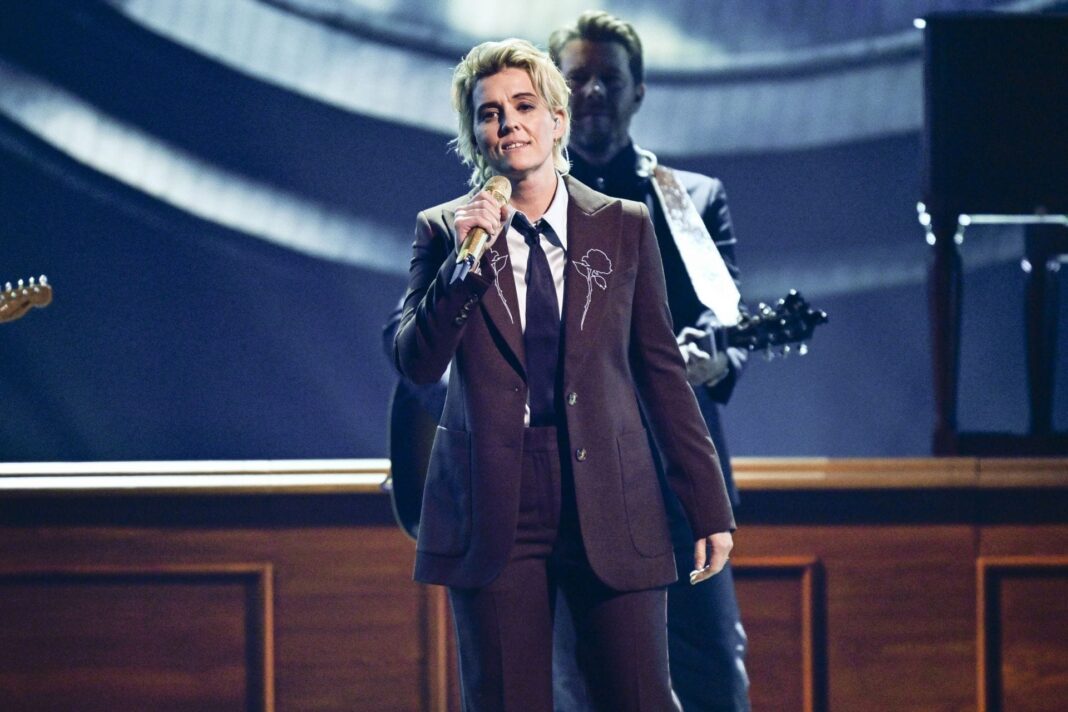


Brandi Carlile’s reimagining of “America the Beautiful” arrives at a pivotal moment in American history, when the nation’s deep-seated divisions are testing the very fabric of its identity. For many, the phrase “America the Beautiful” evokes feelings of patriotism and nostalgia, but also unease and division. Carlile’s rendition offers a fresh perspective, one that resonates with a generation seeking common ground and a more nuanced understanding of the American experience.
Reclaiming a Classic
The song, originally penned by Katherine Lee Bates and composed by Samuel A. Ward, has been a staple of American culture since the early 20th century. However, its message of unity and pride has been tested by the tumultuous events of the past decade. Carlile’s reimagining is not a radical departure from the original, but rather a thoughtful reinterpretation that seeks to capture the essence of the song in a contemporary context. By stripping away some of the more traditional arrangements, Carlile’s version brings a sense of intimacy and vulnerability to the lyrics, making it feel more personal and relatable.
Carlile’s decision to reimagine “America the Beautiful” was sparked by an approach from the Library of Congress to record a version of the song. This invitation prompted a period of introspection and creativity, as Carlile studied the original lyrics and melody, seeking to understand the underlying emotions and themes that made the song endure. She then began to experiment with different arrangements, ultimately settling on a stripped-down, acoustic rendition that showcases her distinctive vocal style.
A Message of Unity
At its core, Carlile’s version of “America the Beautiful” is a message of unity and hope. The song’s lyrics, which speak to the beauty and majesty of the American landscape, are recontextualized to address the complexities of the modern era. Carlile’s delivery is characterized by a sense of empathy and compassion, as she navigates the complexities of the lyrics with a deep understanding of their emotional resonance. The result is a performance that feels both personal and universal, speaking to the experiences of a generation that is seeking to find common ground in a divided world.
The impact of Carlile’s version has been significant, with many praising her thoughtful and nuanced interpretation. The song has been featured in various contexts, from patriotic events to social media campaigns, where it has been used to promote messages of unity and solidarity. By redefining “America the Beautiful” for a new era, Carlile has created a work that not only resonates with the past but also speaks to the present and future.
The Cultural Significance
Brandi Carlile’s reimagining of “America the Beautiful” is part of a larger cultural conversation about the role of music in shaping our understanding of identity and community. As a singer-songwriter, Carlile has long been recognized for her ability to craft songs that are both personal and universal, speaking to the human experiences that unite us. With her version of “America the Beautiful,” Carlile joins a long line of artists who have reinterpreted classic songs to reflect the complexities of their time.
As the story of Brandi Carlile’s “America the Beautiful” continues to unfold, it becomes clear that this is more than just a song – it’s a reflection of our collective hopes and fears. With its themes of unity and identity, Carlile’s version is poised to resonate with audiences for years to come, offering a powerful reminder of the enduring power of music to shape our understanding of ourselves and our place in the world.
Bridging the Divide
One of the most striking aspects of Carlile’s rendition is its ability to transcend the partisan divides that have come to characterize American politics. By focusing on the song’s core message of unity and shared humanity, Carlile’s version creates a sense of common ground that is sorely lacking in today’s polarized climate. This is not to say that the song glosses over the complexities and challenges facing the nation; rather, it offers a nuanced and empathetic exploration of the American experience.
| Original Lyrics | Carlile’s Interpretation |
|---|---|
| O beautiful for pilgrim feet | Emphasizes the word “pilgrim,” highlighting the idea of a shared journey |
| Whose stern, impassioned stress | Delivers the line with a sense of conviction, underscoring the importance of perseverance |
Carlile’s reimagining also draws on her own experiences as a musician and social activist. As someone who has long been involved in various social justice causes, Carlile brings a deep understanding of the complexities and challenges facing American society. Her version of “America the Beautiful” is not just a musical interpretation, but a call to action – a reminder that the song’s message of unity and pride is not just a nostalgic relic, but a living, breathing ideal that can be realized through collective effort.
A Cultural Touchstone
Carlile’s version of “America the Beautiful” has resonated with audiences across the country, sparking a renewed interest in the song and its message. The rendition has been praised by critics and fans alike, with many noting its timely and thought-provoking reimagining of a classic American hymn. As a cultural touchstone, “America the Beautiful” has long played a significant role in American life, from its use in patriotic events to its appearance in films and literature.
Ultimately, Carlile’s “America the Beautiful” is a testament to the enduring power of music to shape our understanding of ourselves and our place in the world. As we continue to grapple with the complexities of the modern era, Carlile’s reimagining serves as a powerful reminder of the importance of empathy, compassion, and unity – values that are at the very heart of the American experience.