
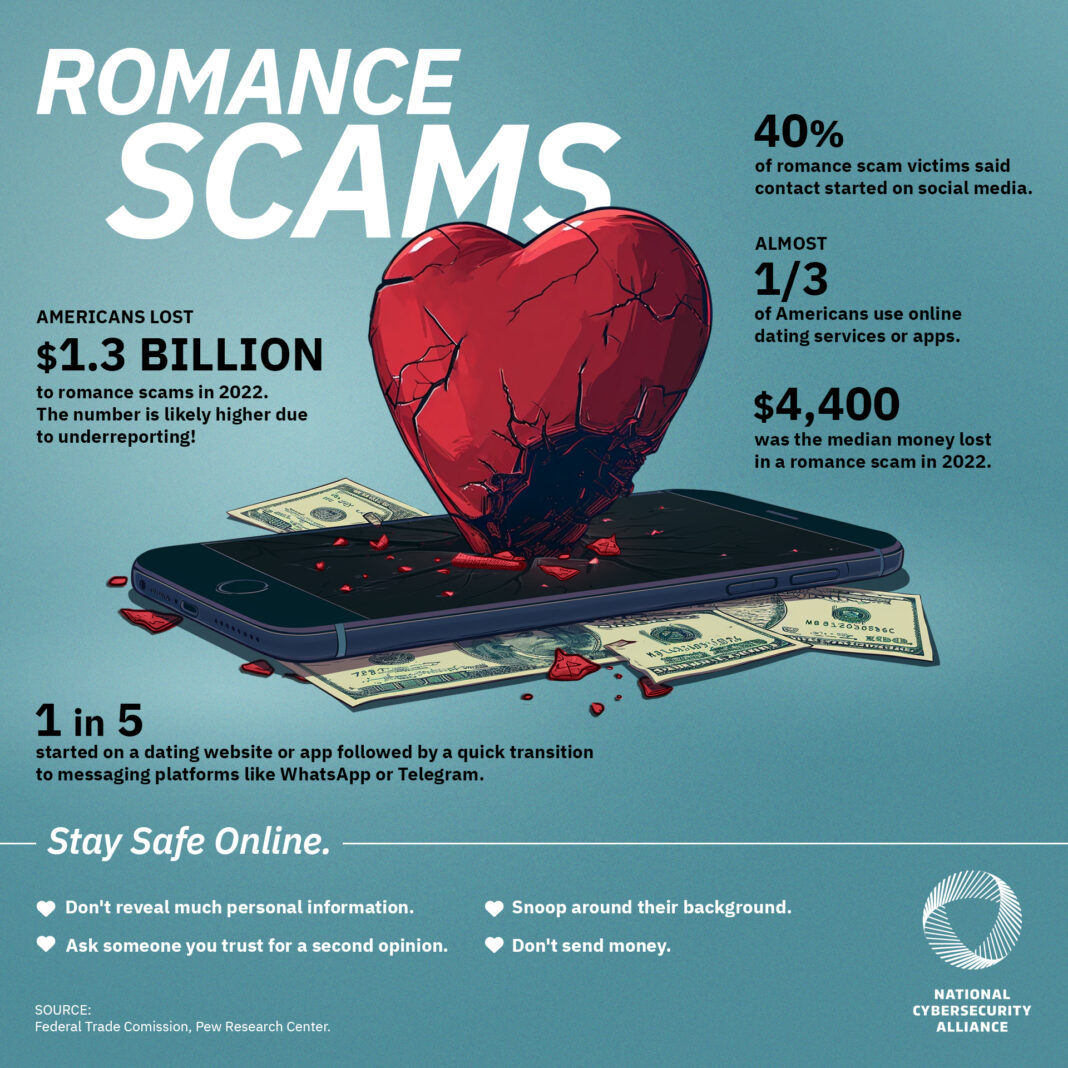


As the world becomes increasingly digitized, the way we form connections and relationships is changing. The rise of online dating has opened up new avenues for people to meet and interact, but it’s also created an environment where romance scams can thrive. Recent reports indicate a concerning spike in these types of scams, leaving many individuals vulnerable to financial and emotional exploitation. In this article, we’ll delve into the world of online romance and explore the factors contributing to the surge in romance scams.
The Rise of Online Romance Scams
Romance scams typically involve a scammer creating a fake online persona, often using stolen photos and fabricated backstories, to gain the trust of unsuspecting victims. They then manipulate their targets into sending money or revealing sensitive personal information. According to the Federal Trade Commission (FTC), romance scams have seen a significant increase in recent years, with losses totaling over $304 million in 2020 alone. The COVID-19 pandemic has likely played a role in this surge, as people turn to online platforms to meet new people while in lockdown.
The scammers often use social engineering tactics to build a convincing narrative, making it difficult for victims to distinguish between genuine and fabricated interactions. They may use emotional manipulation, claiming to be in a difficult situation or professing love, to extract money or sensitive information from their victims. The emotional connection established online can be so strong that victims may be willing to overlook red flags, making it harder for them to recognize the scam.
Data from the FTC also reveals that the majority of romance scam victims are women, with the most common age range being 40-69 years old. The most common methods used to contact victims include dating apps, social media, and online messaging platforms. As online dating continues to grow in popularity, it’s essential to understand the risks associated with it and take steps to protect oneself from potential scams.
How Scammers Operate
Romance scammers often use a variety of tactics to build trust with their victims. They may start by creating a convincing online profile, complete with stolen photos and a fabricated backstory. They then initiate contact, often using generic pickup lines or messages to break the ice. As the conversation progresses, they may use psychological manipulation to create a sense of intimacy and connection, making it easier to extract sensitive information or money from their victims.
One common tactic used by scammers is to claim they are in a difficult financial situation or need money to visit their victim. They may also use the promise of a future meeting or relationship to keep their victims invested. In some cases, scammers may even use catfishing techniques, where they assume the identity of someone else, often a celebrity or wealthy individual, to gain the trust of their victims.
It’s essential for online daters to be aware of these tactics and take steps to protect themselves. This includes being cautious when interacting with strangers online, verifying the identity of potential matches, and being wary of requests for money or sensitive information.
Protecting Yourself from Romance Scams
While the rise of romance scams is a concerning trend, there are steps individuals can take to protect themselves. One of the most effective ways to avoid falling victim to a romance scam is to be cautious when interacting with strangers online. This includes being wary of generic messages or profiles that seem too good (or bad) to be true.
It’s also essential to verify the identity of potential matches, using tools such as reverse image searches to check for stolen photos. Additionally, individuals should be cautious when sharing personal or financial information online, and never send money to someone they haven’t met in person.
As we continue to navigate the complex world of online dating, it’s crucial to remain vigilant and take steps to protect ourselves from potential scams. In the second part of this article, we’ll explore the emotional impact of romance scams on victims and discuss ways to support those affected by these types of scams. For now, we’ll continue to examine the factors contributing to the rise of romance scams and what can be done to prevent them.
The Anatomy of a Modern Romance Scam
Today’s romance scammers operate like sophisticated businesses, complete with playbooks, scripts, and even customer service departments. They don’t just randomly message people—they study their targets first, often spending weeks or months gathering intelligence from social media profiles, professional networks, and online footprints. One victim, a 52-year-old teacher from Ohio, told me how her scammer referenced her recent trip to Greece and her love for rescue dogs—details he’d harvested from her Facebook page before ever sending that first “hello.”
The financial requests have evolved beyond the classic “emergency medical bill” scenario. Modern scammers now weave elaborate narratives involving frozen bank accounts, customs fees for fictional packages, or cryptocurrency investments that need “just one more deposit” to unlock millions. They’ve even begun using deepfake technology for video calls, creating brief, glitchy conversations that seem just real enough to maintain the illusion when victims grow suspicious.
| Scam Tactic | Traditional Method | Modern Evolution | Red Flag Timeline |
|---|---|---|---|
| Initial Contact | Random friend requests | Targeted based on personal data | Immediate if they seem to know too much |
| Photo Verification | Stolen stock photos | AI-generated images of specific requested poses | 3-4 weeks when they can’t meet in person |
| Money Request | Wire transfer | Cryptocurrency, gift cards, or “business loans” | Usually 6-8 weeks into relationship |
| Crisis Story | Sick relative | Complex international business deals | When you question inconsistencies |
The Psychological Toll Beyond Financial Loss
What makes these scams particularly devastating isn’t just the empty bank accounts—it’s the shattering of emotional reality. Victims describe it as worse than a bad breakup because they must grieve not only the relationship but also their ability to trust their own judgment. Many report symptoms similar to PTSD: hypervigilance about online interactions, shame that manifests as social withdrawal, and a deep fear of being perceived as gullible.
The isolation is compounded by how society responds. When victims reach out for support, they’re often met with “How could you be so stupid?” rather than the compassion given to other crime victims. This secondary trauma prevents many from reporting the crime, creating a hidden epidemic of psychological distress. Support groups have emerged on platforms like SCARS Institute, where survivors share stories and healing strategies without judgment.
Perhaps most insidiously, some victims become repeat targets. Scammers share “sucker lists” on the dark web, marking people who’ve paid before as prime candidates for future scams. One widow I interviewed, already depleted of her retirement savings, was re-contacted a year later by a different persona claiming to be an FBI agent who could recover her money—for a fee.
Why Traditional Warnings Fail
We’ve all seen the warnings: “Never send money to someone you haven’t met.” Yet these scams persist because they exploit fundamental human needs, not logical decision-making. The scammers create what psychologists call “manufactured urgency”—a fabricated crisis that requires immediate action, bypassing our rational thinking processes. They’re masters of emotional manipulation, using techniques similar to those employed in cult indoctrination.
The timing is rarely random. They strike when victims are most vulnerable: after a divorce, during illness, or following the loss of a loved one. One scammer told investigators they specifically target people who post about recent hardships on social media, viewing grief and loneliness as vulnerabilities to exploit rather than human pain to respect.
Even more troubling, the rise of remote work and digital nomadism has made geographic distance seem less suspicious. When everyone’s dating pool has expanded globally, a suitor who travels constantly for work doesn’t raise the red flags it once did. The pandemic normalized never meeting in person, creating perfect cover for scammers to maintain relationships entirely online for months or years.
Moving Forward: A New Approach to Protection
The solution isn’t more victim-blaming or simplistic warnings—it’s systemic change in how platforms verify identities and how we as a society discuss online relationships. Dating apps must move beyond optional photo verification to comprehensive identity checks, similar to those required for financial services. Banks need better protocols for detecting potential fraud, flagging unusual patterns like elderly customers suddenly withdrawing large sums or wiring money internationally.
But most importantly, we need to normalize conversations about online relationships the same way we discuss offline ones. Share your dating experiences with friends and family, including the doubts and red flags. Create a culture where asking for a second opinion isn’t seen as weakness but wisdom. The most powerful protection against romance scams isn’t suspicion—it’s connection to real people who care about your wellbeing.
As we navigate an increasingly digital world of relationships, remember that seeking love online isn’t foolish—it’s the new normal. But approaching it with open eyes, guarded wallets, and trusted confidants can help ensure that your next great love story doesn’t become someone else’s crime story. The scammers are evolving, but together, we can evolve faster.