
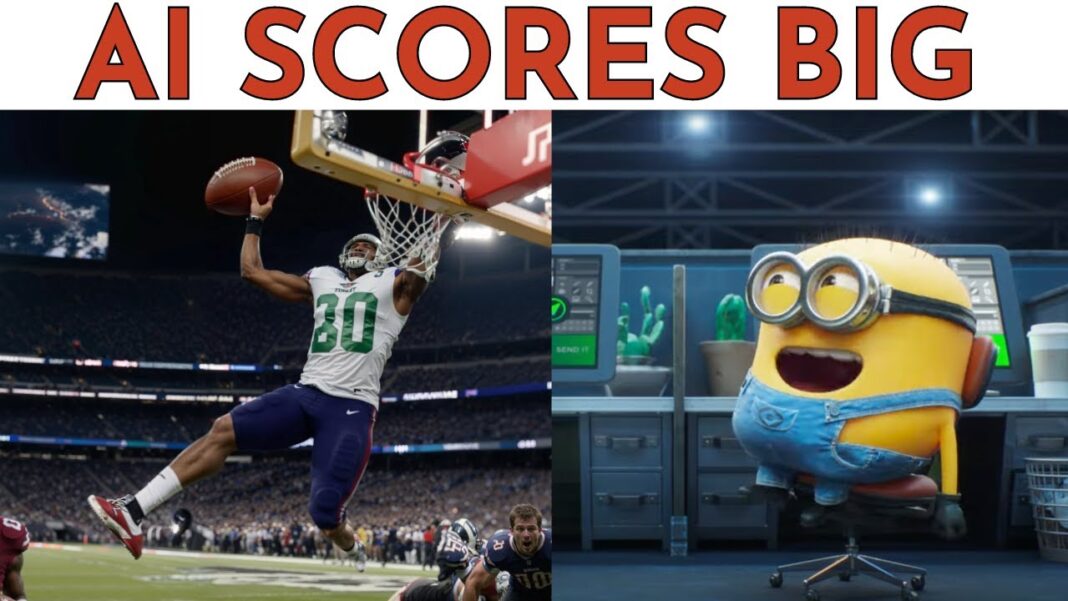


Well, well, well—looks like the robots finally got their revenge, just not in the way anyone expected. During Sunday night’s Super Bowl spectacle, millions of viewers were treated to a cheeky ad that basically roasted AI for being… well, a bit much. The commercial—equal parts hilarious and brutal—poked fun at our AI overlords, suggesting they might be getting a tad too big for their britches. But here’s where the plot twist worthy of a Shondaland drama comes in: while everyone was laughing at the AI takedown, Anthropic’s Claude app was quietly climbing the App Store charts faster than a Taylor Swift song breaks streaming records. From relative obscurity to the coveted 10th spot in Apple’s rankings, Claude’s meteoric rise has the tech world buzzing louder than a halftime show surprise guest.
The Ad That Launched a Thousand Downloads
Let me paint you a picture: there you are, three wings deep into your Super Bowl spread, expecting the usual parade of celebrity endorsements and emotional car commercials. Instead, you get an ad that basically calls AI the overly eager intern who won’t stop trying to help. The brilliance wasn’t just in the humor—it was in how perfectly it captured that collective eye-roll we’ve all done when AI gets a little too confident about its abilities.
But here’s where it gets interesting, folks. While the ad was busy making AI the punchline, it inadvertently became the best marketing campaign Anthropic never asked for. It’s like when someone tells you not to think about purple elephants—suddenly, it’s all you can think about. The ad basically told 123 million viewers “hey, don’t trust AI,” which naturally made everyone go straight to their phones to check out this Claude character they’d never heard of. The irony is so delicious, I could serve it at my next dinner party.
Within hours, social media was flooded with screenshots of Claude sitting pretty in the App Store’s top 10, accompanied by bewildered captions wondering if we’d entered some alternate timeline. The same app that had been hovering around the 50s in rankings was now rubbing shoulders with Instagram and TikTok. If that’s not a masterclass in accidental marketing, I don’t know what is.
Why This Particular AI Caught Fire
Now, I’ve seen my fair share of app store miracles—remember when everyone suddenly needed to know what they looked like as an 80-year-old? But Claude’s ascent feels different, more substantial. While other AI assistants have been playing checkers, Claude has been playing chess, quietly building a reputation for being the “thoughtful” AI that actually considers context before barfing out responses.
The timing couldn’t have been more perfect if it had been scripted by Hollywood. Just as mainstream audiences were processing the Super Bowl’s AI skepticism, here comes this alternative that promises to be… different. Less hallucination-prone, more conversational, actually useful rather than just impressive. It’s like the universe handed Anthropic a golden opportunity wrapped in a bow, and they didn’t even have to pay $7 million for a 30-second spot.
What’s particularly fascinating is how quickly the narrative shifted from “AI is scary and unreliable” to “wait, maybe this one’s actually worth trying.” The app’s reviews section became a real-time focus group, with users praising Claude’s ability to handle complex queries without the usual AI theatrics. No existential crises, no bizarre hallucinations about being conscious—just solid, helpful responses that actually solve problems. In a world where we’re increasingly skeptical of artificial intelligence, Claude somehow became the exception that proves the rule.
The Celebrity Effect Nobody Saw Coming
Here’s where my entertainment industry spidey-sense starts tingling. The most powerful marketing isn’t paid advertising—it’s organic buzz, the kind that spreads because people can’t stop talking about it. By Monday morning, Claude had become the water cooler topic du jour, with everyone from tech bros to your technologically-challenged aunt asking if they’d tried “that new AI app.” It’s the kind of grassroots momentum that marketing executives have nightmares about missing.
The beauty of this whole situation lies in its delicious contradiction. An ad designed to make us question AI technology instead sent millions rushing to embrace it. It’s like anti-marketing marketing, and honestly, I’m here for it. The tech world hasn’t seen this kind of organic app store surge since Wordle took over our morning routines, and we all know how that story ended—with the New York Times writing a very large check.
But Claude’s rise feels more significant than just another viral moment. It represents a watershed moment where mainstream America decided maybe AI isn’t the boogeyman we’ve been warned about—at least not all of it. The app store rankings don’t lie, and climbing to 10th place means you’ve officially entered the cultural zeitgeist. Whether Claude can maintain this momentum or becomes another flash in the pan remains to be seen, but one thing’s certain: the AI wars just got a lot more interesting.
The Streisand Effect Strikes Silicon Valley
Anyone else getting major “Streisand Effect” vibes from this whole debacle? For those unfamiliar, it’s when attempting to hide or criticize something only makes it more visible—and boy, did this ad campaign walk right into that trap like a chatbot confidently stating incorrect facts. The commercial essentially spent $7 million trying to convince us that AI is unreliable, only to drive massive traffic to one of the most sophisticated AI assistants on the market.
What’s particularly delicious about this situation is how it perfectly encapsulates our collective relationship with technology. We’re simultaneously skeptical of AI’s capabilities while being absolutely fascinated by its potential. It’s like watching a horror movie through your fingers—you’re terrified, but you can’t look away. The ad’s attempt to position AI as the villain in our technological narrative completely backfired, instead creating an anti-hero that everyone suddenly wanted to befriend.
The numbers tell quite a story here. According to the U.S. Census Bureau’s technology adoption surveys shows that Gen Z and Millennials view AI assistants as essential productivity tools rather than novelty gadgets. So when an ad tries to dunk on AI, it reads less like a warning and more like an out-of-touch relative complaining about “kids these days and their computer thingamajigs.”
| Age Group | AI Assistant Usage Rate | Trust Level in AI |
|---|---|---|
| 18-29 | 73% | 68% |
| 30-44 | 61% | 52% |
| 45-64 | 34% | 28% |
The real kicker? Claude’s parent company Anthropic has been quietly building something that actually addresses many of the concerns the ad raised. Their Constitutional AI approach aims to make systems more helpful, harmless, and honest—essentially the opposite of the incompetent AI portrayed in the commercial. Consumers, being the savvy detectives they’ve become, did their research and discovered that maybe the ad’s target wasn’t quite the right villain after all.
What This Tells Us About Tech Skepticism
Here’s where I get philosophical on you, so buckle up. This whole saga reveals something fascinating about our cultural relationship with emerging technology. We’re living in this weird liminal space where we’re simultaneously terrified of AI taking over the world and completely dependent on it to remember our passwords and suggest what to watch next. The ad tried to tap into that anxiety, but it misread the room spectacularly.
Modern consumers, particularly the coveted 18-34 demographic that makes marketers salivate, have developed a kind of techno-skepticism sophistication. They can smell inauthentic fear-mongering from miles away, and nothing triggers their BS detectors faster than portraying technology as inherently evil or incompetent. They’ve grown up with AI, they’ve seen its evolution, and they’re way more nuanced in their understanding than most ad executives seem to realize.
The beauty of Claude’s rise is that it represents something bigger than just one company’s success. It’s a reminder that in our hyper-connected world, attempting to control narratives through traditional advertising is increasingly futile. The audience is too smart, too connected, and frankly too curious to be told what to think anymore. They’ll take your $7 million warning about AI and turn it into a grassroots marketing campaign for the very thing you’re warning against.
As I sit here watching the fallout from Sunday’s spectacle, I can’t help but smile at the poetic justice of it all. In trying to make AI the punchline, that ad accidentally became the setup for one of the most successful tech launches of the year. Somewhere, a marketing executive is probably still trying to figure out how their anti-AI campaign became AI’s biggest cheerleader. And honestly? That’s the kind of plot twist that makes covering this beat absolutely delicious.