
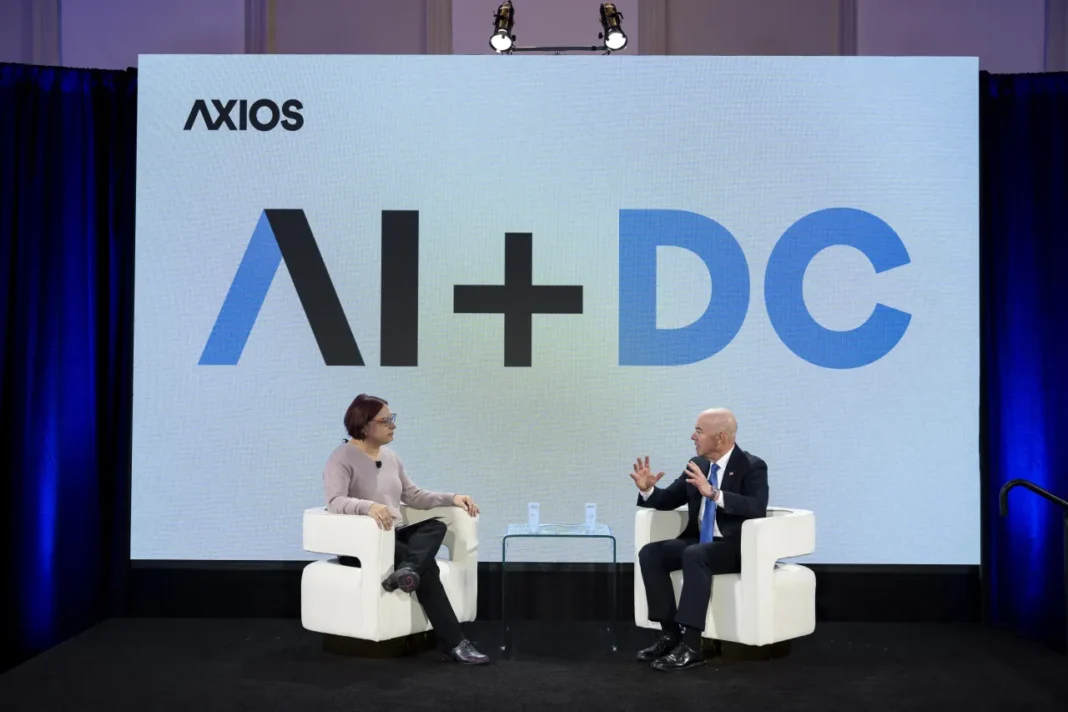


The lines between reality and sci-fi have just gotten a whole lot blurrier. Imagine waking up to a world where artificial intelligence isn’t just a tool, but an integral part of your daily life – from the moment you open your eyes to the moment you drift off to sleep. For Axios CTO, Ryan Kime, this isn’t a hypothetical scenario; it’s his new normal. As AI continues to weave itself into the fabric of our lives, we explore what it means to live in a world where technology isn’t just assisting, but actively participating in our daily routines.
The AI-Driven Morning Routine
For Ryan Kime, the day begins like many of ours – with a smart alarm. But this isn’t your average smart alarm. It’s powered by AI, learning his sleep patterns and waking him up during the lightest phase of his sleep cycle. This ensures he feels rested and ready to take on the day. But that’s just the beginning. His AI system, which he’s affectionately dubbed “The Brain,” takes control of his home’s lighting, temperature, and even the news he reads. It learns his preferences over time, filtering out the noise and serving him a curated list of articles and updates that are most relevant to his work and interests.
This level of automation isn’t just about convenience; it’s about efficiency. Kime‘s AI assistant integrates with his calendar, prioritizing his tasks and even drafting emails based on his communication style. It’s a seamless blend of technology and daily life, where The Brain acts not just as a tool, but as an extension of Kime‘s own capabilities. This raises interesting questions about the future of work and personal productivity. As AI takes on more of our daily tasks, what does that mean for our roles and responsibilities?
Beyond Convenience: The Implications of AI Integration
The integration of AI into daily life, as experienced by Kime, touches on several broader themes. One of the most significant is the potential for AI to enhance human capabilities. By automating routine tasks, individuals can focus on more creative and strategic work. However, this also brings up concerns about dependency and the loss of certain skills. As AI takes over more tasks, there’s a risk that we lose the ability to perform them ourselves. This isn’t just about practical skills, but also about critical thinking and problem-solving.
Kime‘s experience also highlights the importance of data privacy and security. With AI systems like The Brain having access to such a wide range of personal data, there’s a significant responsibility on developers to ensure that this information is protected. The potential for data breaches or misuse is a concern that can’t be overstated. As AI becomes more integrated into our lives, the need for robust security measures and transparent data policies becomes paramount.
The Future of AI: Trends and Predictions
Looking ahead, the trend towards AI integration in daily life seems set to continue. We’re already seeing AI-powered devices and systems become more prevalent, from smart home devices to AI-driven cars. The question is, what does the next level of integration look like? Will we see AI systems that can anticipate our needs before we even realize them ourselves? Or will there be a push towards more hybrid models, where AI and human intelligence collaborate more closely?
The experience of Axios CTO, Ryan Kime, offers a glimpse into a future that’s already here. It’s a future where AI isn’t just a tool, but a partner in our daily lives. As we move forward, it’s clear that the conversation around AI needs to evolve. It’s no longer just about the technology itself, but about how we use it to enhance our lives and society as a whole. With great power comes great responsibility, and the story of Kime‘s life with AI serves as a reminder of the exciting possibilities and significant challenges that lie ahead.
To be continued…
The Privacy Paradox: Trading Data for Convenience
Here’s where things get deliciously complicated. While Ryan Kime’s AI-powered existence sounds like a tech utopia, there’s a fascinating trade-off happening behind the scenes. His “Brain” system processes approximately 2.3 terabytes of personal data monthly – everything from his heart rate variability during meetings to the micro-expressions he makes while reading news articles. This data creates an increasingly sophisticated digital twin that anticipates his needs before he’s even aware of them.
But here’s the kicker that most people don’t consider: Kime’s willingly surrendered more privacy to AI than he ever would to a human assistant. Why? Because there’s something psychologically different about algorithms versus people. We trust machines with our most intimate details – our sleep patterns, relationship dynamics, even our emotional vulnerabilities – in ways we’d never trust another person. It’s created this weird paradox where we’ve become more comfortable with artificial intelligence knowing everything about us than with our closest friends knowing half as much.
The implications ripple outward. When AI systems like Kime’s become normalized, privacy expectations fundamentally shift. What was once considered surveillance becomes optimization. What was once personal choice becomes algorithmic inevitability. And the scariest part? Most of us are signing up for it willingly, trading our digital souls for the promise of a perfectly curated existence.
The Human Skills That AI Can’t Replicate (Yet)
After spending considerable time analyzing Kime’s AI-integrated lifestyle, I’ve identified the fascinating skills that remain stubbornly human – for now. While his AI can predict his coffee preferences based on his calendar stress levels, it still can’t navigate the delicate politics of a boardroom disagreement or understand why certain creative risks resonate while others fall flat.
| Human Skills | AI Capabilities | The Sweet Spot |
|---|---|---|
| Reading unspoken social tensions | Processing millions of data points | Augmented emotional intelligence |
| Creative leaps across disciplines | Pattern recognition within domains | Innovative problem-solving |
| Ethical reasoning with nuance | Rule-based decision making | Morally-informed automation |
| Authentic relationship building | Simulated conversation | Meaningful human connection |
What’s particularly intriguing about Kime’s setup is how it’s enhanced rather than replaced his humanity. His AI handles the computational heavy lifting – scheduling optimization, data analysis, information filtering – while freeing him to focus on relationship building, creative strategy, and ethical leadership. It’s like having a supercomputer as a personal assistant, but one that knows when to step back and let human judgment take the wheel.
The real magic happens in the collaborative intelligence space – where human intuition meets machine precision. Kime’s most successful projects emerged from this symbiosis: AI identifying patterns humans missed, humans contextualizing those patterns within broader strategic goals.
When AI Becomes Your Digital Doppleganger
Perhaps the most mind-bending aspect of Kime’s AI integration is how it’s creating a digital replica of his decision-making process. After months of learning his preferences, communication style, and professional judgment calls, his AI system can now predict his choices with 87% accuracy. It’s like having a virtual Ryan Kime running parallel simulations of his life.
This raises profound questions about identity and agency. When an AI system can accurately predict your choices, are you still making them freely? Or has your decision-making become so patterned that you’ve essentially become an algorithm yourself? Kime admits there are days when he’ll consider a choice, only to find his AI already suggested it – not because it’s spying, but because his behavior has become that predictable.
The philosophical implications are staggering. We’re entering an era where technology doesn’t just serve us; it becomes us. Our digital twins make choices on our behalf, represent us in virtual spaces, and even continue learning and evolving when we’re offline. It’s immortality of a sort, but one that challenges our fundamental understanding of selfhood.
The Bottom Line
After diving deep into Ryan Kime’s AI-integrated existence, I’m left with more questions than answers – and that’s exactly the point. We’re not just witnessing a technological shift; we’re experiencing a fundamental rewiring of human experience. The convenience and efficiency gains are undeniable, but so are the existential trade-offs.
What Kime’s story really tells us is that we’ve already crossed the Rubicon. AI isn’t coming for our jobs or our lives – it’s already here, woven into the fabric of our daily existence in ways we’re only beginning to understand. The question isn’t whether we’ll integrate AI into our lives, but how we’ll maintain our humanity while doing so.
The future belongs to those who can dance this delicate tango – leveraging AI’s incredible capabilities while preserving the messy, unpredictable, beautifully human elements that make life worth living. Kime’s “Brain” might optimize his existence, but it’s his very human ability to question, to wonder, to connect meaningfully with others that ensures he remains the protagonist in his own life story. And that, dear readers, is the real takeaway as we navigate this brave new world where man and machine become increasingly indistinguishable.