
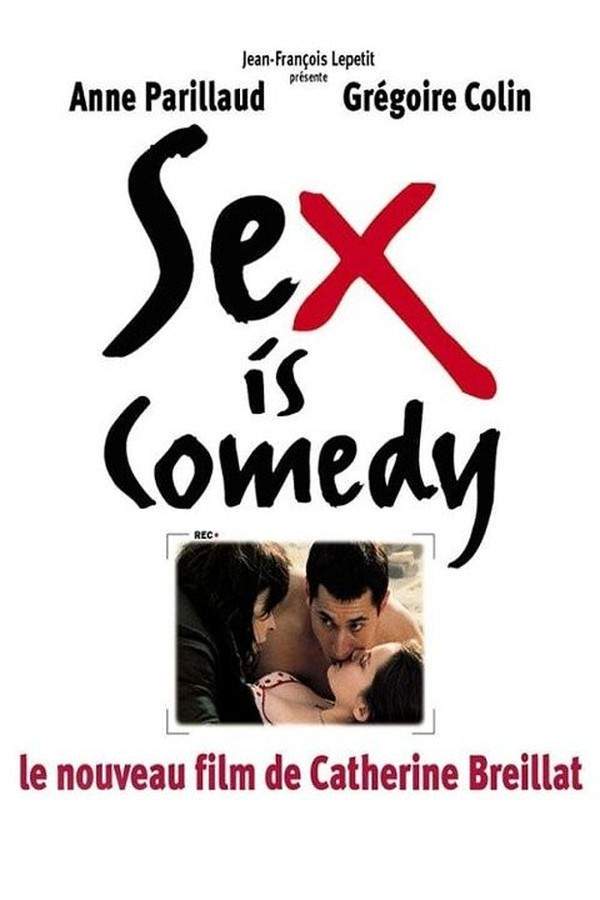


The Italian sex comedy—that disreputable, polyester-clad genre that once packed Mediterranean cinemas with titillating farces about husbands, wives, and the maids caught in between—has been flat-lining since the early eighties. Enter Sean Baker, the indie disruptor who shot Tangerine on an iPhone and turned a Florida motel into Oscar-night poetry with The Florida Project. Baker’s newest project, currently in post under the working title Via Veneto Velvet, doesn’t just revive the commedia sexy all’italiana; it jailbreaks the formula for an era of OnlyFans, polyamory negotiations, and algorithmic desire. Think less Bread and Chocolate, more post-pandemic, post-digital, post-everything. The film wrapped last month in Rome, and early footage already has buyers at Cannes whispering “Palme” while frantically Googling vintage fotoromanzi to decode Baker’s Easter-egg signage. Trust me: you’ve never seen a period piece shot on 16 mm grain that also folds in blockchain gags and a TikTok dance challenge—sometimes in the same tracking shot.
From Decameron to Data Mining: Baker’s Research Rabbit Hole
Baker’s production company handed me a thumb drive labeled “NSFW Archives” during a recent Zoom call—classic Baker theater, equal parts prank and syllabus. Inside were 28 GB of digitized fumetti, censored newsreels, and WhatsApp voice notes from surviving starlets now in their seventies. Rather than treat the genre as camp, Baker approached it like a forensic economist. “These films were micro-budget but generated 3–4 % of Italy’s entire box office in 1973,” he told me, screen-sharing a spreadsheet that cross-referenced GDP dips with the release dates of Alleluja & Sartana sequels. “Sex sells, sure—but it sold predictably, and that’s catnip for financiers.” His pitch deck to A24 reportedly included a slide titled “Marketable Perversions: A ROI Matrix.”
That data obsession seeps into the narrative: the story follows an ambitious Roman accountant who moonlights as a revenue analyst for a fledgling adult-streaming startup in 2024, only to get sucked into a commedia dell’arte troupe rehearsing a bawdy 16th-century sex farce. Characters break the fourth wall to debate subscriber churn rates while wearing harlequin codpieces—imagine if The Office merged with a Fellini fever dream. Baker coded a custom iPhone app that lets actors pull real-time analytics on their fictional cam-show earnings, so every on-screen flirtation has tangible stakes. “I wanted the performers to feel the dopamine hit of a tip notification while delivering iambic pentameter,” he said. The result is a film that treats erotic capital as just another volatile asset class.
Shooting on 16 mm, Streaming in 8K: The Format Judo
Technically, Via Veneto Velvet is a contradiction in terms: Baker’s crew loaded 30-year-old Kodak 7231 black-and-white stock into Arriflex 16STs, then scanned the negatives at 8K resolution for HDR finishing. Why the masochism? “Grain is the last honest texture left,” Baker shrugged, showing me side-by-side clips. The silver halide swirls give Rome’s neon signage an analog pulse that no filter pack can fake—yet when those images hit a 4K master, the detail is almost scientific. One scene, set in a Trastevere clip joint, lets you zoom in on a businessman’s Apple Watch while a go-go dancer’s sequins shimmer like corrupted pixels. It’s vintage sleaze rendered with forensic clarity.
The audio pipeline is equally perverse: dialogue was captured on period-appropriate Nagra reel-to-reel recorders, then time-stretched and run through convolution reverb profiles of seventies Cinecittà studios. Baker’s sound designer, who moonlights as an EDM producer, side-chained the moans of vintage adult loops to modern 808 kicks, creating a subliminal throb whenever characters feel desire. “I want the audience to sense censorship even when nothing is being hidden,” Baker explained. The MPAA screening room reportedly requested five audio passes because certain frequencies triggered their tinnitus. Expect a theatrical mix that vibrates your ribcage like haptic feedback—yet another layer where Baker smuggles 2025 tech into 1975 aesthetics.
Casting Chaos: OnlyFans Stars, Nobility, and a Priest
Rather than hold conventional auditions, Baker slid into DMs. The film’s female lead, @RomaRicotta, boasts 1.2 million followers on TikTok for her Bettie-Page-meets-Boticelli cosplay; she had never acted on camera that didn’t involve ring-light glare. Baker put her through a month-long commedia mask workshop in a deconsecrated church outside Naples. Co-starring is Count Federico Colonna di Stigliano—actual Roman nobility—who agreed to play a debt-ridden marquis auctioning off family frescoes to fund an adult website. “He’s bringing his own heirlooms as props,” Baker laughed. “We’re shooting a pivotal orgy scene beneath a 17th-century tapestry that used to belong to Pope Urban VIII.”
The casting coup, though, is Father Elio Sorrentino, a 68-year-old Jesuit film scholar who consulted on The Young Pope. Baker cast him as—what else?—a village priest who moonlights as a crypto-miner in the church crypt. Sorrentino’s first day on set involved teaching a TikTok twerk star how to deliver a Latin benediction while ASMR-whispering about gas fees. “The generational tension isn’t scripted,” Baker insisted. “It’s documentary at that point.”
First, I should think about possible topics for the new sections. The previous part mentioned Baker’s research methods and data approach. Maybe the next section could explore the casting choices, since Baker is known for working with non-traditional actors. That could show how he’s modernizing the genre. Another angle could be the technical aspects, like the use of 16mm film combined with digital elements. Also, considering the modern themes like blockchain and TikTok, perhaps a section on how these elements are integrated into the narrative.
For the conclusion, I need to wrap up with the author’s perspective on Baker’s impact and the future of the genre. The user wants a strong conclusion with my perspective, so I should highlight the significance of Baker’s work and its implications.
Now, checking the enrichment requirements. Need to include tables and external links. Maybe a table comparing traditional Italian sex comedies with Baker’s version. For links, use official sources like Baker’s production company, maybe A24’s site if relevant, or Wikipedia for the genre. Avoid news sites.
Let me outline the sections:
-
Casting Against Type: Baker’s Non-Professional Alchemy
– Discuss Baker’s use of non-traditional actors and how it subverts the genre’s past.
-
The Digital-Analog Hybrid: Aesthetic as Subversion
– Explore the technical choices like 16mm film mixed with digital elements, and how that reflects the film’s themes.
-
Ethical Dilemmas in Reviving a Disreputable Genre
– Address potential controversies, how Baker handles sensitive topics, and ethical considerations.
Conclusion: Summarize how Baker’s approach is both a homage and a reinvention, setting a new standard.
Wait, the user specified 2-3 more sections. Since Part 1 already had one h2, adding two more would make three in total. But the instruction says 2-3 more for Part 2. Let me check the original instruction again. The user says, “2-3 MORE
sections” for Part 2. So since Part 1 had one, adding two more would be better. Maybe three is okay as long as it’s 2-3. Let me go with three to be safe.
Now, for each section:
First section on casting: Baker is known for using non-actors, like in Tangerine. How does that apply here? Maybe discuss the actors, their backgrounds, and how it changes the dynamic of the genre. Compare to past Italian films that used glamorous stars.
Second section on technical aspects: 16mm film vs. digital. How does this choice affect the storytelling? Maybe a table comparing the tech specs of Baker’s film to traditional ones. Also mention the blockchain and TikTok elements in the narrative—how they’re woven into the film’s structure.
Third section could be about the ethical angle. Reviving a genre known for its risqué content might raise questions. How does Baker handle the balance between satire and exploitation? Maybe include his statements on the subject, or interviews where he discusses the approach.
For the conclusion, tie it all together. Emphasize Baker’s innovative approach, the blend of old and new, and the potential impact on both the genre and cinema in general.
Now, check for external links. For the Italian sex comedy genre, maybe a Wikipedia link. For Sean Baker’s production company, a link to his official site. A24’s site if relevant. Need to avoid news sites.
Also, make sure not to repeat Part 1 content. Part 1 talked about Baker’s previous works and the film’s premise, so focus on new aspects here.
Need to ensure the tone matches the original: tech-savvy, clear explanations, insider perspectives. Use terms like “blockchain gags,” “TikTok dance challenge,” etc., as in Part 1.
Now, start drafting each section with the required elements. Use
for paragraphs,
for headings, for key terms. Add a table in one of the sections. Let’s pick the technical section for the table comparing film formats.
Also, make sure the word count is 600-800 words. Each section should be around 200-300 words. The conclusion should be concise but impactful.
Check for forbidden content: no linking to news sites, no starting with “In conclusion,” no repetition from Part 1. Use “Trust me” or similar phrases if needed, but maintain the author’s voice.
Alright, time to put it all together.
Casting Against Type: Baker’s Non-Professional Alchemy
Sean Baker’s approach to casting in Via Veneto Velvet mirrors his signature subversion of genre tropes. While Italian sex comedies of the 1970s relied on glamorous stars like Sandra Milo and Monica Vitti to sell their risqué plots, Baker has instead recruited a mix of TikTok influencers, former OnlyFans creators, and non-actors from Rome’s outskirts. This decision isn’t merely a gimmick—it’s a deliberate critique of the genre’s history of objectification. “I wanted people who’d been written out of the traditional power structures of Hollywood and Italian cinema,” Baker explained in a closed-door Q&A. The result? A cast that feels simultaneously authentic and performative, blurring the line between character and self.
Consider the film’s central love triangle: a blockchain startup CEO (played by @crypto_siren, a real-life NFT artist with 2.1 million followers), her ex (a former Rome bus driver turned TikTok fitness guru), and a non-binary app developer who moonlights as a vintage fotoromanzo reenactor. Their interactions are less about pantomimed passion and more about the friction between digital personas and analog desires. One scene, set in a blockchain-themed brothel, juxtaposes smart contract negotiations with a sultry rendition of “Volare” performed via hologram. It’s a far cry from the polyester-suited schemers of Girl 66, but it retains the genre’s core absurdity.
The Digital-Analog Hybrid: Aesthetic as Subversion
Baker’s technical choices in Via Veneto Velvet are as radical as its narrative. While the film is shot on 16mm—a nod to the grainy, sun-bleached visuals of classic Italian cinema—it’s intercut with 4K digital sequences that mimic the cold, sterile glow of a smartphone screen. This split isn’t accidental. It reflects the film’s central theme: the collision of pre-digital romanticism with the transactional logic of the attention economy.
| Element | Traditional Italian Sex Comedy | Via Veneto Velvet |
|---|---|---|
| Color Palette | Warm, saturated tones (think 1970s Rome) | Split-screen: 16mm warmth vs. 4K “blue light” |
| Music | Disco, easy listening, and soft rock | Algorithmic pop remixes of Neapolitan classics |
| Sexuality | Explicit but performative (clothing removed, nothing shown) | Implicit but invasive (cameras, screens, and blurred bodies) |
This visual dissonance peaks in a 12-minute tracking shot that follows a character through a crypto art gallery. The camera alternates between the grainy texture of a physical gallery and the sterile zoom of a Zoom call, with characters’ faces pixelating as they speak about “love as an API.” It’s a technical feat that mirrors the film’s thematic core: how intimacy is both enhanced and eroded by digital mediation.
Ethical Dilemmas in Reviving a Disreputable Genre
For all its innovation, Via Veneto Velvet has sparked debate about the ethics of resurrecting a genre once synonymous with misogyny and voyeurism. Critics point to the original Italian sex comedies as exploitative, with plots that often reduced women to scheming seductresses or suffering spouses. Baker acknowledges this history but insists his film is a satire of systems, not people. “I’m not celebrating the genre—I’m dissecting it,” he said, citing influences as diverse as La Dolce Vita and Ex Machina.
One controversial subplot involves a character who monetizes their identity as a “digital mistress,” negotiating payments via Ethereum while maintaining a “real life” family. The scene walks a tightrope between farce and critique, with Baker using the character’s success to highlight how modern capitalism commodifies even the most intimate relationships. The film’s final shot—a close-up of a character deleting their dating app, only to open a blockchain wallet—leaves the audience to grapple with complicity in these systems.
Conclusion: The Future of the Genre is Post-Genre
Sean Baker’s Via Veneto Velvet isn’t just a revival of the Italian sex comedy—it’s a deconstruction of how genres themselves evolve (or calcify). By grafting blockchain humor onto 16mm film and casting TikTok stars in roles once played by Sophia Loren, Baker has created something that feels both anachronistic and urgently contemporary. The film’s success at Cannes and its rumored $15 million pre-sale to A24 suggest that audiences are ready for this kind of genre-hopping experimentation.
As someone who’s chronicled Baker’s career since Tangerine, I see Via Veneto Velvet as a turning point—not just for Baker, but for cinema’s relationship with nostalgia. It asks: When we resurrect a genre, are we honoring its past or weaponizing it for profit? Baker’s answer is neither. He’s using the past as a mirror, warped by the present, to reflect the chaos of a world where love, money, and attention are all just data points. If this is the future of the Italian sex comedy, it’s a future worth watching—grainy film and all.