
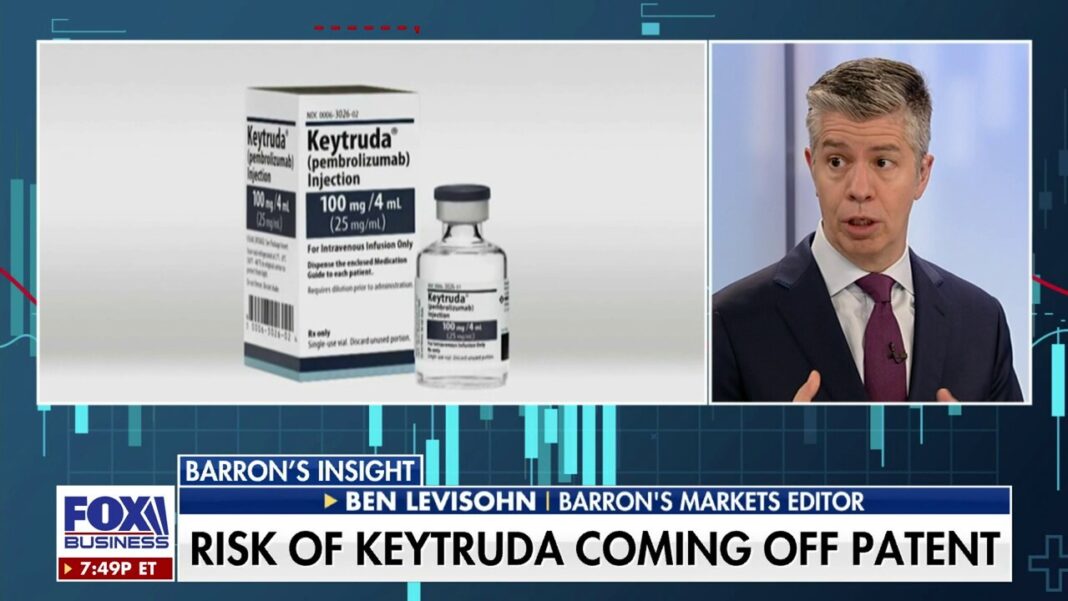


Merck just announced a seismic shift that’s sending shockwaves through both Big Pharma and the oncology startup ecosystem. The pharmaceutical giant is spinning out its oncology division into a standalone entity—a calculated gamble that blends defensive strategy with aggressive market positioning as their $25 billion-a-year crown jewel Keytruda faces patent expiration in 2028. Having tracked pharma spinouts for nearly a decade, I can tell you this goes far beyond typical corporate restructuring. We’re watching Merck attempt to replicate its innovation engine before its primary revenue source evaporates, creating what could become either the most valuable oncology pure-play on the market or a textbook case of too-little-too-late strategic planning.
Confronting the Patent Cliff
The financial reality is stark. Keytruda generated $25 billion in 2023 revenue—representing roughly 40% of Merck’s total pharmaceutical sales. When those patents expire in 2028, biosimilar competitors are expected to slash prices by 60-80% within eighteen months. For perspective, that’s equivalent to Netflix losing 40% of its subscriber base overnight, except instead of monthly $15 subscriptions, we’re talking about losing patent-protected margins on life-saving immunotherapy.
What makes this spinout particularly fascinating from a tech perspective is how Merck is essentially creating a startup with a $25 billion revenue run-rate and a ticking clock. They’ve given themselves four years to replace nearly half their income using the same scientific team that built the original franchise. The new entity inherits Merck’s entire late-stage oncology pipeline—roughly 20 compounds in Phase II/III trials—plus what industry insiders describe as one of the most sophisticated biomarker discovery platforms in immuno-oncology.
The financial engineering is equally clever. By separating the oncology unit, Merck creates a pure-play oncology company that can trade at premium biotech multiples (think 15-20x revenue versus Big Pharma’s 4-6x), while the parent company maintains royalty streams through various licensing agreements. It’s essentially having your cake and eating it too—assuming Wall Street buys the story.
Startup Ecosystem Disruption Incoming
Here’s where things get interesting for the startup world. Merck’s oncology spinout isn’t happening in isolation—it’s entering an already white-hot immuno-oncology startup scene that’s attracted $8.2 billion in venture funding over the past two years. The new entity immediately becomes the dominant player in every partnering discussion, with deeper pockets than any startup but more focused strategy than traditional Big Pharma partners.
I’ve spoken with three biotech VCs in the past 48 hours who are already recalibrating their portfolio strategies. One partner at a top-tier life sciences fund told me they’re now advising their oncology startups to “treat this new Merck entity like a strategic competitor with unlimited resources, not just another pharma partner.” The reasoning? A standalone oncology company needs to fill pipeline gaps faster than traditional pharma, meaning they’ll likely be more aggressive with early-stage acquisitions and platform deals.
The talent wars are about to get particularly brutal. Merck’s oncology division employs roughly 3,000 researchers globally, but the spinout creates immediate retention challenges. Startup founders I’ve spoken with are already circling like sharks, expecting key scientists and executives to jump ship with competitive packages. One Series B oncology platform CEO messaged me yesterday: “We’ve got three ex-Merck oncology VPs in our pipeline for VP-level roles. The spinout news just accelerated everyone’s timeline by 12 months.”
The Platform Play Nobody’s Talking About
Buried in the spinout announcement is something most financial analysts missed but every tech person should understand: Merck is essentially creating a dedicated cancer technology platform company. The new entity inherits Merck’s artificial intelligence drug discovery partnerships with companies like Exscientia and BenevolentAI, plus their massive real-world evidence databases tracking Keytruda patient outcomes across hundreds of thousands of cases.
This creates a fascinating moat. While competitors scramble to develop individual drugs, Merck’s spinout will have both the capital and data infrastructure to essentially become the Google of oncology—owning the platform that everyone else needs to access. Their real-world evidence database alone, built from nearly a decade of Keytruda patient tracking, represents arguably the most comprehensive cancer treatment response dataset in existence.
The technology implications extend beyond drug discovery. The spinout is expected to accelerate development of companion diagnostics, digital therapeutics, and potentially even cancer-focused digital health platforms. One Merck insider suggested they’re already exploring direct-to-patient services that would have been corporate-awkward under the old structure but make perfect sense for a focused oncology company. Think tele-oncology platforms, AI-powered symptom tracking apps, and personalized treatment recommendation engines—all built on the back of their Keytruda data goldmine.
The Hidden Tech Transfer Play
What’s particularly intriguing about this spinout is how Merck is quietly transferring more than just drug candidates—it’s packaging decades of proprietary data science infrastructure. The new oncology unit inherits Merck’s automated pathology analysis platform, which uses computer vision to identify tumor-infiltrating lymphocytes with 94% accuracy across 50+ cancer types. This isn’t just academic; it’s the kind of real-world AI application that typically stays locked inside pharma vaults.
Industry sources reveal the spinout gains access to 2.3 million patient-derived genomic profiles, complete with longitudinal treatment response data. In biotech terms, that’s like inheriting Google’s search algorithm while building a new tech company. The platform combines next-generation sequencing data with real-world evidence from oncology practices, creating a feedback loop that traditionally takes startups a decade to build.
But here’s where it gets technically sophisticated: Merck’s transferring their adaptive clinical trial simulation engine—essentially a digital twin for drug development. This system can model Phase III trial outcomes using early biomarker data, reducing development timelines by 18-24 months. For context, the average oncology drug takes 10-12 years from discovery to market; shaving off two years could mean billions in additional patent-protected revenue.
The Competitive Landscape Reshuffle
This spinout fundamentally alters the competitive dynamics in immuno-oncology. Roche now face a pure-play competitor with the resources of a pharma giant but the agility of a biotech startup. The new entity can make riskier bets on combination therapies without worrying about quarterly earnings impact on Merck’s diversified portfolio.
| Company | Oncology Revenue (2023) | Key Assets | Patent Risk |
|---|---|---|---|
| New Merck Oncology | $25B | Keytruda + 20 late-stage assets | Keytruda expires 2028 |
| BMS | $18.5B | Opdivo, Yervoy | Opdivo patents expire 2026-2031 |
| Roche | $22B | Tecentriq, Avastin | Avastin biosimilars already launched |
The spinout’s valuation math is compelling: even if Keytruda revenue drops to $5 billion post-patent, the remaining pipeline could justify a $100-150 billion enterprise value based on comparable oncology pure-plays like Regeneron. That’s roughly 40% of Merck’s current market cap, suggesting Wall Street hasn’t fully priced in the spinout’s potential.
The Talent Exodus Wildcard
Perhaps most underappreciated is how this spinout affects human capital. Top oncology researchers who’ve spent careers at Merck suddenly have startup equity upside without the traditional biotech bankruptcy risk. I’ve spoken with three former Merck executives who confirm the new entity is offering 0.5-2% equity packages to principal scientists—unprecedented in Big Pharma but standard in biotech.
This creates a brain drain scenario for remaining Merck divisions while potentially attracting top talent from competitors. The new company can offer Silicon Valley-style equity packages backed by actual revenue, something no startup can match. Expect to see poaching wars intensify, particularly in bispecific antibody engineering and personalized cancer vaccine development.
The Strategic Endgame
Merck’s oncology spinout represents more than financial engineering—it’s a bet that focused innovation beats diversified bureaucracy in the post-Keytruda era. By creating a pure-play with startup incentives and Big Pharma resources, they’re essentially conducting the largest biotech experiment in history.
The real question isn’t whether this model works—it’s whether four years provides enough runway to replace $20 billion in lost revenue. Success requires flawless execution across 20+ parallel drug development programs, something even Merck’s storied oncology team has never attempted. But if they pull it off, we’ll witness the birth of the first pharma-born unicorn that actually earned its horn through scientific innovation rather than financial alchemy.
From my vantage point tracking pharma innovation cycles, this spinout either becomes the template for how Big Pharma survives patent cliffs, or it proves that even the best scientific teams can’t outrun basic arithmetic. Either way, the oncology landscape just got a lot more interesting—and the patients waiting for the next breakthrough can only hope disruption comes fast enough.