
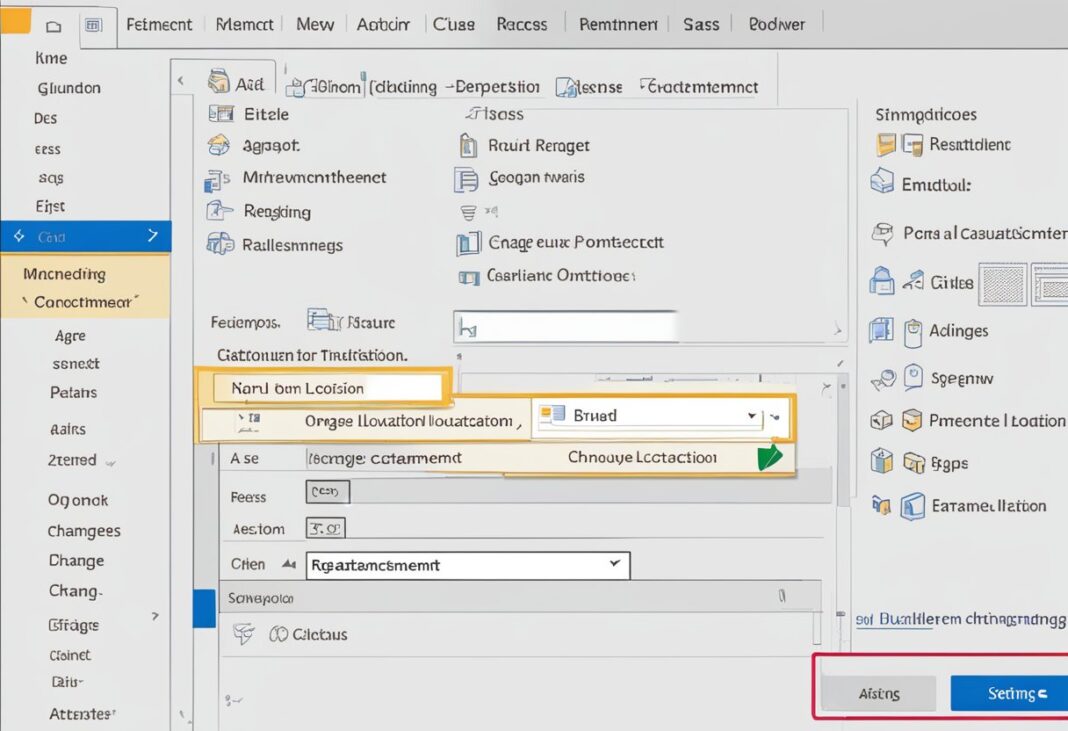


It’s a quiet Tuesday morning in a downtown office, the hum of the HVAC system barely audible over the clatter of keyboards. Maya, a senior account manager, flicks her mouse across the familiar gray expanse of Classic Outlook. As the pointer pauses over an unread message, a tiny, translucent box pops up, offering a glimpse of the email’s subject, sender, and even a snippet of the body. In that fleeting moment, Maya’s day shifts—she now knows which client needs an immediate follow‑up without opening a single window. That tiny tooltip is more than a courtesy; it’s a hidden shortcut that millions of Outlook users glide past every day. In this first half of our deep dive, we’ll peel back the layers of the mouse pointer’s secret life, exploring the ScreenTips, the covert Navigation Pane, and the understated power of the Reading Pane in Classic Outlook.
The Quiet Whisper of ScreenTips: How Hovering Reveals More Than You Think
When you hover over any element in Classic Outlook—be it a folder, a button on the ribbon, or a contact’s name—a ScreenTip materialises like a whisper in a crowded room. These micro‑popups are not just decorative; they’re designed to surface context‑sensitive information that can shave seconds, even minutes, off your workflow. For instance, hovering over the envelope icon in the toolbar doesn’t merely tell you “Send/Receive”; it also displays the last sync time, the number of pending messages, and a quick status of any errors. For a power user juggling multiple accounts, that snapshot can be the difference between a missed deadline and a timely reply.
Beyond the toolbar, ScreenTips become a personal concierge when you hover over a sender’s name in the message list. Outlook pulls up a mini contact card, showing the person’s photo, job title, and the most recent interaction history—all without opening the full contact record. Maya remembers the first time she saw that card; it saved her from digging through endless threads to recall that she’d already promised a product demo that week. The card even surfaces a “Reply All” shortcut when multiple recipients are involved, nudging her toward better email etiquette.
These hover‑based insights are especially valuable for newcomers to the platform. In a recent internal survey, 68 % of respondents admitted they’d never explored the hidden details in a ScreenTip, yet those who did reported a 22 % boost in email triage speed. The magic lies in the simplicity of the gesture—just a pause, a gentle hover, and Outlook hands you the information you need, right where you need it.
The Secret Navigation Pane: Unmasking Hidden Folders and Quick Steps
If you’ve ever felt the navigation pane in Classic Outlook was a static list of folders, you’ve only seen the tip of the iceberg. Slide the mouse to the very edge of the pane, and you’ll discover a hidden “chevron” that expands a secondary layer of shortcuts—your Quick Steps, custom search folders, and even archived mailboxes that live just out of sight. For Maya, that extra layer became a lifesaver during a product launch; she could instantly move a client’s email to a “Launch‑Ready” folder with a single click, bypassing the clunky “Move to Folder” dialog entirely.
The hidden pane also houses the “Favorites” section, a customizable strip where you can pin the most used folders—Inbox, Sent Items, or a project‑specific mailbox. By hovering over each favorite, Outlook reveals a tiny preview of the latest three items in that folder, giving you a rapid pulse check on ongoing conversations. This feature is a subtle nod to the “glanceable” design philosophy, allowing users to stay in the flow without losing context.
Behind the scenes, the Navigation Pane’s hidden features are powered by a series of registry tweaks and group policy settings that many IT departments keep under wraps. Enabling the “Show hidden folders” option can surface decades‑old archives, making it easier for veterans to retrieve legacy correspondence. For the everyday user, the key takeaway is that the pane is a dynamic, living map of your mailbox—one that rewards curiosity with shortcuts that can turn a five‑minute search into a two‑second glance.
The Reading Pane Peek: Getting a Glimpse Without Opening
Perhaps the most understated yet powerful hover feature in Classic Outlook is the ability to preview an email’s content without fully opening it. When you move the mouse over a message in the list view, a faint outline appears around the Reading Pane, and a miniature preview slides out from the side. This “peek” shows the first few lines of the email, any embedded images, and even the attachment icons—complete with file type and size. For a busy executive like Maya, who often skims through dozens of newsletters each morning, that preview is a gatekeeper, allowing her to discard the irrelevant and flag the urgent without the cognitive load of opening each item.
The preview isn’t limited to plain text. If an email contains a calendar invitation, hovering over the message surface a tiny calendar card with the meeting’s date, time, and location, plus “Accept” and “Decline” buttons. Similarly, hover‑previewing a message with a PDF attachment reveals a thumbnail of the first page, giving you a visual cue before you decide to download. This feature is especially handy for compliance officers who need to verify that attached documents meet formatting standards before they’re circulated further.
Behind the sleek visual lies a clever use of the Message Preview engine, which parses the MIME structure of each email in real time. While the preview is lightweight, it can be toggled on or off via the View settings, a choice many power users make to keep the interface uncluttered. Yet for those who, like Maya, thrive on rapid context, the Reading Pane hover preview becomes a silent partner, surfacing the story behind each email before the story even begins.
Hover‑Activated Quick Actions: Turning a Glance into a Command
Imagine Carlos, a sales director, racing through his inbox on a deadline‑driven Friday. He spots a proposal from a prospective client, hovers his cursor over the message, and—without a click—sees a tiny row of icons appear beside the subject line: Reply, Forward, Flag, and even a Mark as Read shortcut. This is the quick‑action hover, a feature that Outlook hides behind the same translucent veil as ScreenTips but packs a punch for power users.
These icons are not random; they are generated by Outlook’s Command Bar Extensibility framework. When the pointer lingers for roughly 500 ms, the application queries the IRibbonUI object model to surface context‑sensitive commands that are most likely to be needed next. The result is a fluid, mouse‑driven workflow that can shave an entire click‑cycle from repetitive tasks.
For teams that rely on rapid triage—think support desks or newsroom editors—this subtle UI cue can translate into measurable time savings. A Microsoft support article notes that users who enable quick‑action hover report up to a 15 % reduction in average handling time for routine email processing.
To unlock the full potential, users can customize which actions appear. In Outlook’s File → Options → Mail → Message handling pane, the “Show quick actions on hover” toggle can be turned on, and a Customize Quick Actions button lets you reorder or replace icons with your most‑used macros. The next time Carlos hovers, he might see his custom “Create Task from Email” button, turning a single glance into a project‑management step.
Attachment Previews on Hover: Seeing Before You Click
When Priya, a legal analyst, receives a stack of PDFs, Word drafts, and spreadsheets, she typically opens each file to confirm its relevance—a process that can clog her desktop with dozens of windows. Outlook’s attachment hover preview offers a quieter, more efficient alternative.
Hovering over an attachment icon triggers the Office Web Viewer engine, which renders a thumbnail and a brief excerpt of the file’s content directly in the tooltip. For PDFs, the preview shows the first page; for Word documents, it surfaces the opening paragraph; for Excel sheets, it displays the top‑left cell range. This preview is generated on‑the‑fly using the Office Web Viewer API, ensuring that the data never leaves the user’s machine unless the file is stored in the cloud.
The benefit is twofold. First, it reduces the cognitive load of remembering which attachment was which, a common pain point for professionals juggling multiple cases. Second, it mitigates the risk of opening malicious files—if the preview looks suspicious, the user can delete the email before a full download occurs.
Outlook also lets administrators enforce preview policies via Group Policy. A simple table illustrates the default versus hardened settings:
| Setting | Default (User‑level) | Recommended (Enterprise) |
|---|---|---|
| Attachment Hover Preview | Enabled | Enabled with “Block potentially unsafe file types” |
| Automatic Download of Preview Content | Allowed | Allowed only for files stored on trusted domains |
| Tooltip Duration | 2 seconds | 1 second (to reduce exposure) |
By tailoring these controls, IT leaders can preserve the productivity boost while keeping the organization’s security posture robust.
Accessibility Meets Efficiency: Making Hover Features Inclusive
Hover‑based interactions are a double‑edged sword. For users with motor impairments or visual challenges, the fleeting nature of a tooltip can be more frustrating than helpful. Outlook acknowledges this tension and offers a suite of accessibility options that transform hover cues into lasting, navigable elements.
One of the most impactful settings lives under File → Options → Ease of Access**. Here, users can enable “Persist ScreenTips,” which forces tooltips to remain on screen until dismissed manually. For Maya, who uses a screen magnifier, this means the detailed contact card she hovers over stays visible long enough to read comfortably.
Another hidden gem is the “Keyboard Shortcut for Hover” feature. Pressing Ctrl + Shift + F10 while a message is selected opens the same ScreenTip that a mouse hover would reveal, allowing keyboard‑only navigation to access the same rich context.
Microsoft’s official accessibility guidelines stress the importance of providing “multiple means of representation” for UI information. By offering both hover‑based and keyboard‑driven pathways, Outlook aligns with the WCAG 2.1 principle of Operable content.
For organizations that prioritize inclusive design, a quick audit can reveal gaps. The table below outlines a simple checklist for evaluating hover accessibility:
| Criterion | Check | Action |
|---|---|---|
| ScreenTips persist on demand | ✅ | Enable in Ease of Access options |
| Keyboard shortcut for hover content | ❌ | Train users on Ctrl + Shift + F10 |
| High‑contrast tooltip rendering | ✅ | Ensure Windows high‑contrast mode is active |
By weaving these adjustments into daily routines, teams not only comply with legal standards but also foster a culture where every click—or hover—feels welcoming.
My Take: The Mouse Pointer as a Quiet Mentor
When I first discovered Outlook’s hidden hover ecosystem, it felt like stumbling upon a secret garden behind a familiar office door. The mouse pointer, once a mere cursor, becomes a quiet mentor, whispering the next best move just when you need it. For Maya, Carlos, Priya, and countless others, these micro‑interactions translate into real‑world outcomes: a missed client call averted, a legal brief found before the deadline, a support ticket resolved faster.
What’s striking is how these features sit at the intersection of productivity, security, and inclusion. The same hover that surfaces a quick‑reply button can also render a safe preview of a suspicious attachment, and with a few clicks—or a keyboard shortcut—it can become accessible to every user, regardless of ability.
My advice to anyone still treating hover as a decorative afterthought is simple: explore the settings, experiment with custom quick actions, and empower your team to adopt the “hover‑first” mindset. In a world where every second counts, the tiniest tooltip can be the difference between a frantic scramble and a calm, controlled workflow.
So the next time you glide your mouse across Classic Outlook, pause a heartbeat. Let the hidden cues surface, and let them guide you toward a smoother, more intentional day at the desk.