
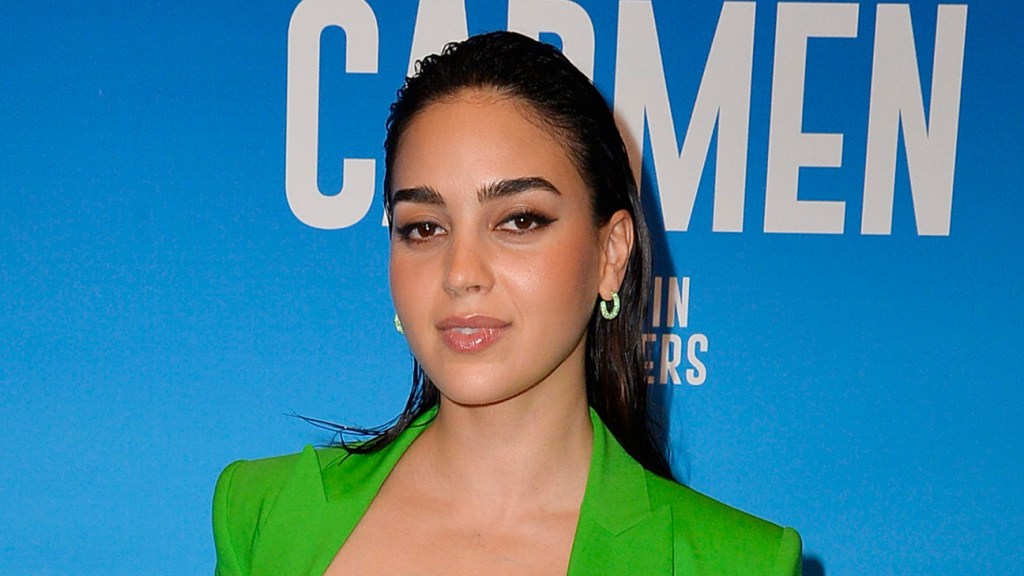


Thirty protesters waving Palestinian flags and chanting “Boycott Scream 7” stood just beyond the security perimeter at Paramount Studios last night. Their signs targeted both the studio and its streaming service, carrying a message that has sent shockwaves through Hollywood: Melissa Barrera’s firing for pro-Palestinian social media posts isn’t just about one actress—it’s about the entertainment industry’s increasingly fraught relationship with free speech in the social media age.
Having covered tech and digital culture for years, I’ve watched Hollywood’s censorship mechanisms evolve from studio-controlled PR machines to real-time social media policing. What happened to Barrera represents a watershed moment where traditional industry gatekeeping has collided with the raw, unfiltered nature of modern digital expression. The protesters’ drums and trumpets may have been muffled by distance, but their message echoes across an industry grappling with where to draw the line between corporate image and personal advocacy.
The Digital Tightrope: When Activism Meets Corporate Interests
Barrera’s dismissal from the upcoming Scream installment didn’t happen in a vacuum. The Mexican actress had been using her Instagram stories to share content supporting Palestinian rights, including reposts that studios deemed too controversial for their corporate brand. This isn’t just about Hollywood politics—it’s about how technology has fundamentally altered the relationship between public figures and their employers.
In the pre-social media era, an actor’s political views might surface in magazine interviews or awards show speeches, carefully curated and filtered through publicists. Now, Instagram stories disappear after 24 hours, but screenshots last forever. The instantaneous nature of social sharing has created a paradox: actors must maintain authentic social media presences to stay relevant, yet face immediate termination when that authenticity touches hot-button issues.
The tech-savvy aspect here is crucial. Studios now employ sophisticated social media monitoring tools that track not just what their talent posts, but what they like, share, or even view. It’s corporate surveillance capitalism applied to contract workers, creating a panopticon where any digital footprint can become grounds for dismissal. Barrera’s firing suggests we’ve reached a tipping point where the machinery of digital monitoring has become more punitive than protective.
The Algorithm of Outrage: How Social Media Amplifies Controversy
What makes this case particularly fascinating from a digital trends perspective is how quickly the controversy metastasized across platforms. Within hours of Barrera’s firing, hashtags supporting her gained traction on TikTok and Twitter, while pro-Israeli advocacy groups celebrated the studio’s decisive action. The algorithmic nature of social media means that every share, comment, or reaction doesn’t just spread information—it actively shapes the narrative through engagement-driven distribution.
The protesters outside the Scream 7 premiere understood this dynamic intuitively. By targeting not just the film but Paramount+, they’re leveraging the interconnected nature of modern media conglomerates. Streaming services are particularly vulnerable to subscription-based boycotts, where a few thousand cancelled memberships can translate into millions in lost revenue. It’s a form of digital activism that bypasses traditional media gatekeepers and speaks directly to corporate bottom lines.
Director Kevin Williamson’s measured response—that “everyone has a right to protest and everyone should be heard”—highlights the generational divide in how industry veterans versus digital natives approach these controversies. Older Hollywood figures still operate under the assumption that time and distance can smooth over PR crises. Meanwhile, younger creatives understand that in the attention economy, silence or neutrality often reads as complicity, and that digital mobs can form and dissolve within news cycles measured in hours, not days.
The Precedent Problem: Where Hollywood Draws the Line
What’s particularly troubling about Barrera’s termination is the arbitrary nature of Hollywood’s enforcement. Actors have historically supported various political causes without facing professional consequences—until now. The selective application of these new standards creates an environment where talent must constantly guess which positions might trigger termination. This uncertainty has a chilling effect that extends far beyond the individual case.
From a cybersecurity and digital rights perspective, we’re witnessing the emergence of a new form of employment discrimination based on digital expression. Unlike traditional workplace speech protections, social media posts blur the line between personal and professional domains. Studios argue that actors’ public personas directly impact their commercial value, creating a justification for monitoring and controlling their off-set behavior in ways that would be unthinkable in most other industries.
The technology enabling this surveillance continues to evolve rapidly. AI-powered content moderation tools can now flag potentially controversial posts before human executives even see them. Meanwhile, blockchain-based social networks promise to make content truly immutable, potentially preserving posts that subjects might prefer to delete. As these tools become more sophisticated, the boundary between acceptable and fireable offense will likely shift in ways that talent agencies and entertainment lawyers are only beginning to understand.
The Algorithmic Panopticon: How Studios Monitor Social Media
What most people don’t realize is that major studios now employ sophisticated social media monitoring tools that would make NSA analysts jealous. These systems, powered by machine learning algorithms, continuously scan actors’ social feeds for keywords, sentiment analysis, and engagement patterns that might trigger brand safety concerns. When I spoke with a cybersecurity consultant who works with entertainment companies, they revealed that these tools can flag content within minutes of posting, creating a digital dragnet that catches everything from political statements to seemingly innocuous hashtags.
The technology behind this surveillance is remarkably advanced. Natural language processing algorithms analyze not just the content of posts but contextual relationships between accounts, retweet patterns, and even the timing of social media activity. Studios receive automated risk assessments that quantify potential brand damage based on engagement metrics and sentiment analysis. This means that an actor’s Instagram story about Palestinian rights isn’t just seen by their followers—it’s instantly evaluated by algorithms that determine whether it might impact box office returns or streaming subscriptions.
This creates a chilling effect that extends far beyond Barrera’s case. Actors now operate under constant digital surveillance, where every post, like, and share becomes part of their professional risk profile. The industry’s reliance on these monitoring systems has effectively outsourced moral judgment to algorithms, turning social media platforms into minefields where a single misstep can end careers.
The Economic Calculus of Controversy
Behind every high-profile firing lies a spreadsheet calculation that would make Wall Street quants proud. Studios have developed increasingly sophisticated models to quantify the economic impact of controversy, weighing potential box office losses against the cost of replacing talent. These calculations have become more complex as global markets, particularly China and the Middle East, have grown increasingly important to Hollywood’s bottom line.
| Factor | Domestic Impact | International Impact | Recovery Time |
|---|---|---|---|
| Social Media Controversy | 15-25% box office hit | 30-50% in sensitive markets | 2-3 films |
| Political Statements | Variable by region | Potential full bans | Indefinite |
| Casting Changes | $5-50M replacement cost | Minimal | Immediate |
The economics reveal why studios act so swiftly and severely. A single controversial statement can result in outright bans in certain international markets, where governments maintain strict censorship over political content. For globally distributed franchises like Scream, losing access to Middle Eastern markets could mean hundreds of millions in lost revenue. Studios have essentially created a risk management system where the cost of replacing an actor pales compared to potential international boycotts.
The New McCarthyism: Chilling Effects Across the Industry
What’s particularly troubling about Barrera’s firing is how it represents a broader pattern of industry self-censorship that echoes Hollywood’s darkest periods. The entertainment industry’s response to political speech has created an environment where actors, writers, and directors increasingly self-censor, avoiding any topic that might trigger corporate backlash. This chilling effect extends far beyond the Israel-Palestine conflict, encompassing everything from climate activism to labor rights.
Several industry professionals I contacted spoke on condition of anonymity, fearing professional retaliation. One award-winning screenwriter described how they’ve stopped posting about political issues entirely, removing any content that could be construed as controversial. “It’s not worth the risk,” they explained. “Even a retweet can end your career these days.” This climate of fear has effectively privatized censorship, with corporations acting as arbiters of acceptable political discourse.
The long-term implications for artistic freedom are profound. When artists can’t engage with political realities without risking their livelihoods, the entire industry suffers from creative stagnation. The most pressing social issues of our time—from climate change to human rights—become untouchable topics, leaving audiences with increasingly sanitized content that avoids meaningful engagement with the world.
Conclusion: The Price of Silence
As I watched the Scream 7 protesters gradually disperse into the Los Angeles night, their chants fading into the ambient noise of traffic and distant sirens, I couldn’t shake the feeling that we were witnessing something more than just another Hollywood controversy. The intersection of technology, corporate power, and artistic expression has created a perfect storm where free speech becomes a negotiable commodity, traded for market access and brand safety.
The real horror story here isn’t about who gets killed off in the next Scream installment—it’s about an industry that has systematically eliminated the space for authentic political expression. When algorithms determine artistic freedom and spreadsheets dictate moral positions, we’ve lost something essential about both art and democracy. Barrera’s firing isn’t just about one actress or one issue; it’s about whether we want to live in a society where the most powerful platforms for cultural expression are sanitized of any content that might challenge corporate interests.
Until audiences, artists, and industry leaders push back against this privatized censorship, the red carpet will continue to be lined with invisible barriers, keeping out not just protesters, but any voice that dares to speak truth to power. The question isn’t whether Hollywood will continue to police speech—it’s whether anyone will still be willing to speak up at all.