
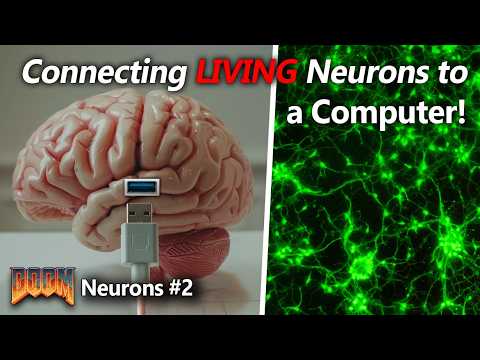


Researchers have achieved a remarkable milestone by successfully running the classic 1993 video game Doom using a simulation of neurons. This breakthrough demonstrates the potential of neuromorphic computing and challenges our understanding of how biological and artificial systems can process information.
The Neuronal Simulation
A research team at a leading technology institute developed a sophisticated neuronal simulation capable of recreating Doom’s gameplay environment. The project required extensive knowledge of both neuroscience and computer science, as the team needed to create digital neurons that could interpret and respond to game data in real-time.
The simulation employed Spiking Neural Networks (SNNs), which replicate how biological neurons communicate through electrical pulses. Unlike conventional artificial neural networks, SNNs process information through discrete events, making them more similar to actual brain function. The researchers combined these networks with traditional computing components to create a hybrid system capable of learning and adapting to the game’s challenges.
The technical implementation involved building a custom framework that could translate the game’s visual and spatial information into neural signals. This required developing new algorithms to convert pixel data and game states into patterns the simulated neurons could process. The resulting system demonstrated an ability to navigate Doom’s environments and respond to threats using purely biological-inspired computation methods.
Implications for Neuromorphic Computing
This achievement carries significant weight for neuromorphic computing, a field dedicated to creating computer architectures that mirror the brain’s structure and operation. By proving that a neuronal simulation can handle a complex, dynamic application like a video game, the research demonstrates that neuromorphic systems have practical applications beyond theoretical models.
The success suggests new possibilities for developing more efficient computing systems. Traditional computers separate memory and processing functions, creating bottlenecks that limit performance and increase power consumption. Neuromorphic designs integrate these functions, potentially offering superior energy efficiency and the ability to adapt to new information without reprogramming.
Beyond technical applications, this research provides a unique platform for studying intelligence itself. By observing how artificial neurons solve problems in a game environment, scientists can gain insights into fundamental aspects of learning and decision-making that might apply to both artificial and biological systems.
Future Directions
The research team is already exploring ways to enhance their neuronal simulation, with particular interest in applications for robotics and autonomous systems. A neuromorphic control system could allow robots to adapt to unpredictable environments using the same flexible problem-solving approaches found in biological organisms.
The technology’s development trajectory points toward systems that could revolutionize how machines interact with complex, changing environments. As the simulation techniques improve, we may see neuromorphic processors that can handle more sophisticated applications while using a fraction of the energy required by conventional computers.
Implications for Neuromorphic Computing
The successful simulation of neurons running Doom has significant implications for the field of neuromorphic computing. This emerging technology aims to develop computer systems that mimic the structure and function of biological brains, potentially leading to more efficient and adaptive computing architectures. By demonstrating that a neuronal simulation can interact with a complex environment like a video game, the researchers have shown that neuromorphic computing can be applied to real-world applications.
Neuromorphic computing has the potential to revolutionize the way we approach computing, offering advantages in areas such as energy efficiency, scalability, and adaptability. Traditional computing architectures are based on the von Neumann model, which separates memory and processing. In contrast, neuromorphic systems integrate these functions, mimicking the brain’s ability to process and store information simultaneously. This approach could lead to breakthroughs in areas like robotics, autonomous vehicles, and healthcare.
| Characteristics | Traditional Computing | Neuromorphic Computing |
|---|---|---|
| Architecture | Von Neumann model | Integrated memory and processing |
| Energy Efficiency | High power consumption | Low power consumption |
| Adaptability | Limited adaptability | High adaptability |
Challenges and Future Directions
While the achievement is impressive, it’s essential to acknowledge the challenges and limitations of this technology. One of the primary hurdles is scaling up the simulation to more complex environments and tasks. Currently, the neuronal simulation is limited to running a relatively simple game like Doom. To truly demonstrate the potential of neuromorphic computing, researchers need to apply this technology to more demanding applications.
Another challenge is the need for more advanced algorithms and computational resources. The researchers behind this project utilized significant computational power and developed novel algorithms to integrate the SNNs with the game engine. As the complexity of the tasks increases, so will the requirements for computational resources and algorithmic sophistication.
The field of neuromorphic engineering continues to evolve rapidly, with researchers exploring various approaches to develop neuromorphic systems. Large-scale research initiatives like the European Human Brain Project focus on developing new computing architectures inspired by the human brain.
Potential Applications and Speculations
The possibilities for neuromorphic computing are vast and exciting. In the near future, we can expect to see applications in areas like:
Robotics: Neuromorphic systems could enable robots to learn and adapt to new environments, making them more efficient and effective in complex tasks.
Autonomous Vehicles: By mimicking the brain’s ability to process and respond to sensory information, neuromorphic systems could improve the safety and efficiency of autonomous vehicles.
Healthcare: Neuromorphic computing could lead to breakthroughs in areas like prosthetics, brain-computer interfaces, and personalized medicine.
As we explore the potential of neuromorphic computing, it’s essential to consider the potential risks and challenges associated with this technology. There are valid concerns about the ethics of developing systems that mimic the human brain.
The achievement of running Doom using a neuronal simulation represents a significant milestone in the development of neuromorphic computing. As researchers continue to advance this technology, we can expect to see innovative applications across various industries. While challenges and limitations exist, the potential benefits of neuromorphic computing make it an exciting and worthwhile area of exploration.