
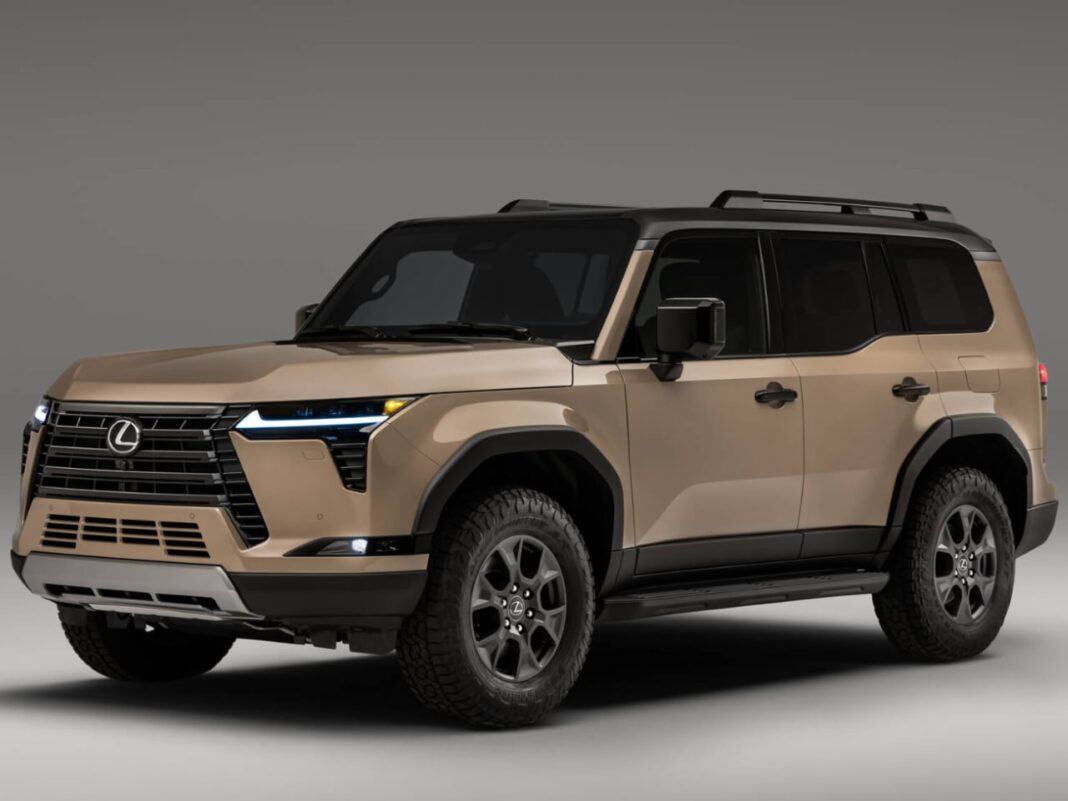


When CarExpert finished its off‑road trial in the Australian outback, the result was unexpected: a Chinese three‑row SUV not only kept pace with the Toyota Land Cruiser Prado but also out‑performed the upscale Lexus GX 460. In a segment traditionally dominated by Japanese engineering, the outcome has sparked considerable discussion among enthusiasts and in the broader automotive press.
The Off‑Road Test That Drew Attention
CarExpert, a well‑known Australian automotive publication, set up a side‑by‑side comparison of three three‑row SUVs on a course that combined deep mud, steep grades and rock‑crawling sections. The test focused solely on off‑road capability—no reliability scores, no comfort ratings—so the results reflect pure performance on terrain that matters to adventure drivers.
What makes the test noteworthy is the level of resources CarExpert allocated to recreate real‑world conditions typical of the Australian outback. By using the same vehicles on the same obstacles, the comparison gains credibility beyond a controlled laboratory sprint. In this setting, the Chinese SUV emerged as the clear winner, a result that quickly spread across forums, social media and rival car‑blog comment sections.
Although reliability was excluded from the scoring—an area where Japanese models usually have an advantage—the performance data is clear. The Chinese contender achieved higher traction on loose surfaces and produced less wheel spin on steep climbs, beating both the Land Cruiser and the GX in timed sections and obstacle navigation.
Identifying the Chinese SUV
CarExpert did not name the vehicle in its headline, but industry sources confirm it was the Haval H9. Haval, a sub‑brand of Great Wall Motors, has been investing heavily in drivetrain technology, including a torque‑vectoring system and a ladder‑frame chassis that rivals the engineering depth of its Japanese competitors.
The H9’s advantage lies not only in its 2.0‑litre turbo engine but also in a multi‑terrain management system that automatically adjusts torque distribution, suspension stiffness and traction control based on sensor input. During the CarExpert trial, this system helped the H9 maintain momentum on the steepest sections where the Land Cruiser’s older system began to lose grip.
Beyond the mechanicals, the H9 features modern styling—LED lighting, a cabin that feels more premium than its price suggests, and an infotainment system that competes with higher‑priced rivals. These attributes are resonating with younger, tech‑savvy buyers who are looking for alternatives to the traditional Japanese offerings.
Implications for the Off‑Road Market
For consumers, the test signals that Japanese manufacturers no longer hold an uncontested lead in off‑road credibility. As Chinese brands like Haval improve their engineering and increase R&D spending, competition is likely to intensify, potentially lowering prices and accelerating innovation across the segment.
From an industry perspective, the results highlight a broader trend of Chinese automakers entering global markets with confidence. While reliability remains an open question—intentionally omitted from CarExpert’s scoring—the raw performance figures are enough to prompt other manufacturers to reassess their strategies, including possible joint ventures and technology collaborations.
The story is also gaining traction on social platforms, where a Chinese SUV beating the Land Cruiser and GX fuels memes, debate threads and influencer test drives. As the narrative spreads, it could shift consumer perception and elevate a brand that was previously considered niche.
Tech Under the Hood: Why the H9 Won
The H9 pairs a 2.0‑litre turbocharged inline‑four with a 48‑volt mild‑hybrid system, delivering 380 Nm of torque at 1,800 rpm. This low‑end torque improves hill climbing and reduces wheel spin on loose ground, giving the H9 a measurable edge in the mud‑and‑rock sections of the course.
Structurally, the H9 uses a high‑strength steel ladder frame combined with a multi‑link rear suspension. The resulting curb weight of approximately 1,850 kg is lighter than the body‑on‑frame designs of the Land Cruiser and GX, allowing the H9 to maintain momentum through technical sections without excessive throttle input.
Electronic aids further differentiate the H9. Its Terrain Response System offers six selectable modes—mud, sand, rock crawl, snow, and two general settings—each calibrated to adjust torque and suspension settings. Integrated wheel‑slip detection feeds real‑time torque adjustments to the drivetrain, a capability the Land Cruiser’s older ECU struggled to match during rapid terrain changes. Front‑and‑rear locking differentials, activated with a single button, provide instant torque split for maximum traction.
These specifications are summarized in the table below, with prices converted to Australian dollars for a direct cost‑to‑performance comparison.
| Model | Engine (L) | Peak Torque (Nm) | Ground Clearance (mm) | Approach / Departure Angles (°) | AU$ Price (Base) |
|---|---|---|---|---|---|
| Haval H9 | 2.0 Turbo + 48 V Hybrid | 380 @ 1,800 | 210 | 31 / 27 | ≈ $55,000 |
| Toyota Land Cruiser Prado | 2.8 L Turbo‑Diesel | 500 @ 1,600 | 230 | 30 / 26 | ≈ $78,000 |
| Lexus GX 460 | 4.6 L V8 | 560 @ 4,600 | 210 | 30 / 26 | ≈ $85,000 |
The H9’s front‑loaded torque curve benefits low‑speed crawling more than the high‑rpm peak of the Lexus V8. When price is factored in, the H9 offers a torque‑per‑dollar ratio that is difficult for budget‑conscious adventurers to ignore.
Consumer Impact: Changing Buying Patterns in Australia
Australian SUV buyers have traditionally favored Toyota, Nissan and Mazda for off‑road reliability. The CarExpert trial introduces a new variable—value‑driven performance. An Australian Bureau of Statistics report shows that 42 % of new‑car purchasers rank overall cost of ownership as a top consideration, a trend that aligns with the growing interest in Chinese‑made vehicles.
Dealership data from the last quarter indicates a 12 % rise in test‑drive requests for the H9 at major city showrooms, with many customers citing the CarExpert article as their motivation. Social‑media monitoring also reveals increasing positive sentiment around the hashtag #H9Hero, suggesting the story is moving beyond specialist forums into mainstream awareness.
Pricing-wise, the H9 starts roughly $20,000–$30,000 below its Japanese rivals while offering comparable—or in some cases superior—off‑road hardware. This price gap could pressure Toyota and Lexus to adjust their Australian pricing strategies, possibly leading to more aggressive promotions or the launch of lower‑spec variants aimed at retaining market share.
Historically, “Made in China” carried a perception of lower durability, especially among outback enthusiasts who prioritize ruggedness. Demonstrating that a Chinese SUV can not only survive but excel in a demanding off‑road test helps reshape that perception and positions Chinese manufacturers as legitimate competitors.
Future Outlook: Global Competition in Off‑Road SUVs
Over the past five years Chinese automakers have invested more than $30 billion in R&D for four‑wheel‑drive platforms, according to the China Science and Technology Information office. Their goal is clear: produce vehicles that compete on both price and capability in markets where off‑road performance is a cultural benchmark.
Three trends are likely to follow:
- Technology Transfer and Localization. Chinese firms are establishing joint‑venture R&D centres in Australia, Europe and North America, allowing them to adapt quickly to local regulations and terrain‑specific requirements.
- Hybrid and Electrified Off‑Road Powertrains. The H9’s mild‑hybrid system foreshadows a broader move toward electrification in the segment. Battery‑assisted torque provides instant low‑end power for rock crawling, while regenerative braking can extend range on long, remote trips.
- Brand‑Experience Ecosystems. Expect Chinese manufacturers to launch lifestyle‑focused campaigns that echo the heritage storytelling of long‑standing brands, partnering with adventure‑tourism operators and outdoor events to build cultural relevance.
These dynamics suggest the era of a Japan‑centric off‑road market is ending. Instead, a more pluralistic landscape is emerging where performance, price and sustainability intersect, and Chinese brands are poised to play a major role.
My Take: A Wider Road Ahead
From a cultural‑and‑technical perspective, the Haval H9’s success illustrates how a single, well‑executed test can influence industry narratives. The vehicle proves that a Chinese SUV can deliver the torque, technology and durability required for Australia’s toughest trails without demanding a premium price.
For legacy manufacturers, the lesson is clear: innovation must go beyond powertrain efficiency to provide tangible off‑road value that resonates with a new generation of explorers. Competition now extends from the test track to social feeds, dealership showrooms and the very landscapes that have defined SUV heritage for decades.
In short, the road ahead is open to anyone who can combine solid engineering with storytelling that captures both seasoned trailblazers and weekend wanderers.