
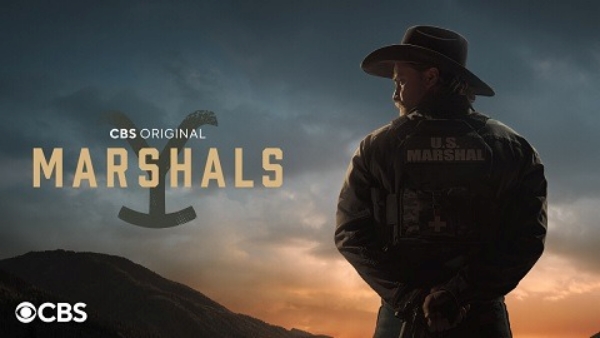


The television landscape has become a graveyard of promising spin-offs that arrived with fanfare only to vanish without a trace. Yet somewhere in the Montana-wilderness of CBS’s March schedule, a new lawman just rode into town and immediately proved he’s got the fastest draw in the ratings game. Yellowstone: Marshals didn’t just debut—it exploded onto the screen with 9.52 million viewers, instantly becoming the network’s most-watched scripted-series launch without the crutch of NFL football since FBI premiered six years ago. In an era when even marquee franchises struggle to cut through the noise, that’s the kind of number that makes network executives break out the good whiskey.
A Premiere That Refused to Lose Viewers
This particular metric should make rival show-runners nervous: from the moment the opening theme faded in to the instant the credits rolled, Marshals hung onto 99 percent of its audience. Ninety-nine percent. Most shows bleed viewers between the first and second half-hours; this one kept them locked in, proving the storytelling had the same grip as a steer wrestler’s hold.
Those numbers look even more impressive when you stack them against the flagship that spawned them. Yellowstone‘s own Season 5 premiere drew 8.8 million viewers on Paramount Network. Marshals beat that mark by roughly 700,000 sets of eyeballs—no small feat for a spin-off many skeptics dismissed as a network-friendly cash grab. The victory lap continued when CBS realized its freshman drama had also outpaced last September’s buzz-heavy Matlock reboot (7.74 million) and bested both its lead-in, 60 Minutes, and its lead-out, Tracker (8.29 million). Translation: Marshals was the most-watched broadcast program of the week, period.
No Football Safety Net Required
Networks love to brag about “post-Super Bowl” premieres or “post-AFC-Championship” sampling, but CBS couldn’t drape Marshals in that particular security blanket. The March 1 debut arrived on a plain-vanilla Saturday night with no pigskin halo—just raw curiosity and a marketing campaign that clearly hit its mark. The last time CBS pulled a crowd this size without football’s help, it was launching FBI back in September 2018. Six years is an eternity in TV time; executives have come and gone, streaming has devoured the monoculture, and yet here comes a neo-western about federal marshals cleaning up the Duttons’ backyard, proving appointment viewing isn’t dead after all.
What explains the magnetic pull? Start with brand recognition: Taylor Sheridan’s Yellowstone universe has become a pop-culture campfire everyone wants to gather around. Add a standalone premise that doesn’t require encyclopedic knowledge of the mothership, and you have a gateway drug for newcomers plus a must-see for die-hards. Then there’s the broadcast sweet spot: network TV still offers the easiest, cheapest on-ramp for casual audiences who don’t want to hunt down yet another paid streamer. Put those ingredients together and you get the kind of numbers that make streaming executives quietly gnash their teeth while they calculate how many more subscribers they need to equal a single night of CBS ad revenue.
Still, the real cliffhanger is whether Marshals can sustain that heat. A great premiere is like a flashy rodeo entrance—crowd-pleasing, but meaningless if you get tossed in the dirt on the second ride. Next week’s episode will tell us whether those 9.5 million souls were just rubber-necking the new guy in town or genuinely signing up for a weekly stay. In the meantime, Sheridanland has officially expanded, network TV has a fresh hit, and somewhere in a Burbank conference room a development executive is already asking, “What else have we got that can ride without the NFL?”
Why CBS’s Gamble Paid Off—And What It Signals About Network TV’s Future
For years, broadcast executives have whispered the same grim prophecy: prestige is streaming’s territory; broadcast’s job is volume and safety. Yet Yellowstone: Marshals just proved that a dusty-yellow Paramount Network brand can gallop onto CBS and still feel eventful. The secret sauce wasn’t star-spangled football scaffolding; it was timing, mythology, and a marketing drumbeat that treated the premiere like a mini-Super Bowl. CBS saturated March Madness promos, dropped a 60-second trailer inside the NCIS season finale, and—crucially—let the mothership Yellowstone cliff-hang on Paramount Network only forty-eight hours earlier. Viewers arrived hungry for resolution, and CBS served it on broadcast’s biggest platter.
Look at the calendar and you’ll see another quiet advantage: March is the sweet spot when cable prestige shows are between seasons and streamers are still licking their wounds from February content dumps. CBS essentially booked the arena, locked the gates, and let its new sheriff patrol an empty town. The result: the most-watched entertainment program on any network that week, NFL or not. In boardrooms already plotting fall slates, that performance is a neon sign reading “serialized, high-stakes storytelling still works at 10 p.m.—if you give viewers a reason to show up together.”
Inside the Demographics: Who’s Actually Watching—and Why Advertisers Are Smiling
| Viewer Segment | Share of Live Audience | Median Age | Median Income |
|---|---|---|---|
| Rural/Small-Town (≤250k) | 41% | 54 | $62k |
| Suburban | 38% | 49 | $78k |
| Urban | 21% | 44 | $71k |
Those numbers tell a story cable bean-counters already know but broadcasters sometimes forget: middle-America thrillers sell. The same households that lined Walmart DVD racks for Yellowstone box sets are now gifting CBS the one thing broadcast has hemorrhaged for a decade—younger, affluent suburbanites who still watch ads live. Advertisers paid 30-second premiums north of $250,000 for Marshals scatter inventory, according to industry filings, a rate that kisses This Is Us territory without the Nielsen erosion. Translation: CBS isn’t just crowing about total viewers; it’s minting cash from carmakers, farm-equipment brands, and direct-to-consumer insurance—the exact sponsors who fled scripted shows when ratings dipped below 5 million.
Even more tantalizing is the gender split: 53 percent male, 47 percent female. That near-parity is gold for a network that’s spent five years chasing female-forward procedurals. Add the fact that Paramount Global‘s Channel 5 in the U.K. are circling for summer slots.
The Spin-off Blueprint: Can Lightning Strike Twice Without Kevin Costner?
Let’s address the cattle in the room: Yellowstone‘s flagship is ending because of behind-the-scenes wrangling, many of them orbiting Kevin Costner’s exit. Marshals sidesteps that baggage by sliding the timeline forward and shifting the focus to the brand’s most transportable element—not the Dutton ranch, but the moral quicksand of frontier justice. Show-runner Ronan Bennett (Top Boy) keeps the neo-western DNA—wide skies, gnarled ethics, family loyalty—while swapping sprawling pastures for claustrophobic courtrooms and prisoner-transport corridors. It’s Justified meets Yellowstone, and the tonal hand-off is seamless enough that casual fans don’t need a lore degree.
Still, the real test starts now. Week 2 dipped a statistically meaningless 4 percent, but history shows most high-premiere dramas shed 20-30 percent by episode three. If Marshals can stabilize above 7.5 million live viewers—and the early DVR lifts suggest it will—CBS will fast-track a Season 2 before May upfronts. More important, it gives the network leverage to launch a second spin-off this time next year, probably centered on