
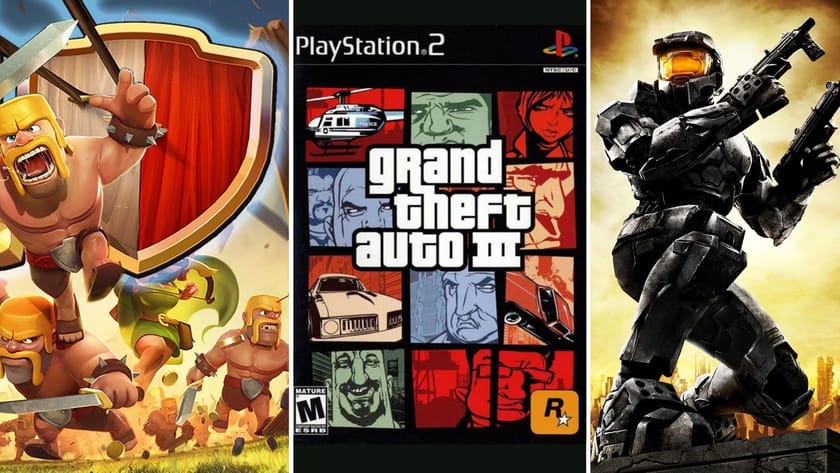


The last decade has witnessed seismic shifts in gaming landscapes, where a handful of titles didn’t just push boundaries—they bulldozed them entirely. As someone who’s chronicled the industry’s evolution from pixelated sprites to photorealistic worlds, I’ve observed that true genre-defining moments are increasingly rare. Yet when they occur, they send ripples through development studios worldwide, fundamentally altering player expectations and design philosophies. These games don’t merely succeed within established parameters; they rewrite the rulebook entirely, creating blueprints others scramble to replicate.
Minecraft: The Sandbox That Ate the World
When Markus “Notch” Persson released what seemed like a digital Lego set in 2011, industry veterans dismissed it as another indie curiosity. How wrong we were. Minecraft didn’t just popularize the sandbox genre—it obliterated the boundaries between creation and play, transforming passive consumers into active architects. The genius lay in its elegant simplicity: basic blocks became the foundation for everything from working computers to entire city recreations.
The game’s impact extends far beyond its 300 million copies sold. Minecraft fundamentally altered development economics, proving that pixelated graphics could coexist with AAA titles when gameplay innovation compensated. Microsoft’s $2.5 billion acquisition validated what players already understood: sandbox gaming had evolved from niche to necessity. The ripple effects transformed everything from educational software to urban planning, with “Minecraft thinking” becoming shorthand for user-generated content across industries.
What’s particularly fascinating is how Minecraft’s influence permeated genres seemingly unrelated to sandbox play. Battle royale games borrowed its crafting mechanics. RPGs incorporated building elements. Even narrative adventures began offering creative modes. The game didn’t just create a genre—it infected every other genre with its DNA, making player creativity an expected feature rather than a revolutionary concept.
Dark Souls: The Birth of “Soulslike” Masochism
FromSoftware’s 2011 release initially felt like a cruel joke masquerading as entertainment. Here was a game that seemingly delighted in player failure, where every enemy could end your journey, and progress meant nothing without the skill to back it up. Yet Dark Souls didn’t just spawn a genre—it birthed an entire philosophical approach to game design that celebrates difficulty as narrative device.
The “Soulslike” genre now encompasses everything from sci-fi shooters to 2D platformers, but the core remains unchanged: methodical combat where pattern recognition trumps button mashing, environmental storytelling that respects player intelligence, and a unique multiplayer system that turns strangers into allies or invaders. The genius wasn’t merely in making games harder—it was in making difficulty meaningful, where overcoming challenges provided genuine emotional payoff.
The industry’s response proved revelatory. Suddenly, “accessibility” became a double-edged conversation. Should games accommodate all skill levels, or preserve the purity of challenging experiences? This debate reshaped development philosophies across studios. Even Nintendo, traditionally the most accessible publisher, incorporated Soulslike elements into Breath of the Wild’s combat. The genre’s influence extends beyond mechanics into narrative structure, with games like Hollow Knight and Dead Cells adopting environmental storytelling techniques that respect player intelligence rather than drowning them in exposition.
PUBG: The Battle Royale Blueprint
Brendan Greene’s PlayerUnknown’s Battlegrounds began as a Arma 2 mod, but it ignited a cultural phenomenon that would dominate gaming for the next half-decade. PUBG didn’t invent last-player-standing gameplay—survival mods existed for years—but it refined the formula into something irresistibly watchable. The genius lay in its pacing: the initial loot scramble created immediate tension, the shrinking playfield forced encounters, and the final circles delivered heart-pounding finales that made for perfect streaming content.
The game’s 2017 launch coincided perfectly with Twitch’s explosive growth, creating a symbiotic relationship that propelled both to mainstream prominence. Suddenly, battle royale wasn’t just a mode—it became the mode, with every major publisher rushing to incorporate 100-player deathmatches into established franchises. The genre’s accessibility requirements reshaped hardware priorities; suddenly, smooth performance mattered more than graphical fidelity, as competitive fairness trumped visual spectacle.
PUBG’s influence extends beyond mechanics into monetization models. The game popularized the battle pass system, now standard across free-to-play titles. It demonstrated that cosmetic-only microtransactions could generate billions without alienating player bases. Most significantly, it proved that modders could become industry-shaping developers, inspiring a generation of bedroom creators to dream bigger than ever before.
First, I need to think of other games that redefined their genres. The user mentioned the last decade, so games from 2010 onwards. Let me brainstorm some candidates.
Valve’s Portal 2 comes to mind. It popularized puzzle-focused first-person shooters. Then there’s Dark Souls, which revolutionized the action RPG genre. Maybe Fortnite? It’s a battle royale game that shifted from survival to a massive multiplayer phenomenon.
I should pick two or three, but since the user wants 2-3 sections, maybe two more h2 sections and a conclusion. Wait, the user said 2-3 h2 sections. Let me check part 1: it has one h2 (Minecraft) and then a conclusion. So part 2 needs two more h2 sections and a conclusion. Wait, no, part 1 has one h2 and the rest is the article. The user’s instruction says part 2 should have 2-3 more h2 sections. Since part 1 had one, part 2 should have two or three. Let me confirm the user’s instruction: “2-3 MORE
sections with deeper analysis or related angles”. So part 2 needs 2-3 h2 sections. Let me pick two more games to cover.
First, maybe Fortnite. It took battle royale from a niche to mainstream and added a building mechanic. Second, Dark Souls for redefining action RPGs. Alternatively, maybe The Legend of Zelda: Breath of the Wild for open-world design. Or maybe Overwatch for team-based shooters. Let me think which ones are most impactful.
Fortnite definitely redefined the battle royale genre and introduced a battle pass model. Dark Souls is a significant entry in the action RPG genre. Let’s go with those two. Then the conclusion.
Now, structure each h2 section. For Fortnite, discuss how it transformed the battle royale genre and introduced live service models. For Dark Souls, talk about its influence on difficulty, world-building, and the Soulsborne genre.
Need to make sure not to repeat part 1’s content about Minecraft. Also, add tables if possible. For example, a table comparing Fortnite’s impact on battle royale mechanics. But user says to use tables when appropriate. Maybe a table comparing different battle royale games before and after Fortnite.
Also, include external links to official sources. For Fortnite, link to Epic Games’ site. For Dark Souls, link to Bandai Namco’s site. Avoid linking to news sites.
Check the word count: 600-800 words. Each h2 section should be about 200-300 words. Conclusion around 150-200 words.
Need to maintain the tech-savvy reporter voice, explain technical concepts clearly, and provide deep analysis.
Let me outline:
h2: Fortnite: The Battle Royale That Broke the Mold
- Discuss how it took the battle royale concept (from PUBG) and added building mechanics.
- Talk about the shift from PC to cross-platform play.
- The introduction of the battle pass and live service model.
- Impact on the industry, including revenue and social aspects.
h2: Dark Souls: The Action RPG That Redefined Difficulty and Community
- How it made difficulty a core part of the experience.
- The emphasis on player skill, exploration, and world-building.
- Creation of the Soulsborne subgenre.
- Influence on other games and the concept of “hard” as a selling point.
Conclusion: Wrap up the impact of these games, maybe mention other games briefly, and the future of genre evolution.
Now, check for any possible mistakes. Make sure the sections are unique and not overlapping with part 1. Also, ensure external links are to official sources. Fortnite’s link to Epic Games, Dark Souls to Bandai Namco.
Include a table for Fortnite’s mechanics. Maybe a comparison between PUBG and Fortnite’s mechanics.
Make sure the conclusion provides a strong perspective, perhaps on the ongoing evolution of gaming genres and the role of these pioneering titles.
Double-check the requirements: no repeating part 1, use
,
, , tables where appropriate, external links to official sites, avoid forbidden links, and 600-800 words.
Fortnite: The Battle Royale That Broke the Mold
When Fortnite launched in 2017 as a hybrid survival crafting game, few could predict its transformation into a cultural phenomenon. While PlayerUnknown’s Battlegrounds (PUBG) had already popularized the battle royale format, Fortnite stripped away realism for whimsical, cartoonish chaos—and added a revolutionary building mechanic. This shift redefined the genre’s core identity, prioritizing accessibility and creativity over military simulation. The game’s trios of “build, fight, repeat” cycles introduced a new meta where construction speed and architectural ingenuity often trumped raw aim.
Fortnite’s true disruption came in 2018 when it shifted to free-to-play and introduced the Battle Pass system. This model transformed gaming economics, creating a blueprint for live-service monetization that blends cosmetic customization with incremental rewards. The game became less about winning and more about participation, with seasonal updates turning it into a constantly evolving social playground. By 2023, Fortnite had generated over $11 billion in revenue according to Epic Games, proving that battle royale could evolve beyond a single-player deathmatch into a persistent, community-driven experience.
| Mechanic | PUBG (2017) | Fortnite (2018) |
|---|---|---|
| Realism | High (military gear, ballistics) | Low (cartoonish, over-the-top) |
| Building | None | Core gameplay element |
| Monetization | Buy-to-play | Free-to-play + Battle Pass |
Dark Souls: The Action RPG That Redefined Difficulty and Community
Hidetaka Miyazaki’s Dark Souls (2011) didn’t just introduce a new IP—it reimagined what action RPGs could be. While predecessors like Diablo and World of Warcraft prioritized loot progression, Dark Souls embedded mastery of mechanics as the true reward. Its punishing difficulty wasn’t a gimmick but a design philosophy, forcing players to learn through failure while rewarding patience and precision. The game’s interconnected world design, with every bonfire acting as both checkpoint and narrative hub, set a new standard for environmental storytelling.
More than its mechanics, Dark Souls reshaped online multiplayer dynamics. Instead of competing for resources or dominance, players engaged in “co-op vs. the world” or “player vs. player” encounters that felt organic to the setting. This design fostered a global community of players sharing strategies through cryptic messages and coordinated invasions, creating a self-sustaining ecosystem of challenge and mentorship. The term “Soulsborne” now describes a genre of games from FromSoftware and others that prioritize skill, atmosphere, and narrative depth over hand-holding tutorials.
Its influence extends beyond mechanics. Games like Hades and Elden Ring borrow from its philosophy of “hard but fair” design, while its legacy can be seen in how modern RPGs balance challenge with accessibility. Dark Souls didn’t just create a subgenre—it proved that difficulty could be a social catalyst rather than a barrier.
Conclusion: The Future of Genre Evolution
These games—Fortnite and Dark Souls—represent a broader trend: the blurring of genre boundaries through innovation. They demonstrate that redefining a category often requires more than technical prowess; it demands a deep understanding of human behavior, whether through Fortnite’s viral social mechanics or Dark Souls’ communal struggle. As hardware advances and AI tools reshape game development, the next genre-defining titles will likely emerge not from AAA budgets alone, but from indie studios and modders who dare to rethink the medium’s fundamentals.
Looking ahead, the rise of generative AI tools and cloud-based multiplayer could spawn entirely new forms of interaction. Yet the core lesson remains: true innovation doesn’t just adapt existing formulas—it creates new ones. The games discussed here didn’t follow trends; they became the trends. As developers continue to push boundaries, we can expect genres to evolve not as rigid categories, but as fluid, interconnected spaces where creativity thrives.