
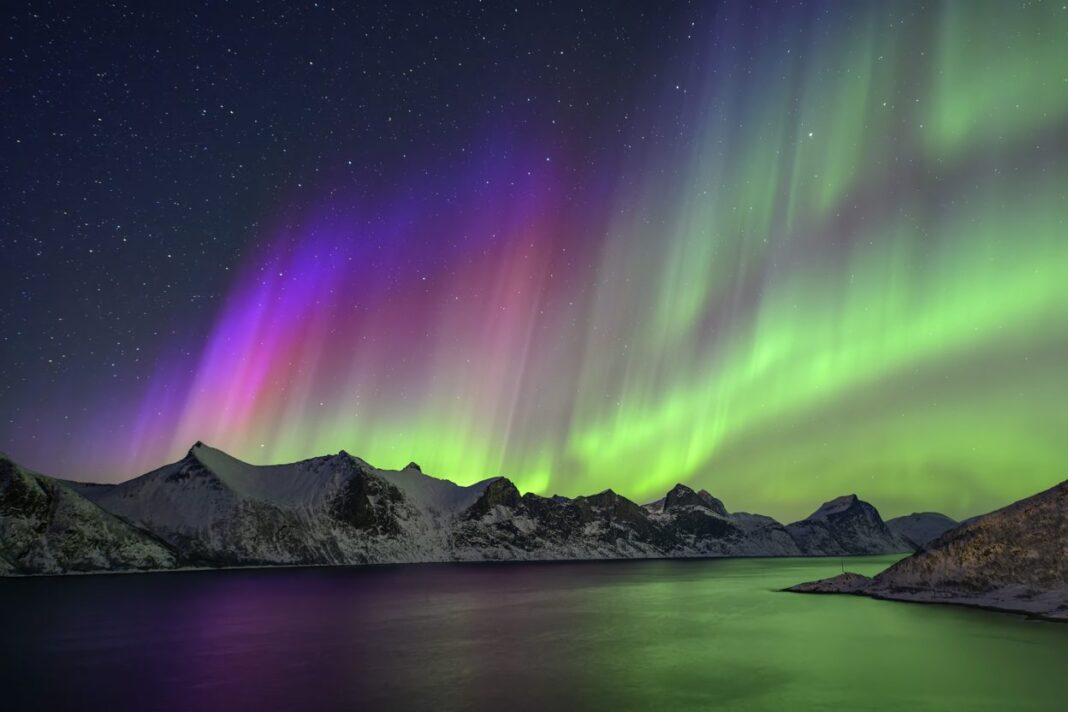


The night sky is ablaze with a breathtaking spectacle as the northern lights reach their peak, captivating the hearts of stargazers and photographers alike. The aurora borealis, a natural phenomenon born from the polar skies, has been putting on a show across the Northern Hemisphere. We’re here to guide you on how to catch a glimpse of this ethereal display before it fades.
The Science Behind the Spectacle
The northern lights are a result of charged particles from the sun interacting with the Earth’s magnetic field and atmosphere. This interaction causes the atoms and molecules in the atmosphere to excitedly emit light, resulting in the vibrant colors we see in the night sky. A period of heightened solar activity has led to the recent peak in the northern lights, making it an ideal time to witness this phenomenon. According to NASA, the current solar cycle is producing more frequent and intense geomagnetic storms, leading to an increased likelihood of spectacular aurora displays.
The colors and patterns of the northern lights vary greatly, depending on the energy of the particles and the altitude at which they collide with the atmosphere. Green is the most common color, produced by collisions at altitudes of around 100-200 km. Red is produced by collisions at higher altitudes, while blue and violet are produced by collisions at lower altitudes. Understanding the science behind the northern lights can enhance the viewing experience, as it allows us to appreciate the complexity and beauty of this natural phenomenon.
Top Locations for Viewing the Northern Lights
Several prime locations across the Northern Hemisphere offer excellent views of the aurora borealis. Tromsø, Norway is renowned for its excellent views, thanks to its location in the Arctic Circle and minimal light pollution. Other top destinations include Fairbanks, Alaska, Yellowknife, Canada, and Svalbard, Norway. These locations offer a high probability of clear skies and optimal viewing conditions, making them ideal for both seasoned aurora chasers and first-time viewers.
In addition to these prime locations, Orkney Islands, Scotland and Iceland are becoming increasingly popular among aurora enthusiasts, offering a unique blend of natural beauty and cultural experiences. When planning your trip, be sure to check aurora forecasts and local weather conditions to maximize your chances of witnessing this spectacle.
Tips for Capturing the Perfect Shot
For photographers, the northern lights offer a unique opportunity to capture breathtaking images. A camera with manual settings and a tripod is essential for stabilizing the camera. A wide-angle lens with a low f-stop value (around f/2.8) is ideal for capturing the vibrant colors and patterns of the aurora. Dress warmly and be prepared for potentially long exposure times, as cold temperatures can quickly drain battery life.
When composing your shot, consider incorporating interesting foreground elements, such as landscapes or silhouettes, to add depth and context to your image. Experiment with different shutter speeds and ISO settings to capture the dynamic movement and colors of the northern lights. With the right equipment and patience, you can capture stunning images of this natural wonder.
Best Times and Conditions for Viewing
The northern lights are typically visible on clear, dark nights from late August to early April. The best time to see them is around the equinoxes in March and September, when the Earth’s magnetic field is tilted, allowing for more charged particles to interact with the atmosphere. For optimal viewing, look for nights with minimal moonlight and clear skies. The Kp index, a measure of auroral activity, can help predict the likelihood of a spectacular display. A Kp index of 4 or higher is considered good for viewing the northern lights.
| Location | Best Time to View | Optimal Viewing Conditions |
|---|---|---|
| Tromsø, Norway | September to April | Clear skies, Kp index 4+ |
| Yellowknife, Canada | November to March | Dark skies, Kp index 3+ |
| Svalbard, Norway | September to November, February to March | Clear skies, Kp index 4+ |
Photography Tips for Capturing the Northern Lights
Capturing the northern lights on camera requires specialized equipment and techniques. A wide-angle lens with a low f-stop value (such as f/2.8) is ideal for capturing the expansive display. A tripod is essential for stabilizing the camera and avoiding blur. For optimal results, use a remote shutter release or the camera’s self-timer to minimize camera shake.
When composing your shot, consider including interesting foreground elements, such as trees or buildings, to add depth to the image. ISO settings should be set to 800 or higher, and the shutter speed should be around 20-30 seconds.
Impact of Climate Change on the Northern Lights
Research suggests that climate change may affect the northern lights in the coming years. A study by the University of Alaska Fairbanks found that increasing levels of greenhouse gases in the atmosphere may alter the Earth’s magnetic field, potentially weakening the northern lights. However, more research is needed to fully understand the impact of climate change on this phenomenon.
According to the National Oceanic and Atmospheric Administration (NOAA), the northern lights are an important indicator of the Earth’s magnetic field and upper atmosphere. Changes in the northern lights could have significant implications for our understanding of the Earth’s climate and magnetic field.
In conclusion, witnessing the northern lights is a once-in-a-lifetime experience that requires planning and preparation. By understanding the science behind the spectacle, choosing the right location and time, and using the right photography techniques, you can increase your chances of witnessing this breathtaking display. As we continue to monitor the northern lights, it’s essential to consider the potential impact of climate change on this phenomenon and support further research into this area. With the northern lights peaking now, get ready to embark on an adventure of a lifetime and experience the natural beauty of the aurora borealis.