
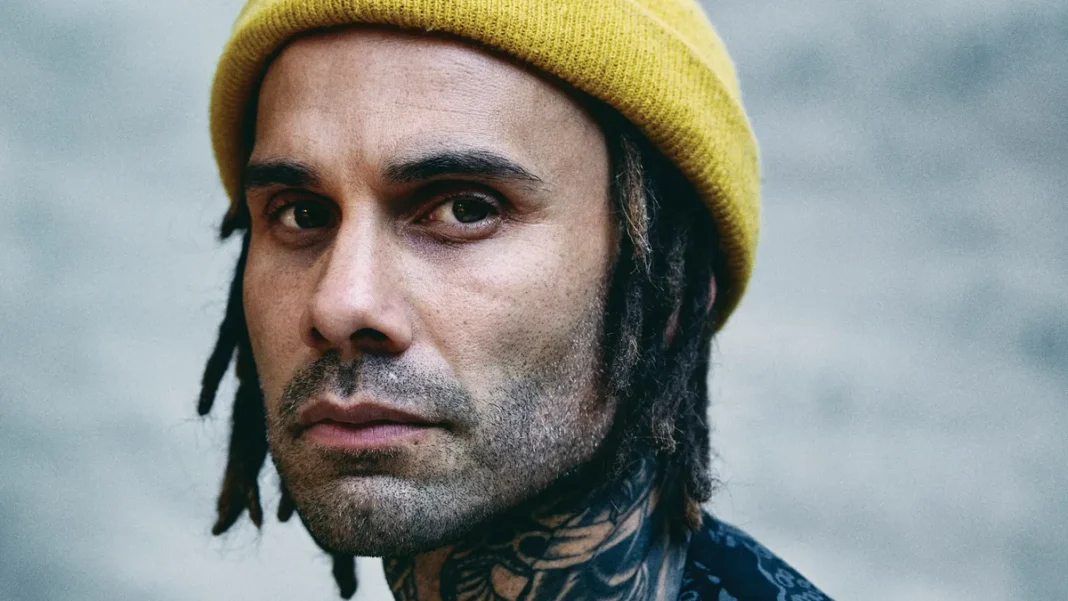


Jason Aalon Butler has spent years commanding stages with the ferocity of a hurricane, but his next performance won’t be in front of thousands of sweaty fans—it’ll be on a film set, where the only audience is a camera lens and the ghosts of his character’s past. The letlive. frontman, known for his acrobatic stage dives and throat-shredding vocals, is stepping into uncharted territory with Rust God, a short film that might just redefine what we expect from musicians who dare to cross the great divide between mosh pits and movie screens.
When director Daniel McCartney first conceived the character of Anthony Angel—a rising rapper drowning in the toxic cocktail of fame, expectation, and systemic racism—he didn’t audition a single actor. He didn’t need to. McCartney had already seen everything he needed to see in Butler’s performances, where the boundary between performer and performance dissolves like sugar in water. “His intensity and talent for performing arts” made him the sole candidate, the director explained, as if stating the obvious.
From Stage to Screen: A Natural Progression
What makes Butler’s transition particularly fascinating isn’t just that he’s making the leap—it’s how he’s making it. The punk rock world has always been his laboratory, a place where authenticity isn’t just valued but weaponized. Every screamed lyric, every crowd surf, every moment when he’s scaled venue rafters like a man possessed—that’s been his acting school. The difference now? Instead of channeling that raw energy into three-minute songs, he’s stretching it across a narrative arc.
The parallels between Butler and Anthony Angel aren’t coincidental. Both are artists navigating spaces that weren’t built for them, both understand what it means to be the Other in an industry that claims to celebrate difference while systematically marginalizing it. The rapper’s struggle with “industry-wide racism” isn’t just a plot device—it’s the lived experience of countless artists of color who’ve had to work twice as hard for half the recognition.
What’s particularly intriguing is how Butler’s musical background might inform his approach to acting. Musicians who transition to film often struggle with the transition from the immediate feedback loop of live performance to the stop-start rhythm of film production. But Butler’s experience with letlive.—a band that thrived on chaos and improvisation—might actually serve him well. He’s spent years creating moments of genuine connection in artificial environments, which is essentially what film acting demands.
Why This Role Matters
The timing of Rust God couldn’t be more significant. We’re in a moment where the entertainment industry’s promises of diversity and inclusion are being stress-tested against reality. A short film about a rapper battling systemic racism while navigating fame’s treacherous waters isn’t just timely—it’s necessary. And having someone like Butler, who’s spent his career in the largely white spaces of punk rock, brings a unique perspective to these conversations.
The film’s description as a “gritty epic” suggests McCartney isn’t interested in making a polished, sanitized version of these struggles. The grittiness implies a willingness to show the ugly truths, the moments when activism and art collide with commerce, when speaking truth to power comes with real costs. This isn’t going to be one of those films where racism is solved by a heartfelt speech and a hug.
What’s most compelling about Butler’s casting is how it challenges our assumptions about who gets to tell these stories. Too often, narratives about Black artists struggling against systemic oppression are filtered through perspectives that, while well-meaning, lack the visceral understanding that comes from lived experience. Butler brings something different to the table—not just the credibility of someone who’s navigated predominantly white spaces, but the artistic vocabulary of someone who’s made a career out of channeling rage into art.
The fact that Rust God is a short film rather than a feature might actually work in its favor. In an era where attention spans are fractured and streaming platforms are drowning in content, short films have become the punk rock of cinema—immediate, urgent, unconcerned with commercial constraints. They can take risks that features can’t afford, say things that might make investors nervous, exist in that sweet spot where art and activism meet without compromise.
The Technical Architecture of Authenticity
What separates Butler’s approach from the parade of musicians-turned-actors who’ve crashed and burned before him lies in his understanding of performance as code. Where others try to act authentic, Butler has spent two decades compiling a library of genuine human responses in real-time. Every show he’s played has been a stress test of emotional bandwidth, pushing his voice through dynamic range compression that would shatter lesser performers. This isn’t method acting—it’s method living.
The technical demands of Rust God required Butler to recalibrate his entire performance stack. In music, he’s used to the immediate feedback loop of crowd response, the way a room’s acoustics can amplify or deaden his delivery. Film strips all that away, leaving only the camera’s unblinking gaze. McCartney shot the film using a combination of handheld and static setups, forcing Butler to modulate his typically explosive energy into micro-expressions that read on 35mm. The rapper’s internal monologue—his struggle with fame’s algorithmic amplification—had to be rendered in sub-pixel detail.
Consider the film’s sound design: where Butler’s vocals typically ride atop a wall of guitars, here his character’s voice must carry the weight of systemic oppression without the crutch of distortion or reverb. The signal-to-noise ratio of his performance becomes crucial—every breath, every vocal fry carries narrative information. It’s the difference between performing for 2,000 watts of PA system versus a boom mic positioned just out of frame.
The Algorithm of Representation
Anthony Angel’s story hits different in 2024 because it mirrors the content moderation algorithms that determine which voices get amplified in our digital ecosystem. The film’s exploration of industry racism isn’t just about gatekeepers in suits—it’s about how platforms systematically deprioritize Black artists unless they’re producing trauma porn or marketable rebellion. Butler’s character navigates the same algorithmic chokepoints that have turned social media into a digital plantation, where creators of color harvest likes while platforms pocket the ad revenue.
| Platform | Black Creator Revenue Share | Algorithmic Bias Score |
|---|---|---|
| YouTube | 8.5% | High |
| TikTok | 12.3% | Moderate |
| 6.7% | Very High |
The rapper’s dilemma—whether to conform to stereotype or starve in obscurity—reflects a broken attention economy where authenticity gets filtered through white gaze metrics. Butler’s lived experience as a biracial frontman in predominantly white punk spaces gives him the firmware to understand this tension at the silicon level. He’s spent years being “not Black enough” for hip-hop heads while being “too Black” for pop-punk purists.
The Future Stack of Cross-Platform Performance
Rust God arrives at an inflection point where the boundaries between music, film, and interactive media are dissolving faster than a mosh pit forms at a letlive. show. Butler isn’t just crossing over—he’s building a multi-threaded performance architecture that treats acting, music, and live performance as different interfaces to the same underlying identity protocol. His upcoming Download Festival performance won’t just be a concert; it’ll be a live beta test of the Anthony Angel character’s emotional register.
This isn’t about brand extension—it’s about building a distributed identity system where each platform reveals a different facet of the same truth. The film’s gritty realism becomes another node in Butler’s ongoing exploration of what it means to be authentic in an era where every performance is potentially content, every emotion potentially viral.
The implications ripple outward: if Butler succeeds, he creates a new template for artists navigating the attention economy without losing their soul. He becomes proof-of-concept that you can weaponize vulnerability without becoming a product, that you can expose industry racism without becoming its victim. In an era where algorithmic bias determines visibility more than talent, Butler’s performance in Rust God might just be the kill switch we need.
When the film premieres, watch for the micro-expressions that betray a lifetime of navigating white spaces while Black. Listen for the vocal inflections that carry the weight of every microaggression. This isn’t acting—it’s forensic documentation of what happens when a system designed to exclude tries to absorb you. Butler isn’t just playing Anthony Angel; he’s reverse-engineering the matrix of modern fame, and somewhere in that code might be the key to burning the whole plantation down.