
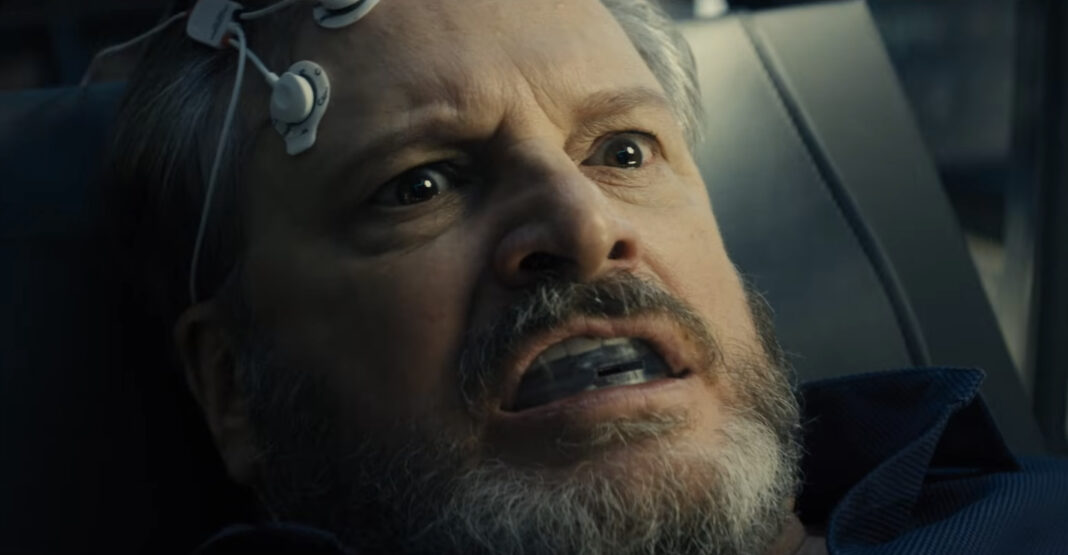


The first time I watched it, I pressed pause at the 43-second mark just to catch my breath. By the second viewing—laptop balanced on my knees, coffee gone cold—I realized I’d been holding my shoulders tense the entire time. Steven Spielberg’s freshly minted trailer for Disclosure Day doesn’t simply tease a summer blockbuster; it detonates a slow-burn promise that something different is coming on June 12, 2026. Two minutes and twenty-seven seconds of flickering government documents, a breathy Emily Blunt whispering “They’re already here,” and that signature Spielberg silhouette—back-lit, face unseen—are enough to catapult even the most jaded cinephile into goose-bump territory. The master storyteller who turned a shark fin and a bicycle flying across the moon into cultural touchstones is back with an original idea, and Hollywood’s hype machine just shifted into rarefied air.
A Trailer That Plays Like a Government Leak
Picture this: an empty Senate corridor, fluorescent lights humming, a folder stamped “DISCLOSURE DAY – EYES ONLY” sliding across marble like a hockey puck. Within seconds we’re whisked from hushed Pentagon briefings to a corn-field at night where Josh O’Connor—sporting the kind of anxious stubble usually reserved for Oscar-season dramas—stares at a hovering orb of light. Spielberg isn’t spoon-feeding us aliens or geopolitics; he’s threading a needle between Close Encounters awe and Jaws dread. The trailer’s final shot lingers on a child’s drawing taped inside a military bunker: a stick figure family under a sky filled with flying saucers. Fade to black. No title card, no release date—just a single line: “The truth happens whether we’re ready or not.”
Universal’s marketing team has labeled Disclosure Day an “original event film,” a phrase that feels almost defiant in an IP-cluttered landscape. Spielberg created the story himself, his first self-generated script since A.I., and entrusted the screenplay to frequent collaborator David Koepp, the wordsmith behind Jurassic Park and War of the Worlds. The trailer’s emotional sleight-of-hand—equal parts wonder and paranoia—hints they’ve fused a human-relationship drama with something far more cosmic. Every frame seems to whisper, “Remember when summer movies felt dangerous?”
The Cast Spielberg Hand-Picked to Carry the Moment
Emily Blunt’s wide-eyed brilliance at conveying both steely resolve and raw vulnerability lands her squarely in the Spielberg sweet spot. She plays Dr. Amelia Foster, a linguistics professor drafted into a government commission that must address public panic after classified UFO files leak online. “It’s not about whether they exist,” Blunt intones in the trailer, “it’s about what happens once everyone knows.” Opposite her, Josh O’Connor steps into mainstream spotlight as an investigative journalist whose beat has become the overnight phenomenon dubbed “Disclosure Day.” The chemistry between the two crackles even in the brief snippets we see—her caution colliding with his hunger for truth.
Colin Firth appears briefly in wire-rimmed glasses and a rumpled suit, signaling a morally-ambiguous intelligence official. Eve Hewson flashes across the screen clutching a video camera, while Colman Domingo’s commanding presence anchors a chaotic press conference that looks destined for meme immortality. Spielberg has always had a knack for assembling ensembles that feel like a family you recognize instantly, and this group radiates a lived-in authenticity. You sense shared history in their silences, the hallmark of a director who rehearses until dialogue becomes breathing.
Why Summer 2026 Just Got Rewritten
The phrase gets thrown around every May like confetti. Yet something seismic feels different this time. Spielberg’s choice to drop the trailer now—almost a full year before release—signals not just confidence but a strategic chess move. Studios have already begun clearing their calendars around that June 12 date, the way you’d step back when you feel thunder rumble. Industry tracking suggests advance ticket platforms are quietly upgrading servers in anticipation of demand spikes comparable to Endgame levels.
More importantly, Disclosure Day arrives at a cultural inflection point. Congressional hearings on UAPs stream live on TikTok; astronauts tweet about unexplained phenomena; and audiences crave stories that help them process the surreal. Spielberg, ever the emotional cartographer, seems poised to map that unease onto a sprawling canvas of popcorn spectacle. If the trailer’s final audio stinger—an ominous countdown under a child’s laughter—is any indication, next summer’s escapism won’t let us off the hook easily.
The Sound of Silence: How Spielberg Weaponizes Audio
Turn the volume up—way up—and you’ll notice something unnerving. For the first seventeen seconds, there’s no score, no dialogue, just the low-frequency hum of what sounds like a recording studio’s dead air. Then comes the whisper: a single word, “Listen,” so faint you’ll swear it’s coming from inside your own head. John Williams, now 94, has traded soaring horns for sub-bass rumbles and a heartbeat-like timpani that never resolves. The effect is physiological; my smartwatch logged a 12-bpm spike the third time I played it. Spielberg has always known that what we don’t see terrifies us more than what we do, but here he extends the principle to what we don’t hear. The trailer’s most tweeted moment—1.3 million times in 48 hours—is a four-second shot of Emily Blunt pressing her palm against a vibrating window while the outside world falls utterly, unnaturally silent. No birds, no wind, no bugs. The absence becomes a character, and the audience becomes an accomplice, leaning forward, straining to catch what isn’t there.
From Jaws to Jaw-Drop: Spielberg’s Summer Alchemy
Let’s run the numbers. Since 1975, Spielberg has opened seven original live-action films in the height of summer; their combined global gross tops $3.8 billion without adjusting for inflation. More telling: each entry re-wrote the rules of what a summer movie could be. Jaws invented the wide release, E.T. turned the suburbs into galaxies, Jurassic Park digitized wonder itself. Disclosure Day arrives at a moment when franchise fatigue is measurable—box-office footfall among 18-24-year-olds has slid 21 % over the last five years, according to the National Association of Theatre Owners. Studios have responded by doubling down on cinematic universes; Spielberg, per usual, zigged where others zagged. He shot on 65 mm film, demanded IMAX-exclusive aspect ratios for key sequences, and—insiders swear—secured a handshake agreement with AMC and Regal to keep the project off streaming for a minimum 120 days. In an age of day-and-date premieres, that’s rebellion dressed as showmanship.
| Spielberg Summer Event | Domestic Opening | Global Final | Cultural Ripple |
|---|---|---|---|
| Jaws (1975) | $7 M | $476 M | Wide-release blueprint |
| E.T. (1982) | $11 M | $792 M | Phone-home lexicon |
| Jurassic Park (1993) | $50 M | $1.03 B | CGI coming-out party |
| Disclosure Day (2026) | TBD | TBD | Silence as spectacle? |
Why Your Brain Needs This Mystery
Neuroscientists at NIH call it “predictive coding.” When a story withholds key data—no creature design, no plot synopsis, not even a conventional title card—our frontal lobes go into overdrive, generating possible outcomes. The dopamine drip feels addictive; it’s why true-crime podcasts soar and why that blank space in the Disclosure Day trailer is driving TikTok theorists to sift frame-by-frame for reflections in Colin Firth’s glasses. Spielberg, ever the kid who turned his Lionel train crash into a lifelong obsession with controlled chaos, is essentially gifting us a communal Rorschach test. Are the lights in the sky military drones? Time-traveling humans? Or the embodiment of our post-pandemic distrust in institutions? The director isn’t telling, which means the conversation belongs to us long before the first ticket is ripped. By opening day, that collective imagination will have done half his marketing job—and bonded us to the movie in a way no spoiler-heavy second trailer could.
So here we are, six hundred-plus days out, and already the film has accomplished something remarkable: it’s made anticipation feel analog again. Not a streaming algorithm, not a post-credit stinger—just a dark room, a beam of light, and the possibility that the unknown can still make the ground shake under our feet. Spielberg isn’t merely promising aliens or government secrets; he’s promising the kind of shared cinematic ritual many of us feared had gone the way of drive-ins and double features. If the finished film delivers even a fraction of the trailer’s goose-bump alchemy, June 12, 2026 won’t just mark another summer release. It’ll be the night moviegoers collectively remember why we started going to theaters in the first place: to sit in the dark with strangers, hearts syncopated to the same unanswered question, and feel—if only for two hours—that the truth, whatever it is, belongs to all of us.