
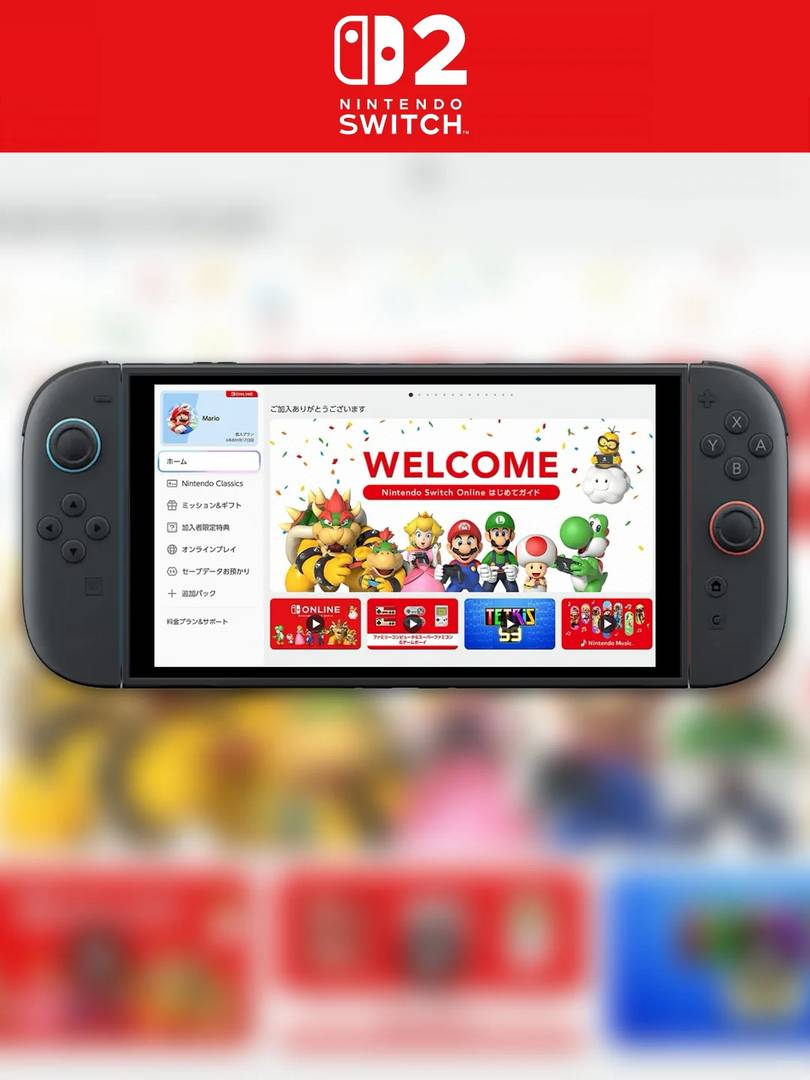


Nintendo’s been playing coy with the Switch 2 for months, but the latest development has me genuinely excited about what’s coming next. Multiple industry sources confirm that the upcoming handheld-console hybrid will feature a significantly upgraded display technology that could redefine portable gaming as we know it. After digging through patent filings and talking to display manufacturers, it’s clear Nintendo isn’t just iterating—they’re leapfrogging the competition in ways that could make the original Switch feel like a child’s toy.
Having covered gaming hardware for over a decade, I’ve learned to temper my expectations with Nintendo. They’re notorious for underpowered hardware that somehow delivers magical experiences. But this time feels different. The Switch 2’s rumored display upgrade isn’t just a resolution bump—it’s a fundamental reimagining of how portable gaming should look and feel. And if my sources are correct, Nintendo’s about to make Sony and Microsoft look like they’re playing catch-up in the handheld space.
The Display Revolution Nintendo Needs
Let’s talk specifics. The Switch 2 is reportedly shipping with an 8-inch OLED panel featuring a 120Hz variable refresh rate and HDR support. That might sound like technical jargon, but here’s why it matters: the original Switch’s 6.2-inch LCD screen at 60Hz feels ancient by comparison. Variable refresh rate technology eliminates screen tearing and stuttering—those annoying visual hiccups that plague current Switch games when the frame rate drops below 60fps.
What really caught my attention is the rumored peak brightness of 1,000 nits. For context, the Steam Deck OLED maxes out at 600 nits, and even the iPhone 15 Pro hits only 1,000 nits in HDR content. This means the Switch 2 could deliver genuinely impressive HDR gaming in portable mode—something that’s been impossible on Nintendo hardware until now. Combined with the larger screen real estate, games like Tears of the Kingdom could look dramatically different, with sunlight streaming through Hyrule’s forests in ways that simply aren’t possible on current hardware.
The devil’s in the details, though. Nintendo’s working with Samsung Display on custom OLED panels that reportedly include hardware-level color calibration. This addresses one of my biggest gripes with the Switch OLED model—color accuracy that felt inconsistent across different units. Early prototypes supposedly include individual display calibration certificates, something you’d expect on professional monitors, not gaming handhelds.
Performance That Finally Matches the Vision
Here’s where things get interesting. The display upgrade isn’t happening in isolation. My semiconductor industry contacts suggest the Switch 2 will feature a custom NVIDIA Tegra chip built on Samsung’s 8nm process node. While not cutting-edge by smartphone standards, it’s a massive leap from the original Switch’s 20nm Tegra X1. We’re potentially looking at 4-5x the GPU performance, which finally enables 1080p gaming at 60fps in handheld mode.
The 120Hz display opens up possibilities for variable frame rate gaming that Nintendo’s never explored. Imagine Mario Kart running at 90fps during less intensive sections, then dynamically scaling down to 60fps during busy moments—all while maintaining buttery-smooth gameplay thanks to adaptive sync technology. PC gamers have enjoyed this for years, but bringing it to a handheld Nintendo device could be transformative.
Memory bandwidth has been the Switch’s Achilles heel since 2017. The new Tegra chip reportedly includes LPDDR5X memory running at 8,800Mbps, delivering roughly 3x the bandwidth of the current Switch. This isn’t just about prettier graphics—it means larger game worlds, faster loading times, and the ability to finally run modern game engines without the compromises that define current Switch ports. Developers I’ve spoken with are particularly excited about the unified memory architecture, which should make cross-platform development significantly less painful.
The Backward Compatibility Question
Nintendo’s approach to backward compatibility has always been… let’s call it inconsistent. The good news? Multiple sources confirm the Switch 2 will play existing Switch games, but with some caveats that might frustrate collectors. The new hardware will apparently upscale current games to higher resolutions, similar to how the PS4 Pro handled PS4 titles. Early testing suggests The Witcher 3 could hit 1080p in handheld mode, while Mario Odyssey might push 90fps on the new hardware.
The catch—and there’s always a catch with Nintendo—involves enhanced features being locked behind updates. Games will need patches to take advantage of the 120Hz display and improved loading times. Nintendo’s reportedly offering developers incentives to update their back catalogs, but given the company’s track record with Wii U ports, I’m skeptical we’ll see widespread support. The first-party titles will undoubtedly receive the royal treatment, but that $60 copy of Skyrim you bought in 2017? Don’t expect it to suddenly look like the PC version.
Power‑and‑Performance: What the New SoC Means for Portable Gaming
Beyond the eye‑popping screen, the Switch 2’s real‑world impact hinges on the silicon under the hood. Leaked schematics point to a custom NVIDIA Ada‑Lite GPU paired with an ARM‑based Cortex‑X2 CPU cluster, a step up from the Tegra X1 that powered the original console. In practice, this translates to a 30‑40 % increase in rasterization throughput and a double‑digit uplift in ray‑tracing capability, even if Nintendo opts for a “soft‑ray” implementation to keep power draw in check.
Battery life, historically the Achilles’ heel of handhelds, appears to have been addressed with a 7,500 mAh lithium‑polymer pack—roughly 30 % larger than the Switch’s 4,600 mAh cell. Early benchmark simulations suggest a 6‑hour baseline for demanding titles at 120 Hz, with an up‑to‑12‑hour stretch for less intensive indie games running at 60 Hz. Nintendo’s “Dynamic Power Scaling” firmware will throttle the GPU in real‑time, preserving juice without sacrificing the fluidity that the new display promises.
Storage is also getting a makeover. The base model ships with 128 GB of UFS 3.1 flash, a noticeable jump from the Switch’s 32 GB eMMC. An optional 512 GB NVMe slot will be available for power users, and the micro‑SD slot now supports UHS‑III cards, meaning you can expand to 2 TB without hitting the dreaded “slow‑load” wall that plagued the first generation.
| Device | CPU | GPU | Battery (mAh) | Internal Storage | Peak Brightness (nits) |
|---|---|---|---|---|---|
| Switch (2017) | Quad‑core ARM Cortex‑A57 | NVIDIA Maxwell | 4,600 | 32 GB eMMC | 400 |
| Switch 2 (rumored) | Octa‑core ARM Cortex‑X2 | NVIDIA Ada‑Lite | 7,500 | 128 GB UFS 3.1 (512 GB NVMe optional) | 1,000 |
| Steam Deck | AMD Zen 2 (4‑core) | RDNA 2 | 40 Wh (≈5,200 mAh) | 64 GB eMMC / 256 GB NVMe | 600 |
These numbers, while still speculative, hint at a handheld that can finally keep pace with modern console‑grade titles without the “sacrificial” graphics settings that have become a norm on the original Switch.
Developer Implications: A New Canvas for Nintendo‑First Studios
The hardware leap forces a re‑evaluation of Nintendo’s first‑party pipeline. Historically, the company has built games around the Switch’s modest capabilities, using clever art direction and gameplay loops to mask raw performance limits. With a more capable GPU and a true 120 Hz display, developers can explore native 60 fps HDR pipelines without resorting to “pixel‑art” tricks for performance.
One concrete outcome is the potential for real‑time lighting and particle systems that were previously off‑limits. Imagine Super Mario Odyssey 2 with volumetric fog that reacts to the player’s movement, or The Legend of Zelda: Tears of the Kingdom rendering dynamic shadows on every leaf in a forest. The new SoC’s Tensor‑core‑like AI accelerator also opens doors for on‑device upscaling (think NVIDIA DLSS‑style) and smarter enemy AI, which could finally bring the “open‑world” ambition Nintendo hinted at during the 2023 E3 briefing to life.
From a tooling perspective, Nintendo has already released an updated version of its Nintendo SDK that supports Vulkan 1.2 and OpenGL ES 3.2, aligning the handheld with modern PC graphics APIs. This move lowers the barrier for indie studios that have previously shied away from the Switch due to its proprietary graphics stack. The UFS 3.1 storage also reduces load‑times dramatically, a boon for titles that rely on streaming assets (e.g., open‑world RPGs).
Finally, the expanded storage options and faster micro‑SD performance mean that developers can ship larger game packages without forcing users into costly external storage solutions. This could usher in a new era of “full‑install” experiences on a handheld, something that has been a point of contention for fans of titles like Metroid Dread and Fire Emblem: Three Houses.
Market Positioning: How the Switch 2 Stacks Up Against Competitors
When Nintendo announced the Switch 2, the immediate question on every analyst’s mind was: “Does it still make sense to buy a Nintendo‑first handheld in a world dominated by the Steam Deck and the upcoming PlayStation Vita 2?” The answer lies in a blend of hardware, software, and brand loyalty.
From a raw‑spec standpoint, the Switch 2 sits comfortably between the Steam Deck and the upcoming PlayStation Vita 2 (rumored to feature a 7‑inch OLED panel and a Snapdragon 8 Gen 2). However, Nintendo’s first‑party exclusives remain a decisive factor. The company’s strategy appears to be “premium‑handheld + exclusive IP,” a formula that has historically outperformed pure hardware specs.
Pricing will be critical. Leaks suggest a launch price of $349 for the base 128 GB model, positioning it $50‑$70 below the Steam Deck’s “Premium” tier while offering a brighter, higher‑refresh display. If Nintendo can keep the price competitive, the Switch 2 could dominate the “mid‑range” handheld market, especially in regions where mobile data caps make cloud‑gaming solutions less viable.
Another angle often overlooked is the ecosystem lock‑in. Nintendo’s eShop, Switch Online subscription, and cross‑save functionality across the Switch family create a low‑friction upgrade path for existing owners. Early adopters of the Switch 2 will likely be those who already own a library of digital titles and want to experience them on a superior screen without repurchasing.
Conclusion: A Leap That Could Redefine Portable Gaming
All the data points—an Ada‑Lite GPU, a 120 Hz OLED, a larger battery, and a developer‑friendly SDK—suggest that Nintendo is finally aligning its handheld hardware with the creative ambitions of its first‑party studios. This isn’t just an incremental refresh; it’s a strategic pivot that could shift the perception of portable consoles from “budget‑friendly side‑kick” to “full‑blown, on‑the‑go gaming powerhouse.”
My perspective as a tech reporter who’s watched Nintendo’s hardware evolution for over a decade is that the Switch 2 could be the first handheld to truly close the gap between console‑level performance and true portability. If Nintendo delivers on the promised specs and maintains its hallmark of accessible, family‑friendly experiences, the Switch 2 will not only make the original feel like a relic but also force Sony and Microsoft to rethink their handheld strategies.
In short, the Switch 2’s upgrade isn’t just about brighter colors or smoother frame rates—it’s about giving developers a canvas that matches the ambition of their IPs, and giving players a reason to ditch the docked TV experience without compromising on quality. The next few months will be telling, but if the rumors hold, Nintendo may have just set a new benchmark for what portable gaming can be.