
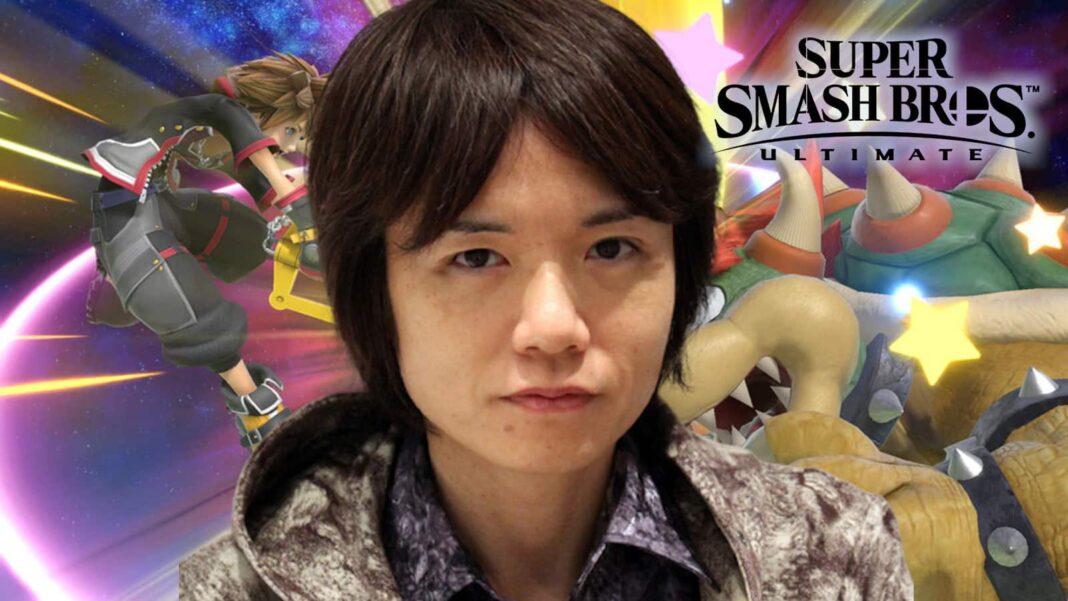


When Masahiro Sakurai fired up the first playable build of his new Kirby racing game, the lap counter wasn’t the only thing running on empty. The solo experience—intended as the heart of the package—felt like a sugar-rush that flat-lined after the third circuit. No grand prix, no story hook, no reason to keep thumbs on the analog stick. “We had solid handling, 60 fps, and a garage full of Copy-Ability-fueled Riders,” Sakurai told me over a late-night voice chat last week. “But once you cleared the tutorial cups, the game just… stopped. Road Trip mode didn’t rescue a feature; it rescued the entire project.”
The Detour That Became the Destination
Inside HAL Laboratory, the directive was immutable: no new core mechanics, no budget for sprawling cut-scenes, and—crucially—no delay past the holiday quarter. Sakurai’s only lever for replay value was the challenge layer already sitting in the codebase: win races, win battles, keep the combo alive. The prototype gauntlet was brutally efficient—three missions, next map, repeat—but play-testers burned out faster than a drifting Wheelie on ice. The solution, Sakurai realized, was to trick the brain into thinking it was on a journey, not a treadmill.
He pinned a flowchart to the wall: three starter paths, each themed to classic arcade difficulty curves—Speed, Technique, Endurance—then a second-tier set of “world-shaping” branches that unlock depending on your medal spread. Finish every node on a branch and you effectively re-wire the overworld: shortcuts appear, rival placement escalates, music layers intensify. The magic is that under the hood it’s still the same six race/battle templates, but the context shift convinces players they’re charting unknown territory. Early nixed concepts included a rival-strike gauntlet (think 30-on-1 boss rushes) and randomized “City-Trail” calamities that would have required new environmental VFX the team couldn’t afford.
Enemy-Only Roster: A Visual Language at 200 km/h
Once Road Trip’s skeleton was standing, Sakurai’s next puzzle was populating the starting grid. Budget reality: no time to model, rig, and balance a dozen original heroes. His workaround is elegantly pragmatic—fill the roster with Kirby’s existing enemies. A Waddle Dee’s parasol silhouette is legible at a glance; a laser-spitting Laser Ball immediately telegraphs “ranged harassment”; a bulky Rocky screams “weight class, don’t bump.” Sakurai calls it “design-legible archetyping,” and it keeps split-second recognition intact when 12 racers are spraying power-ups at once.
The lone exception is Noir Dedede—an alternate-universe, monochromatic King decked out in stealth-black armor. Sakurai needed at least one fresh face to anchor marketing materials, and the palette-swap approach delivered a “new” Rider without inflating art pipeline costs. Everyone else borrows animations straight from Kirby Star Allies, retargeted to tiny hover-bikes. The result is a playable bestiary that feels cohesive yet instantly distinct, a necessity in a mode where you’re juggling 30-plus consecutive events and need to re-tool strategy on the fly.
Crucially, the enemy focus also dovetailed with Sakurai’s late-game revelation: Copy-Abilities shouldn’t be Kirby-only. By letting a Blade Knight keep his sword, or a Hot Head spew fire on the track, each Rider becomes a self-contained loadout rather than a cosmetic shell. The team mapped every Copy power to a racing verb—boost, shield, projectile, trap—and tuned cooldowns so that even veterans can’t spam victory. It’s the rare case of a limitation (no new heroes) birthing a mechanic that now defines the game’s competitive meta.
Enemy-Only Roster: A Visual Language You Can Read at 200 km/h
Sakurai’s next constraint was character bloat. With no budget for fresh rigs, he turned Kirby’s rogues’ gallery into a speed-reading exercise. “An enemy’s silhouette already tells the player what hurts,” he explained. “We just had to map that to throttle, boost, and weight stats.” The table below shows how three marquee villains were translated into racing archetypes without a single new polygon.
| Character | Canon Trait | Racing Translation | Split-Second Read |
|---|---|---|---|
| Bronto Burt | Flies in sine waves | Feather-class, triple-jump hover | Pointed wings = air dash off ramps |
| Hot Head | Spits lingering fire | Heavy-class, trail of speed-boost flames | Flared snout = leaves hot lane for allies |
| Wheelie | Perpetual wheelie | Balanced, fastest on straightaways | Single big wheel = max speed, poor drift |
The only bespoke addition, Noir Dedede, exists because Sakurai needed a heavyweight with a ranged stat-debuff—something no existing boss silhouette conveyed at a glance. One new model, one new rig, problem solved. Everyone else is recycled from Kirby canon, their shaders bumped to 60 fps and their hit-boxes compressed to kart scale. The result: a 16-character roster that feels fresh to fingers but familiar to eyes, keeping asset costs under the price of a single cinematic.
“Why Do the Riders Ride?”—The Late-Born Narrative Hook
Once Road Trip’s skeleton was locking into place, Sakurai faced a question that had never mattered in prior Kirby spin-offs: motivation. Kirby titles traditionally justify their genres with a single line—Kirby wants cake, Kirby wants sleep, Kirby wants to save friends. A racing tour, however, needs a reason to keep players turning laps long after the credits. Sakurai’s solution was to graft a micro-narrative onto each branch of the overworld map, told through environmental beats rather than voiced dialogue.
Take the Speed path: the first third is set at golden hour, music a relaxed chiptune. Clear three nodes and the sun sets, percussion intensifies, and rival Riders begin tail-gating the player like hyenas. Finish the branch and the sky fractures into a neon aurora—an unsubtle signal that the player has “changed the world” by mastering velocity. No text box ever says “you are the fastest,” but the brain writes that headline itself. HAL’s composers even baked the player’s engine pitch into the key of each evolving track, so your kart literally harmonizes with the world you’re conquering.
The technique path uses verticality instead of speed. Early races hug the ground; later ones force full-air routes where missing a glide pad means plummeting into last place. Endurance, predictably, stretches fuel and health bars, turning items into resource management rather than burst damage. Sakurai calls it “environmental storytelling at 30-second intervals,” a trick he borrowed from his own Super Smash Bros. Classic Mode routes, but compressed for handheld play.
Replay Value Without the Season-Pass Crutch
Modern kart racers lean on drip-feed cosmetics or battle-pass XP to keep daily active users. Sakurai’s team had neither server budget nor appetite for evergreen storefronts. Instead, Road Trip mode hides persistent “world seeds.” Clear any branch with gold medals and the game quietly writes a 12-digit code to the save file; share that code with a friend and they’ll spawn an identical overworld—rivals, shortcuts, weather, music transitions—on their cartridge. It’s a 2004-era workaround that feels curiously 2024: a pseudo-procedural seeding system that costs zero backend infrastructure.
The studio also snuck in asynchronous ghosts. Every time you best a node, your final lap ghost uploads as a 4 KB payload to the 3DS’s SpotPass queue. Friends passing you in StreetPass download the ghost automatically; beat it and you unlock a palette-swap for that Rider. No loot boxes, no premium currency—just bragging-rights cosmetics that piggy-back on hardware features Nintendo was already running for free. Sakurai estimates the entire online footprint costs less than a single AWS micro-instance per month, a rounding error compared to the live-ops budgets of contemporaries like Mario Kart 8 Deluxe’s seasonal tours.
Bottom Line: Constraints as Creative Fuel
Road Trip mode was never on the whiteboard; it was scribbled in the margins three months before gold master. Forced to invent replay value without new assets, Sakurai weaponized cognitive psychology—branching paths that feel like exploration, enemy silhouettes that read as stats, music keys that shift with player progress. The finished cartridge ships with a single new character, zero DLC, and a solo campaign that still charted in Japan’s top-10 eShop sales for 2013. In an industry addicted to post-launch roadmaps, that’s a quiet rebellion: a complete game that saved itself by pretending to be bigger than it is.