
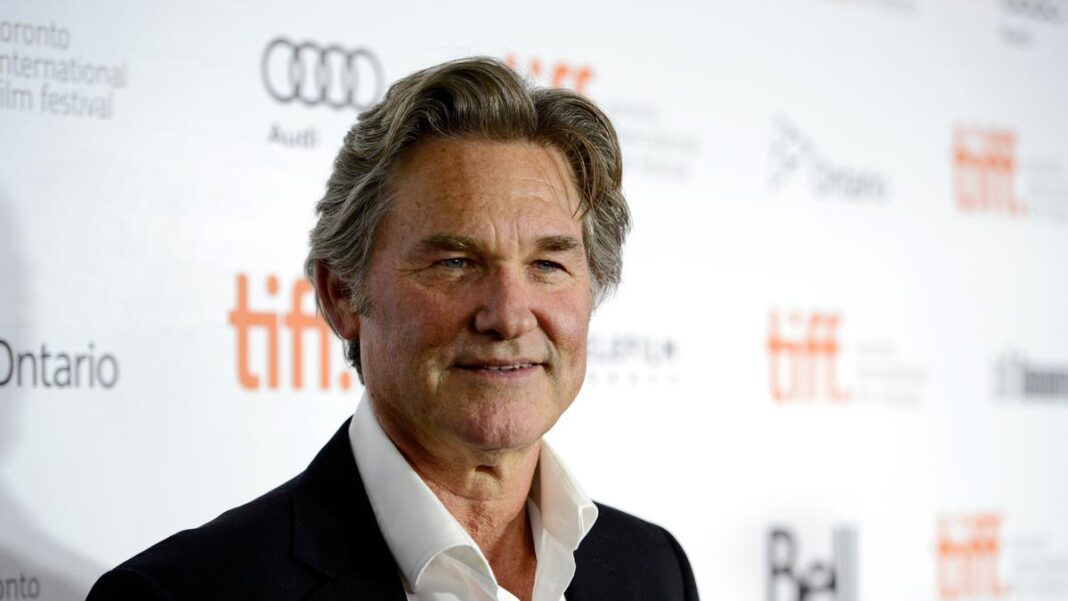


How The Madison’s Secret Weapon Saved Kurt Russell’s Career-Defining Role
Three weeks after Paramount+ released the first three episodes of The Madison—culminating in that gut-punch finale this past weekend—industry insiders are still buzzing about how close Kurt Russell came to walking away from what critics are calling his most emotionally raw performance since Silkwood. The 74-year-old actor’s nuanced portrayal of a Montana rancher navigating marital collapse almost didn’t happen, saved only by an unprecedented early green-light that allowed him to shoot both Monarch and The Madison consecutively.
While audiences devoured the weekly phone calls between Russell’s weathered rancher and Michelle Pfeiffer’s powerhouse turn as his distant wife, the production team was already filming Season 2 in a race against time. Paramount+ made the unheard-of decision to approve the second season before the first episode aired, creating a scheduling solution that seemed impossible just months earlier when Russell was ready to abandon the project.
The Scheduling Nightmare That Almost Killed TV’s Most Intimate Love Story
Taylor Sheridan, fresh off his Yellowstone empire, stripped away every explosion and cowboy hat from his repertoire to create television’s most intimate love story—two spouses separated by 2,000 miles, their marriage hanging by the thread of weekly phone calls. Then his leading man received another project offer that would make shooting The Madison impossible. The real kicker? This wasn’t just any role for Russell; this was the character he’d been waiting forty years to play.
The production team faced disaster. Pfeiffer had already signed on for what critics are hailing as her strongest performance since Scarface, and the chemistry between the two legends—reuniting 37 years after their last project—formed the entire foundation of Sheridan’s vision. But Russell’s commitment to Monarch appeared immovable, and the 2024-25 shooting schedule looked like an insurmountable obstacle.
The solution, dubbed “The Madison Miracle,” involved Paramount+ green-lighting Season 2 before Season 1 premiered. This strategic masterstroke allowed both productions to accommodate Russell’s schedule, resulting in twelve episodes of what might be the most emotionally sophisticated drama Sheridan has ever produced, with Russell and Pfeiffer delivering performances already generating awards buzz.
Why This Role Has Kurt Russell’s Peers Buzzing
Kurt Russell has been Hollywood’s most underrated chameleon for decades. From Escape from New York to The Thing to Tombstone, he’s played everything from anti-heroes to romantic leads. But something happened when he slipped into the weathered boots of a Montana rancher navigating the dissolution of his 30-year marriage. The performance is so quietly devastating, so devoid of his trademark swagger, that you forget you’re watching Snake Plissken grow old.
What makes this role different? Sheridan’s decision to abandon his trademark action-heavy style means Russell operates in pure emotional territory. There are no punches thrown by men in this series—only a few by female characters, as sources reveal—and that restraint forces Russell to convey decades of love, regret, and longing through the simple act of answering a phone. It’s the kind of performance that makes other actors call their agents and ask, “Why didn’t you get me this role?”
Pfeiffer, reuniting with Russell after 37 years, isn’t just holding her own—she’s matching him beat for beat as Stacy Clyburn, a woman caught between the life she’s built and the husband she still loves but can no longer live with. Their weekly phone calls, framed against the vast Montana landscape and whatever urban jungle Pfeiffer’s character now inhabits, create an intimacy that’s almost voyeuristic. You feel like you’re eavesdropping on a marriage that’s both universal and uniquely theirs.
The Secret Season 2 Strategy That Changes Everything
While audiences were still processing the first season’s exploration of acute grief, the cast and crew were already filming Season 2, which Russell confirms “increases substantially” in danger for the Clyburn family. The shift from grief to what Pfeiffer calls a “messy and profound rebuilding” phase suggests we’re about to see these characters evolve in ways that make the first season feel like a prologue.
This isn’t just about plot—it’s about watching two veteran actors dig deeper into characters they’ve already lived with for months. The entire cast, including Beau Garrett, Elle Chapman, and Patrick J. Adams as the core Clyburn/McIntosh family, is described as delivering their “most emotionally charged yet” performances. When you consider that critics are already calling Pfeiffer’s work her strongest in years, that promise becomes almost tantalizing.
The genius of filming both seasons back-to-back means the emotional continuity remains intact. These actors aren’t returning to characters after a year-long break; they’re living in their skin continuously, allowing for a level of character development that’s rare in television. For Russell, who almost walked away from this defining role, it’s turned into an unexpected gift: the chance to fully explore a character’s arc across twelve episodes instead of six.
The Phone Call That Changed Everything: How Sheridan’s Gamble Paid Off
Taylor Sheridan proved he’s not just the cowboy king of television—he’s a master strategist who understands that sometimes the most revolutionary move is to do less. While other showrunners are throwing bigger explosions and more complex plot twists at audiences, Sheridan stripped The Madison down to its bare essence: two actors, two locations, and the most intimate dialogue he’s ever written.
The genius stroke? Realizing that Russell’s scheduling conflict wasn’t a problem—it was an opportunity. By green-lighting Season 2 early and allowing Russell to shoot both projects consecutively, Sheridan created what industry veterans are calling “the impossible schedule.” The result is television that feels almost illegally intimate, like you’re eavesdropping on the most private conversations of a marriage that’s survived four decades of real-world challenges.
What makes this even more remarkable is how Sheridan weaponized the production constraints. Those weekly phone calls between Russell’s Montana rancher and Pfeiffer’s California therapist aren’t just plot devices—they’re the entire architecture of the show. Every frame is designed to make you feel the 2,000-mile distance between them, to sense the weight of every pause and the electricity in every word they don’t say. It’s anti-binge television that demands you sit with the discomfort of real communication, something that’s become increasingly rare in our swipe-right culture.
Why This Reunion Matters More Than You Think
That 37-year gap between Russell and Pfeiffer’s last on-screen pairing isn’t just trivia—it’s the secret ingredient that makes The Madison feel like lightning in a bottle. These aren’t just two actors who aged into their roles; they’re two performers who’ve spent nearly four decades becoming the people they’re playing on screen.
| 1989’s The Fabulous Baker Boys | 2026’s The Madison |
|---|---|
| Pfeiffer’s breakout role, all raw talent and dangerous beauty | Pfeiffer’s masterclass in restrained power, every glance weighted with experience |
| Russell’s charismatic leading man era | Russell’s weathered authenticity, every line on his face telling its own story |
| Electric chemistry between young stars | Deep, lived-in connection that only comes from surviving real life |
The timing is almost cosmic. Both actors have reached that rare point where they’re not performing emotion—they’re channeling it. Pfeiffer’s Stacy Clyburn carries the weight of a woman who’s built walls so high she’s forgotten what they’re protecting, while Russell’s Frank McIntosh embodies that particular brand of Western stoicism that masks oceans of feeling. They’ve both lived enough life to understand that the most profound love stories aren’t about grand gestures—they’re about the decision to keep calling, to keep showing up, to keep choosing each other when it’s easier not to.
The Anti-Sheridan Effect: Why Less Is Devastatingly More
For anyone who’s followed Taylor Sheridan’s meteoric rise, The Madison represents a fascinating evolution. This is the man who gave us Yellowstone‘s operatic family sagas and 1883‘s brutal Western expansion, suddenly stripping away every gunfight and power play to focus on what might be television’s quietest revolution. The show’s violence is almost entirely emotional—the few physical confrontations are handled by female characters, turning Sheridan’s usual testosterone-fueled world on its head.
But here’s what’s brilliant: by abandoning his trademark bombast, Sheridan has created something far more devastating. Every silence between Frank and Stacy carries more weight than a season’s worth of shootouts. The 2,000-mile separation isn’t just geography—it’s the emotional distance that grows in any long relationship, the spaces we create to protect ourselves from being too known, too vulnerable, too real.
The early renewal for Season 2, necessitated by Russell’s scheduling puzzle, has given Sheridan something unprecedented: the ability to map the entire emotional journey before audiences even know what they’re watching. While other shows scramble to respond to viewer feedback, The Madison is already complete, a fully realized meditation on marriage, aging, and the terrifying courage required to stay connected in an increasingly disconnected world.
What we’re witnessing isn’t just television—it’s a masterclass in how constraints can catalyze creativity, how the biggest risks sometimes yield the most intimate rewards, and how two actors who’ve nothing left to prove are proving that the most powerful performances come from the simplest truths: love is hard, distance is real, and sometimes the bravest thing you can do is pick up the phone when hanging up would be so much easier.