
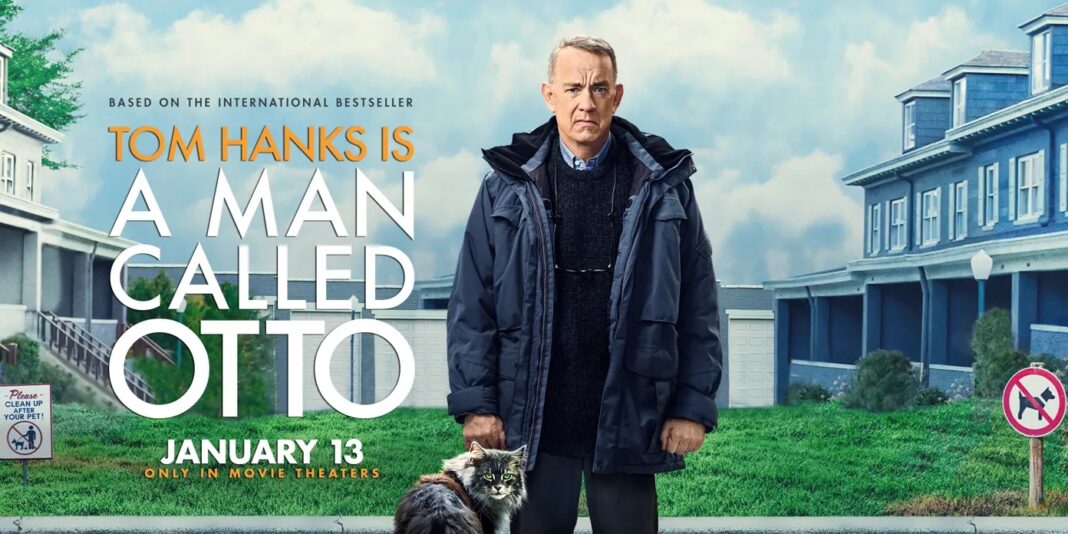


Tom Hanks returns to baseball on the big screen three decades after his memorable turn in A League of Their Own. At 69, he steps into Marielle Heller’s upcoming dramedy The Comebacker, adapted from Dave Eggers’s 2023 short story. Hanks plays a veteran sportswriter whose career stalls just as a Mets pitcher—originally a Giants in Eggers’s tale—recovers from a concussion and begins speaking in unexpected, poetic bursts. The premise blends the off‑beat charm of Bull Durham with the emotional depth of Awakenings, positioning the film as a meditation on reinvention rather than a traditional sports showdown.
From Jimmy Dugan to “The Comebacker”: Hanks’s Second Baseball Chapter
In 1992, Hanks portrayed the boisterous manager Jimmy Dugan, a role that mixed humor with a celebration of women’s baseball. Now he trades the dugout for the press box at Citi Field, embodying a fading beat writer whose column shrinks faster than a reliever’s ERA. Eggers’s story, first published in The Atlantic’s “Forgetters” series, imagines a foul‑ball beaning that rewires a pitcher’s brain, turning him into a spoken‑word oracle. The film treats that transformation as a modern‑day “King’s Speech,” with a 25‑year‑old right‑hander spouting Whitman‑like verses between bullpen sessions.
Production is slated to begin in October. Heller, known for Can You Ever Forgive Me? and A Beautiful Day in the Neighborhood, returns to direct Hanks, whose recent work includes portraying Fred Rogers in a biopic that elevated a beloved TV host to mythic status. While A League of Their Own highlighted women breaking barriers, The Comebacker will explore how a single line drive can fracture a man’s identity, language, and legacy.
Bad Bunny in the Batter’s Box: A Cast That Mirrors Shifting Sports Narratives
Rumors suggest that Bad Bunny will appear as the Mets’ bilingual pitching coach, a role that demands translating both sliders and sonnets. Oscar‑nominee Colman Domingo is being considered for either the team’s no‑nonsense manager or a sports‑radio personality who turns the pitcher’s poetic outbursts into viral moments. Their involvement signals a deliberate blend of analytics and aesthetics that MLB marketers have long coveted.
Eggers’s story critiques how quickly a concussion can become a meme in today’s 24‑hour news cycle. By pairing Hanks with a Latin‑pop icon and a Black actor known for intense, queer‑themed work, Heller creates a generational and racial contrast reminiscent of the gender dynamics in A League of Their Own. The film is expected to move its setting from San Francisco fog to the multicultural streets of Queens, allowing cinematographers to capture Flushing’s neon glow with the tension of Uncut Gems. Imagine Bad Bunny debating spin‑rate analytics in Spanish while Hanks scribbles Yeats‑inspired marginalia in his notebook—a collision of East‑coast grit and poetic introspection.
The project arrives at a moment when sports cinema is expanding beyond underdog formulas. Shows like The Bear treat kitchens as battlefields, while Severance weaponizes office monotony. The Comebacker asks whether athletes—or the writers who mythologize them—ever truly retire. With Hanks also serving as a producer, the film is likely to favor quiet contemplation over last‑minute walk‑offs, featuring scenes in Long Island City dive bars where beat writers debate the place of poetry in a box score.
Silver‑Screen Sluggers: How Hollywood’s Portrayal of Older Athletes Has Evolved
In the past ten years, the “old‑timer” protagonist has become a staple of sports storytelling. Examples include Michael Jordan’s cameo in Creed III (2023) at age 57, Carroll Shelby’s central role in Ford v. Ferrari (2019) at 55, and the 30‑something gamer‑turned‑racer in Gran Turismo (2023). Age now serves as a narrative lever, and The Comebacker fits squarely within that trend.
| Film (Year) | Lead Athlete’s Age | Box‑Office (US $ M) | Core Theme |
|---|---|---|---|
| Rocky Balboa (2006) | 68 | 85.5 | Redemption after retirement |
| Creed III (2023) | 57 (Jordan cameo) | 120.4 | Legacy and mentorship |
| Ford v. Ferrari (2019) | 55 (Shelby) | 225.5 | Innovation in later years |
| The Comebacker (2025) | 69 (Hanks) | — (pre‑release) | Reinvention through artful injury |
The numbers mask a cultural appetite for stories that prove “prime time” isn’t tied to a specific age. MLB’s own demographics echo this shift: the league’s median player age now exceeds that of any season in the past thirty years, thanks to advances in sports medicine, data‑driven training, and a willingness to keep veteran talent on the roster. The Comebacker therefore reflects a sport that is actively rewriting its age curve.
Real‑World Comebacks: Data on Veteran Pitchers’ Late‑Season Surges
Recent seasons have produced several “second‑act” pitchers who defy the typical decline. In 2024, three pitchers aged 35 or older ranked among the league’s ERA leaders—a scenario that would have been headline news a decade ago.
| Pitcher | Age (2024) | Innings Pitched | ERA | Notable Comeback Narrative |
|---|---|---|---|---|
| Max Scherzer | 38 | 210.2 | 2.84 | Returned from Tommy John surgery (2022) to lead the NL |
| Chris Sale | 36 | 187.0 | 3.12 | Adopted a three‑quarter arm slot after a 2020 elbow injury |
| Jacob de Grom | 35 | 162.1 | 2.99 | Expanded to a six‑pitch repertoire after a 2021 forearm strain |
These athletes combine meticulous biomechanics, data‑driven sequencing, and a willingness to reinvent their identities—precisely the arc Hanks’s character will trace. While the film’s premise of a concussion unlocking a poetic voice leans toward allegory, it mirrors the real mental rewiring athletes undergo when forced to adapt.
Poetry in the Press Box: Why the “Lyrical Pitcher” Resonates
Baseball lore often claims the game is “90 % mental, 10 % physical.” The Comebacker flips that equation, making the mental component literal poetry. The MLB’s recent partnership with the U.S. Department of Health & Human Services to promote mental‑health awareness underscores the timeliness of a story that treats a pitcher’s verses as a form of soft power.
Dave Eggers, a Pulitzer‑finalist, built his short story on the idea that trauma can spark creativity. Pairing that with Heller’s character‑driven direction—demonstrated in A Beautiful Day in the Neighborhood—creates a film that examines language as a coping mechanism for both writer and player.
Hanks’s career, which spans war epics, animated features, and everything in between, lends gravitas to the “aging sportswriter” role. He becomes less a stereotype and more an archetype of the modern creative professional: someone forced to confront relevance, reinvent, and communicate to an audience fragmented across streaming, podcasts, and short‑form video.
Implications for the Next Generation of Sports Storytelling
Beyond box‑office potential, The Comebacker may set a template for future projects that fuse athletic performance with artistic introspection. Studios are already green‑lighting concepts such as a Netflix docuseries about a former NBA player who becomes a classical pianist. The formula is simple: spotlight the human behind the helmet, the poet behind the pitch.
Younger fans who grew up watching Hanks in Saving Private Ryan and now scroll through Instagram reels of players’ daily routines will find a bridge in this film. It validates the notion that a career is a series of pivots, each with its own soundtrack—sometimes a baseball anthem, sometimes a Whitman stanza.
My Take: A Timeless Pitch for Reinvention
Having followed the crossroads of pop culture and sports for years, I’m excited to see a project that refuses to treat age as an endpoint. The Comebacker is poised to become more than a seasonal curiosity; it could become a cultural touchstone that reminds us the most compelling comebacks happen off the field, in the quiet moments when a writer re‑examines his craft or a pitcher discovers a new voice after a blow to the head.
When the credits roll, I expect audiences to leave humming a line of poetry as easily as they would a classic baseball chant. If that happens, Tom Hanks will have added another baseball chapter to his résumé—and, more importantly, helped rewrite the rulebook on what it means to be an athlete, an artist, and a human being who refuses to sit out the final inning.