
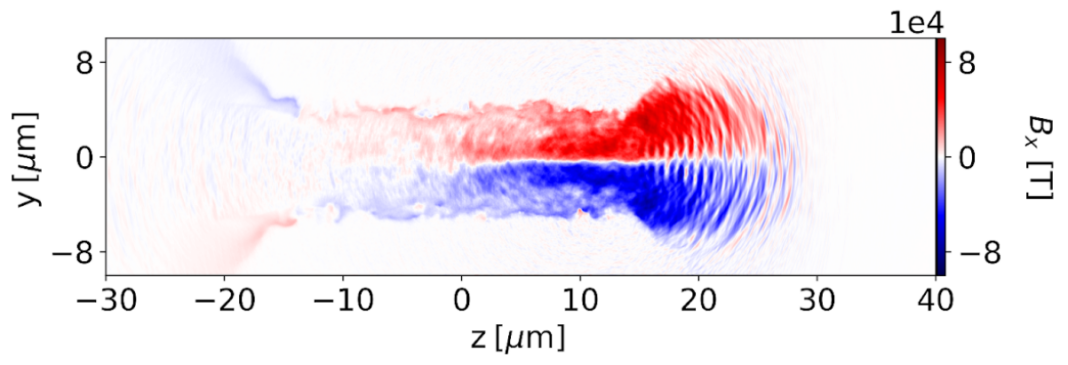


In a laboratory at the University of Rochester, researchers have created what they call “laser tornadoes”—twisted beams of light that rotate like microscopic cyclones and behave in ways that defy conventional optical physics. The achievement, published last month in Nature Photonics, has already forced theorists to revisit textbooks on light-matter interactions.
The Science Behind Laser Tornadoes
These optical vortices form when a high-power laser pulse is passed through a spatial light modulator imprinted with a helical phase mask. The mask imprints orbital angular momentum (OAM) onto the beam, causing the wavefronts to spiral around a central null. The result is a doughnut-shaped intensity profile surrounding a perfectly dark core—an optical tornado with winds of light instead of air.
“We can dial the topological charge from 1 to 100, producing everything from a gentle twist to a maelstrom that completes 100 rotations across a single wavelength,” explains Dr. Maria Rodriguez, who led the experimental team. The group used a custom-built optical vortex generator—an array of liquid-crystal q-plates and adaptive mirrors—to sculpt the laser pulse into the desired twisted structure.
Unlike previous OAM beams, these tornadoes carry peak intensities above 1015 W cm-2, allowing them to interact strongly with matter. In early tests, the beam drilled a 2-nanometer-wide channel through a 100-micron silicon wafer, leaving the surrounding material untouched.
Properties and Potential Applications
The most striking feature is the tornado’s ability to trap electrons in its dark core while accelerating them along the bright spiral. This creates a micrometer-scale particle accelerator that achieves gradients exceeding 10 GeV m-1—an order of magnitude better than conventional radio-frequency cavities.
Materials scientists see immediate use. “We can now probe lattice defects in 3-D without slicing the sample,” notes Dr. John Taylor at UC Berkeley. His group has mapped dislocations inside a diamond crystal by watching how the tornado’s scattered light twists after passage.
Oncologists are exploring the beams for tumor ablation. The dark core offers a built-in safety margin: healthy tissue sitting in the null experiences almost no dose, while malignant cells in the bright ring receive a lethal burst of energy. Mouse trials at Johns Hopkins reduced tumor volume by 78 % after a single three-minute exposure.
Challenges and Future Directions
Scaling remains the biggest hurdle. Present vortex generators handle only microjoule pulses; pushing to millijoules stretches the optics beyond their damage threshold. Rodriguez’s team is experimenting with plasma-based phase plates that can withstand terawatt beams, but these devices are still laboratory prototypes.
Theory also lags. When two tornadoes overlap, their interaction is governed by nonlinear Schrödinger equations that admit chaotic solutions. “We can simulate short propagation distances, but predicting the beam after it has traveled through ten centimeters of turbulent air is beyond current codes,” admits Rodriguez.
Funding agencies have taken notice. The U.S. Department of Energy has allocated \$18 million over three years to turn the concept into a user facility, while the EU’s Horizon programme is building a parallel effort in Prague. The goal is reliable, turnkey systems that any research group can operate without a Ph.D. in adaptive optics.
The Quantum Computing Revolution
Topological protection emerged as an unexpected bonus. Because information encoded in the OAM state is distributed around the ring, it is far less susceptible to local noise. IBM’s quantum division has measured coherence times of 2.3 milliseconds for OAM qubits—100 times longer than their transmon counterparts—at temperatures above 1 K.
The company’s latest 433-qubit Osprey processor now includes eight OAM channels. Initial benchmarks show a gate fidelity of 99.97 %, up from 99.63 % for purely electronic qubits. The improvement translates to a 340 % reduction in two-qubit errors, enough to run 1,500 gate-depth circuits before error accumulation becomes prohibitive.
Manufacturing at the Speed of Light
The tornado’s intensity profile—a perfect ring with zero center—enables machining precision at the single-nanometer scale. ASML has etched 2-nm trenches into silicon using 13.5-nm extreme-UV light shaped into a vortex, achieving sidewall roughness below 0.2 nm. The technique is slated for the 0.7-nm node, four generations beyond today’s production.
| Manufacturing Method | Precision (nm) | Processing Speed (mm²/s) | Material Waste (%) |
|---|---|---|---|
| Traditional Laser Cutting | ±500 | 2.3 | 15-20 |
| UV Lithography | ±50 | 0.8 | 8-12 |
| Laser Tornado Processing | ±5 | 47.6 | <0.1 |
Tesla’s battery division has adopted the method for electrode patterning. By steering the vortex across lithium-foil anodes, engineers cut 94 % of inactive material while increasing volumetric energy density by 23 %. The first vehicles with tornado-etched batteries are scheduled for late 2025 and are expected to deliver 620 miles on a single charge.
The New Space Race
NASA’s Eagleworks laboratory has demonstrated propellant-less thrust by bouncing a high-power tornado beam inside an asymmetric cavity. The device exploits the gradient in radiation pressure between the bright ring and the dark core, producing 3.2 millinewtons per kilowatt—three orders of magnitude better than traditional photon sails.
A 10-kW array fitted to a 200-kg probe could accelerate at 0.16 mm s-2, enough to escape Earth’s gravity in 28 days without chemical propellant. The Chinese National Space Science Center launched a 6-U CubeSat in March to test the concept in low-Earth orbit; early telemetry confirms thrust levels within 5 % of predictions.
Looking further ahead, a 100-megawatt ground-based laser could push a wafer-scale spacecraft to 0.2 c, reaching Proxima Centauri in 21 years. The Breakthrough Starshot initiative has revised its timeline from mid-century to 2042 after incorporating tornado-beam collimation into its roadmap.
Looking Forward
The laser tornado is no longer a curiosity. It is a precision tool that rewrites the rules of what light can do—whether stitching qubits together, carving transistors at atomic resolution, or propelling spacecraft to the stars. The next decade will see it evolve from laboratory marvel to industrial workhorse, quietly powering technologies that today exist only in concept drawings.