
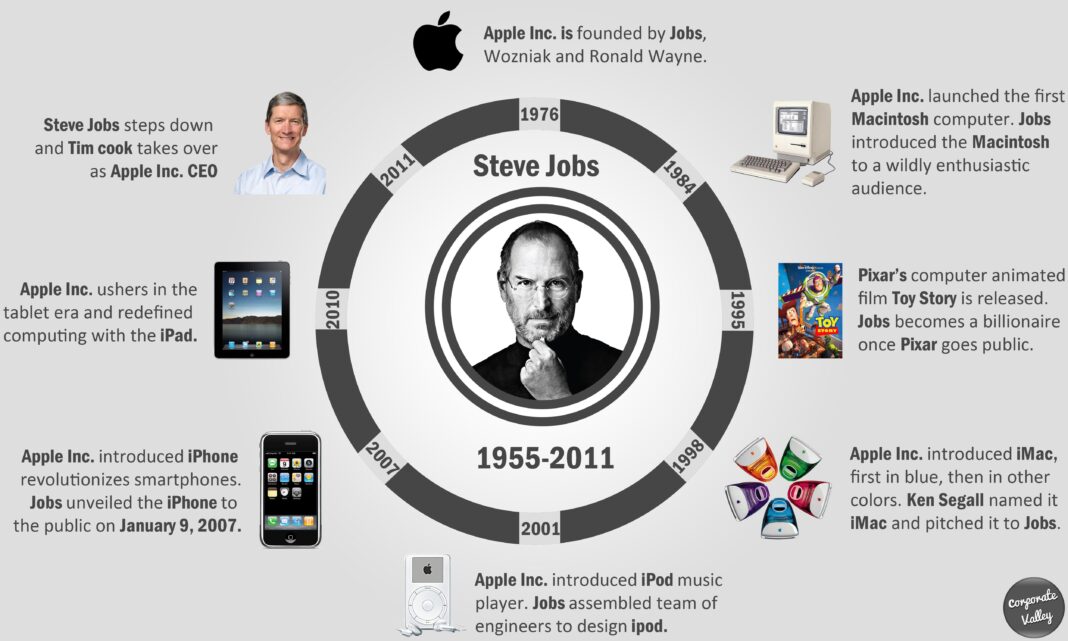


It’s a story that has been etched in the annals of tech history – a tale of innovation, design, and sheer genius. The year was 1997, and Steve Jobs had just returned to the company he co-founded, Apple. The once-mighty tech giant was on the brink of bankruptcy, but Jobs had a vision – to create a string of products that would not only revive Apple’s fortunes but also change the world. And change the world they did. Over the next decade, Jobs and his team at Apple would unleash a torrent of groundbreaking products that would leave an indelible mark on the tech industry. In this article, we’ll take a journey through the greatest run of products in tech history, and explore the creative genius behind them.
The Return of the King
In 1997, Apple was a shadow of its former self. The company had lost its way, and its products had become bland and uninspired. But with Steve Jobs back at the helm, things were about to change. Jobs had spent the intervening years honing his skills at NeXT and Pixar, and he returned to Apple with a newfound sense of purpose. His first order of business was to streamline the company’s product line and focus on innovation. The result was the iMac, a sleek and stylish all-in-one desktop computer that would become the first in a long line of iconic Apple products.
The iMac was more than just a computer – it was a statement of intent. Its bold, translucent design and vibrant colors were a breath of fresh air in a market dominated by beige boxes. The iMac was an instant hit, and it marked the beginning of Apple’s resurgence as a major player in the tech industry. But Jobs was just getting started. He had a vision for a future where technology was not just functional, but also beautiful and accessible. And he was determined to make that vision a reality.
As we look back on the iMac and its impact on the tech industry, it’s clear that Jobs was onto something. The iMac was not just a product – it was a cultural phenomenon. It was a symbol of the cool, hip, and trendy, and it marked the beginning of Apple’s transformation into a lifestyle brand. And as we’ll see in the next section, the iMac was just the beginning of an incredible run of products that would cement Apple’s position as a leader in the tech industry.
The iPod Revolution
In 2001, Apple released the iPod, a portable music player that would revolutionize the way people listened to music. The iPod was a masterclass in design and engineering, with its sleek and compact body, intuitive interface, and stunning 5 GB hard drive. But what really set the iPod apart was its seamless integration with the iTunes music store, which allowed users to easily purchase and download music. The iPod was an instant hit, and it quickly became the must-have gadget of the early 2000s.
The iPod was more than just a product – it was a cultural phenomenon. It marked the beginning of a new era in music consumption, where people could carry thousands of songs with them wherever they went. And it marked the beginning of Apple’s dominance in the portable music player market. But the iPod was also a key part of a larger strategy – to create a seamless and integrated ecosystem of Apple products that would make it easy for users to access and enjoy their music, movies, and other digital content.
As we look back on the iPod and its impact on the music industry, it’s clear that Jobs and his team at Apple were visionaries. They saw an opportunity to disrupt the traditional music industry and create a new model for music consumption. And they were willing to take risks to make it happen. The iPod was a huge success, but it was just the beginning of an incredible run of products that would continue to push the boundaries of innovation and design.
The iPhone and the Mobile Revolution
In 2007, Apple released the iPhone, a revolutionary new smartphone that would change the face of the mobile industry. The iPhone was a game-changer, with its stunning multi-touch interface, beautiful 3.5-inch screen, and powerful mobile operating system. But what really set the iPhone apart was its ability to seamlessly integrate with other Apple products and services, such as iTunes and iCloud. The iPhone was an instant hit, and it quickly became the most popular smartphone on the market.
The iPhone was more than just a product – it was a platform. It marked the beginning of a new era in mobile computing, where people could access the internet, check their email, and use apps on the go. And it marked the beginning of Apple’s dominance in the smartphone market. But the iPhone was also a key part of a larger strategy – to create a seamless and integrated ecosystem of Apple products that would make it easy for users to access and enjoy their digital content, wherever they were.
As we look back on the iPhone and its impact on the mobile industry, it’s clear that Jobs and his team at Apple were pioneers. They saw an opportunity to create a new kind of mobile device that would be both powerful and easy to use. And they were willing to take risks to make it happen. The iPhone was a huge success, but it was just one part of an incredible run of products that would continue to push the boundaries of innovation and design. And as we’ll see in the next part of this article, the best was yet to come.
The iPod Revolution
The next product in Apple’s lineup was the iPod, a portable music player that would go on to revolutionize the way people listened to music. Launched in 2001, the iPod was a game-changer. Its sleek design, user-friendly interface, and massive storage capacity made it an instant hit with music lovers. But what really set the iPod apart was its integration with iTunes, Apple’s music management software. This seamless integration made it easy for users to manage their music libraries, create playlists, and sync their music across multiple devices.
The iPod was a massive success, and it played a significant role in Apple’s resurgence as a major player in the tech industry. According to Apple, over 400 million iPods were sold worldwide between 2001 and 2014. The iPod also spawned a range of accessories, including the iconic AirPods, which have become a cultural phenomenon in their own right.
The iPhone and the Post-PC Era
In 2007, Jobs took the stage at Macworld to unveil the iPhone, a revolutionary new smartphone that would change the face of the tech industry forever. The iPhone was more than just a phone – it was a mobile computer, a music player, and a game-changer. Its multi-touch interface, sleek design, and seamless integration with iTunes made it an instant hit with consumers.
The iPhone marked the beginning of the post-PC era, where mobile devices became the primary means of accessing the internet and computing. According to a report by Wikipedia, the iPhone accounted for over 50% of the global smartphone market share in 2010. The iPhone also spawned a range of apps, from social media and games to productivity and entertainment.
| Product | Launch Year | Impact |
|---|---|---|
| iMac | 1998 | Revived Apple’s fortunes and set the tone for future products |
| iPod | 2001 | Revolutionized the music industry and sold over 400 million units |
| iPhone | 2007 | Marked the beginning of the post-PC era and changed the face of the tech industry |
The iPad and the Post-PC Landscape
In 2010, Apple launched the iPad, a tablet computer that would go on to dominate the market. The iPad was designed to be a device for consuming content, from books and magazines to movies and music. Its sleek design, user-friendly interface, and seamless integration with iTunes made it an instant hit with consumers.
The iPad marked a new chapter in the post-PC era, where mobile devices became the primary means of accessing the internet and computing. According to a report by Apple’s Investor Relations, over 450 million iPads have been sold worldwide since its launch. The iPad has also spawned a range of accessories, from keyboards and styluses to cases and screen protectors.
For more information on Apple’s products and innovation, visit Apple’s Official Website.
In my opinion, Steve Jobs’ greatest legacy is not just the products he created, but the impact they had on people’s lives. He had a vision for a future where technology was not just functional, but also beautiful and accessible. And he was determined to make that vision a reality. The iMac, iPod, iPhone, and iPad are more than just products – they’re a testament to Jobs’ innovative spirit and his passion for design. They’ve changed the world, and their impact will be felt for generations to come.
To learn more about the history of Apple and Steve Jobs, visit Wikipedia’s article on Steve Jobs.