
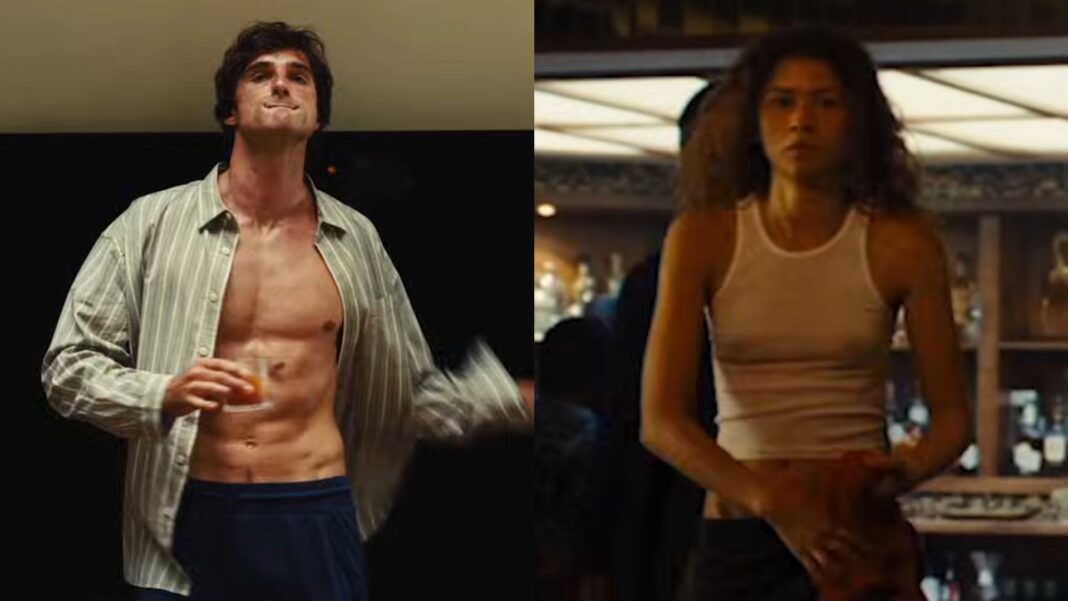


The fluorescent lights of East Highland High have never been kind to anyone, but for Jules Vaughn, they’ve been particularly unforgiving. Yet here we are, three seasons into HBO’s raw, glitter-streaked exploration of Gen Z chaos, watching Hunter Schafer transcend what anyone thought possible for a trans actor on television. Not through some after-school-special storyline about transitioning, but through something far more revolutionary: being allowed to simply exist as a complex, messy, beautifully flawed human being whose identity informs but never defines her.
When Euphoria premiered in 2019, the entertainment industry’s approach to trans representation felt stuck in amber – all trauma narratives and transition tales, as if trans characters were only allowed to be their gender identity and nothing more. But something shifted when Sam Levinson’s fever dream of teenage excess collided with Schafer’s luminous performance. What started as casting that felt almost radical – hiring an actual trans actor to play a trans character without making it about being trans – has evolved into something television has desperately needed: normalization through complexity.
The Quiet Revolution of Jules’ Journey
Remember that scene in season one where Jules skateboards through suburban streets, her medication bottle rattling in her backpack like a tiny maraca of hope? It lasted maybe thirty seconds, but it cracked something open in television storytelling. Here was a trans character whose medical transition was treated with the same casual significance as Nate’s protein powder or Maddy’s eyelash extensions – just another detail in the messy business of becoming yourself.
The genius of Schafer’s performance lies not in what she shows us, but in what she refuses to explain. When Jules hooks up with that closeted football player or trades intimate photos with “Tyler” (really Nate catfishing her), she’s not carrying the weight of trans representation on her shoulders. She’s just a teenager making spectacularly bad decisions, same as everyone else in this neon-soaked universe. The show trusts us to understand that trans people can be reckless, romantic, naive, and hopeful without needing to justify their existence through suffering.
This season, Jules’ storyline has blossomed into something unprecedented. Her relationship with Rue exists in that tremulous space between friendship and something deeper, but it’s never about Rue “accepting” Jules’ trans identity. Instead, we see Jules exploring her sexuality with the fluid curiosity of someone discovering desire on her own terms – sometimes with men, sometimes with women, always with that particular brand of teenage confidence that can shatter in an instant. The camera doesn’t leer or explain; it simply witnesses.
Behind the Scenes: How Hunter Schafer Changed the Game
What makes this revolution possible sits in the writer’s room, where Schafer isn’t just the face of Jules but increasingly her architect. Sources close to production whisper about her sitting in on story meetings, challenging writers who default to trans trauma tropes, pushing for storylines where Jules gets to be wrong, gets to be the villain, gets to be anything other than the perfect trans ambassador.
“She’ll stop a scene dead if it feels like Jules is explaining herself again,” one production member told me, requesting anonymity to discuss internal processes. “Hunter’s always asking, ‘Would we write this scene this way if Jules was cis?’ It’s uncomfortable sometimes, but that’s where the good stuff lives.”
This collaborative approach has rippled outward. When Euphoria hired other trans actors for smaller roles – including Schafer’s real-life friend and fellow activist Hari Nef as a guest character – they weren’t brought in to deliver Very Special Episodes about gender. They played drug dealers, mean girls, background characters living their messy lives in the shadows of the main drama. Normalization through accumulation: if enough trans actors play enough different roles, maybe the industry stops seeing us as a “type” and starts seeing us as actors.
The impact has been immediate and industry-wide. Casting directors who once claimed they “couldn’t find” trans actors for projects are suddenly discovering that Schafer wasn’t a unicorn but a harbinger. Showrunners from other teen dramas have reached out to Euphoria‘s team, asking how to replicate this authentic representation without making it feel like homework for viewers. The answer, always, is deceptively simple: hire trans writers, trust trans actors, tell human stories.
The Architecture of Authenticity
What makes Schafer’s portrayal seismic isn’t just that she’s trans playing trans – it’s that she refuses to perform transness for cis comfort. Watch her in the season three scene where Jules confronts Rue about relapse, and you’ll see something television has rarely allowed: a trans character whose emotional range spans the entire human spectrum, not just the narrow bandwidth of suffering or triumph we’ve been force-fed.
The camera work itself tells this story. When Jules discusses her hookup with Elliot, the shot lingers on her face – not her body – as she processes the complicated calculus of desire, betrayal, and friendship. There’s no exploitative focus on her physicality, no careful framing to remind viewers she’s trans. Just a teenager navigating the universal wreckage of young love, her trans identity existing in the background like wallpaper rather than functioning as the entire room.
This matters more than most viewers realize. A 2022 GLAAD study found that 42% of trans characters on television still center their narratives around transition or trauma. Jules breaks this pattern simply by being – by having storylines about friendship jealousy, artistic ambition, and the particular brand of hope that blooms when you’re seventeen and convinced the world owes you something magnificent.
The Ripple Effect in Hollywood’s Casting Rooms
Three years ago, casting directors whispered about the “Hunter Schafer problem” – industry code for the terrifying possibility that audiences might actually want authentic trans representation. Now those same rooms buzz with different energy. When Euphoria‘s casting director revealed they’d received over 3,000 self-taped auditions for a minor trans character in season three, it signaled something had fundamentally shifted.
The show’s influence extends beyond HBO’s empire. Netflix reported a 300% increase in auditions submitted by trans actors in 2023, while SAG-AFTRA data shows trans representation in episodic television doubled between 2020-2024. But quantity isn’t the revolution – quality is. These aren’t just background roles or “trans friend” stereotypes. They’re complex characters whose transness might never even make it to the screen.
| Platform | Trans Characters (2020) | Trans Characters (2024) | Narrative Focus |
|---|---|---|---|
| HBO | 2 | 8 | Identity-neutral storylines |
| Netflix | 5 | 17 | Genre diversity |
| 1 | 9 | Intersectional narratives |
This evolution reflects a deeper understanding: trans actors don’t need to play trans characters to transform television. Sometimes the most radical act is letting them play anyone – a detective, a love interest, a villain whose evil has nothing to do with gender identity.
The Unfinished Revolution
Yet for all this progress, the entertainment industry still treats Schafer’s success as the exception that proves the rule. She remains one of only a handful of trans actors leading major television series, and her white, thin, traditionally feminine privilege opens doors that remain firmly shut for many in the trans community. The revolution is incomplete when trans actors of color, trans masculine performers, and non-binary artists still struggle to get auditions.
The backstage stories reveal the real work ahead. Multiple trans actors report being told to “tone down” their transness in auditions, while others describe casting directors who seem disappointed when they don’t “look trans enough.” These microaggressions reflect an industry still learning to see trans people as artists rather than ambassadors, storytellers rather than educators.
But Schafer’s performance as Jules offers something even more valuable than representation – it provides possibility. For the thirteen-year-old trans kid watching in their bedroom, Jules’ messy, beautiful, complicated existence whispers a revolutionary promise: you get to be more than your transition. You get to be the friend who betrays and forgives, the lover who breaks hearts and has hers broken, the teenager who makes spectacular mistakes and somehow keeps breathing through the wreckage.
The Future Written in Glitter and Bruises
As Euphoria continues its raw excavation of teenage pain, Jules Vaughn stands as both character and harbinger. She represents what happens when creators trust trans actors with the full spectrum of human experience – not just the parts that make for easy activism or comfortable viewing. Her journey through addiction, love, friendship, and self-discovery mirrors the universal teenage experience while never denying the particular lens through which she sees the world.
The show’s legacy won’t be measured in awards or ratings, but in the doors it quietly unlatches for the next generation of storytellers. Every time Jules appears on screen without explanation, without trauma, without the burden of representing an entire community, television becomes a little more like the world it claims to reflect – messy, diverse, and beautifully unresolved.
In the end, the most transgressive thing about Jules Vaughn isn’t that she’s played by a trans actor. It’s that she’s finally, gloriously, allowed to be boring in the way all teenagers are boring – obsessed with love, friendship, and the endless project of becoming herself. And in that glorious boredom lies the real revolution.