
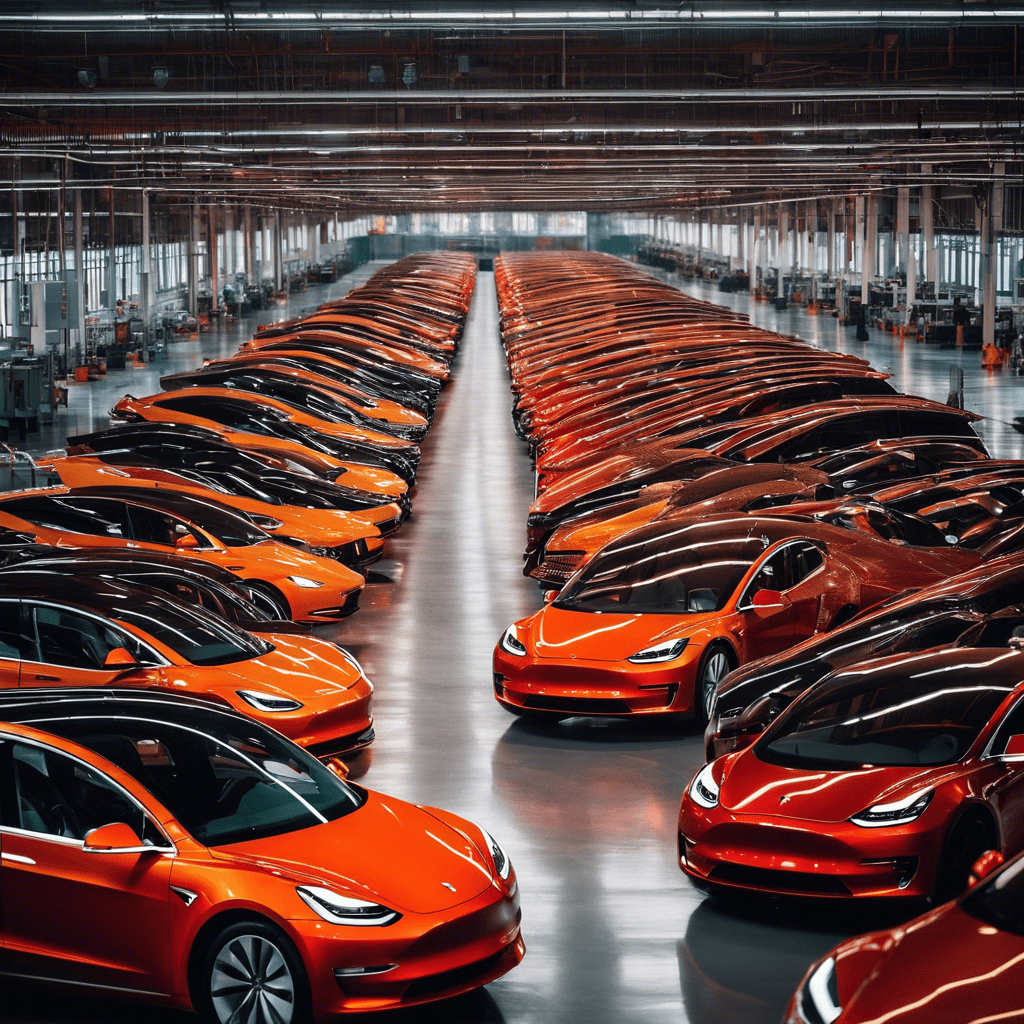


General Motors (GM) has reached a record stock high in 2025, surpassing competitors Tesla and Ford in the process. This milestone is a testament to the automaker’s successful pivot towards electric vehicles (EVs) and its strategic investments in cutting-edge technology. As the automotive industry continues to evolve, GM’s commitment to innovation has paid off, driving its stock to unprecedented heights.
GM’s Electric Vehicle Strategy
GM’s EV strategy has been a key driver of its success, with the company investing heavily in the development of its Ultium battery platform. This modular battery system has enabled GM to reduce production costs and increase the range of its EVs, making them more competitive in the market. The company’s EV lineup, which includes models such as the GMC Hummer EV and the Cadillac Lyriq, has been well-received by consumers, with sales exceeding expectations.
The success of GM’s EV strategy can be attributed to its focus on software-defined vehicles, which enable the company to deliver over-the-air updates and improve the overall ownership experience. This approach has allowed GM to stay ahead of the curve, as the industry shifts towards more software-centric vehicles. By leveraging its software capabilities, GM has been able to differentiate its products and attract a new generation of tech-savvy consumers.
GM’s EV push has also been supported by its partnerships with leading technology companies, including Microsoft and LG Chem. These collaborations have enabled GM to tap into the expertise of its partners, accelerating the development of its EV technology and improving its overall competitiveness.
Investments in Autonomous Driving and AI
In addition to its EV strategy, GM has also made significant investments in autonomous driving and artificial intelligence (AI). The company’s subsidiary, Cruise, has been at the forefront of autonomous driving technology, with a focus on developing safe and reliable self-driving systems. GM’s commitment to autonomous driving has been driven by its vision of a future where vehicles are increasingly connected and autonomous.
GM’s investments in AI have also enabled the company to improve its manufacturing processes, with the use of machine learning algorithms to optimize production and reduce costs. The company’s AI capabilities have also been applied to its customer service operations, with the use of chatbots and other AI-powered tools to enhance the ownership experience.
Market Outlook and Future Plans
As GM continues to push the boundaries of automotive technology, the company is well-positioned for future growth. With its strong EV lineup and investments in autonomous driving and AI, GM is poised to remain a leader in the industry. The company’s commitment to innovation has also enabled it to attract top talent, with many of the industry’s leading experts joining GM’s ranks.
Looking ahead, GM is expected to continue to drive growth through its focus on mobility services and connected car technologies. The company’s investments in these areas are likely to pay off, as the industry continues to shift towards a more service-oriented model. With its strong foundation and commitment to innovation, GM is likely to remain a major player in the automotive industry for years to come.
As the automotive landscape continues to evolve, GM’s ability to adapt and innovate will be crucial to its continued success. With its focus on EVs, autonomous driving, and AI, the company is well-positioned to navigate the challenges and opportunities of the rapidly changing industry.
Competitive Landscape: GM vs. Tesla and Ford
As GM continues to soar to new heights, it’s essential to examine the competitive landscape and understand how the company stacks up against its rivals, Tesla and Ford. A key metric to consider is the companies’ respective EV sales. According to data from the International Energy Agency (IEA), GM’s EV sales have been growing rapidly, with the company delivering over 250,000 EVs in 2024. While this is still behind Tesla’s sales, GM’s growth rate has been impressive, with a year-over-year increase of 50%. For more on this topic, see: Our team of home cinema .
| Company | 2024 EV Sales | Year-over-Year Growth |
|---|---|---|
| GM | 250,000 | 50% |
| Tesla | 500,000 | 20% |
| Ford | 100,000 | 30% |
Another important factor to consider is the companies’ respective investments in EV technology. GM has been investing heavily in its Ultium battery platform, with plans to spend $10 billion on EV development by 2026. Tesla, on the other hand, has been focusing on its Autopilot technology, with a reported investment of $1 billion in AI research and development in 2024. Ford has also been investing in EV technology, with a focus on its F-Series electric pickup trucks.
Future Outlook: Opportunities and Challenges
As GM looks to the future, the company faces both opportunities and challenges. On the one hand, the growing demand for EVs presents a significant opportunity for GM to continue its growth trajectory. The company’s investments in autonomous driving and AI also position it well for the future, as the industry continues to shift towards more software-centric vehicles. However, GM also faces challenges, including increasing competition from new entrants in the EV market and the need to continue investing in new technologies to stay ahead of the curve.
One potential challenge for GM is the regulatory environment, with governments around the world implementing policies to support the adoption of EVs. For example, the Biden administration has announced plans to invest $7.5 billion in EV charging infrastructure. While this presents an opportunity for GM, it also creates uncertainty and potential risks for the company.
Implications for the Automotive Industry
GM’s success has significant implications for the automotive industry as a whole. As the company continues to push the boundaries of EV technology and autonomous driving, it sets a new standard for the industry. Other automakers will be forced to follow suit, investing in their own EV and AI capabilities to remain competitive. This could lead to a new era of innovation in the industry, with potential benefits for consumers and the environment.
The success of GM also highlights the importance of strategic partnerships and collaborations in the industry. By partnering with leading technology companies, GM has been able to accelerate its development of EV technology and stay ahead of the curve. This trend is likely to continue, with other automakers forming their own partnerships to remain competitive.
As the automotive industry continues to evolve, it’s clear that GM’s commitment to innovation and its strategic investments in EV technology and autonomous driving have positioned the company for long-term success. With its record stock high in 2025, GM is poised to remain a leader in the industry, driving growth and innovation for years to come. The company’s focus on software-defined vehicles and its partnerships with leading technology companies will be key to its continued success, as the industry shifts towards more software-centric vehicles. As a tech-savvy observer, it’s exciting to see where GM’s journey will take it next.