
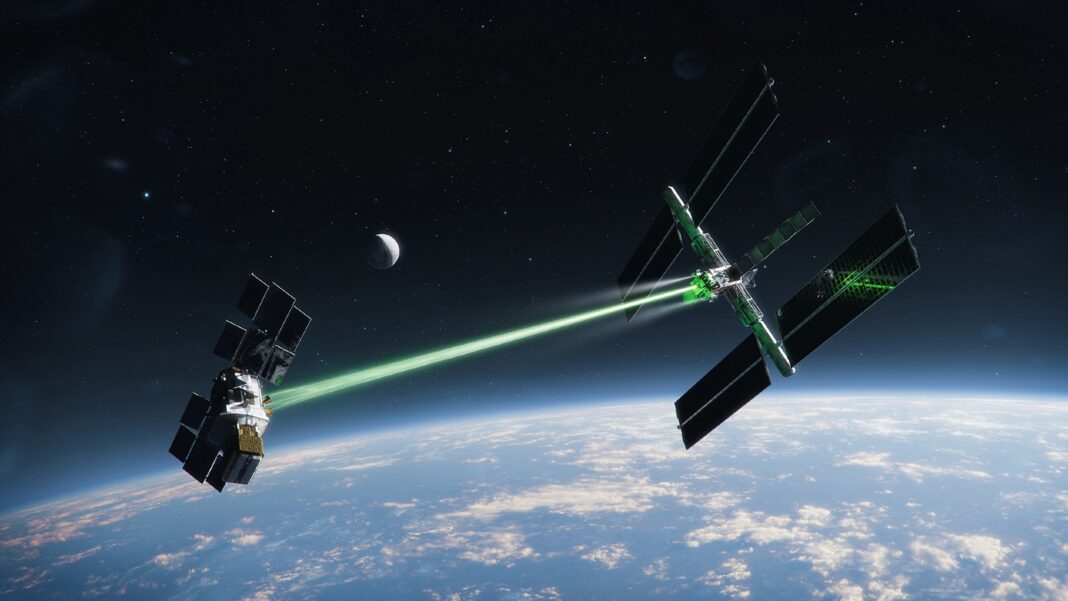


Imagine a future where the stars are hidden from us, not by clouds or city lights, but by a swirling vortex of defunct satellites, rocket parts, and other debris orbiting our planet. This is not a dystopian sci-fi scenario, but a very real concern that scientists and engineers are grappling with today. The problem of space junk in Earth’s orbit is a growing one, and it’s not just a matter of aesthetics – it’s a serious threat to operational spacecraft and satellites. But what if we told you that a technology straight out of science fiction could be the key to cleaning up our cosmic backyard? Enter the tractor beam, a concept that’s been captivating audiences in movies and TV shows for decades, but is now being developed into a real-world solution.
The Growing Problem of Space Junk
Earth’s orbit is home to a staggering number of objects, from functioning satellites to the remnants of long-forgotten space missions. According to the European Space Agency, there are over 500,000 pieces of debris in Earth’s orbit, ranging in size from tiny fragments to entire defunct satellites. This space junk poses a significant risk to operational spacecraft, as collisions can cause catastrophic damage and create even more debris. The problem is further complicated by the fact that many of these objects are in high-speed orbits, making them difficult to track and remove.
The consequences of inaction are dire. If we fail to address the issue of space junk, we risk creating a cascade of collisions that could render certain orbits unusable for generations to come. This is known as the Kessler Syndrome, a scenario in which the density of debris in Earth’s orbit becomes so high that it triggers a chain reaction of collisions, making it impossible to launch new satellites or spacecraft. The impact on our daily lives would be significant, as many of the technologies we rely on, from GPS and weather forecasting to telecommunications, rely on satellites in Earth’s orbit.
Tractor Beams: The Sci-Fi Solution
So, what is a tractor beam, exactly? In science fiction, a tractor beam is a device that can attract and manipulate objects using an energy field. In reality, researchers are working on developing a similar technology that uses electromagnetic forces to attract and capture debris. One approach being explored is the use of electrodynamic tethers, which are long, thin wires that can interact with the Earth’s magnetic field to generate a force that can attract and slow down debris.
The concept is still in its early stages, but researchers are making progress in developing the necessary technology. For example, a team of scientists from the University of Surrey has been working on a project to develop a tractor beam that can capture and de-orbit small satellites. The team has made significant progress in simulating the interaction between the tractor beam and the target object, and is now working on developing a prototype that can be tested in orbit.
Challenges and Opportunities
While the concept of a tractor beam is promising, there are still significant technical challenges to overcome. For example, the technology requires a high degree of precision and control to accurately target and capture debris. Additionally, the development of a tractor beam capable of handling larger pieces of debris is a complex task that will require significant advances in materials science and robotics. Despite these challenges, the potential rewards are significant, and researchers are optimistic that a tractor beam could be a game-changer in the effort to clean up space junk.
As researchers continue to push the boundaries of what’s possible with tractor beam technology, we’re likely to see significant advancements in the coming years. With the problem of space junk only set to grow, the need for innovative solutions like this is more pressing than ever. Whether or not a tractor beam will become a reality remains to be seen, but one thing is certain – the future of space exploration depends on it. As we continue to explore the possibilities of tractor beam technology, we may uncover even more exciting applications for this innovative tech. For more on this topic, see: NASA Gets Leader, But Future . For more on this topic, see: Our team of home cinema .
Tractor Beam Technology: From Fiction to Reality
The concept of a tractor beam, also known as a tractor beam propulsion or attractive beam, has been a staple of science fiction for decades. It typically involves a device that emits a beam of energy, which can then be used to attract and manipulate objects. While this technology may seem like the stuff of fantasy, researchers are actively exploring its potential applications in space debris removal. One of the most promising approaches involves the use of laser-based tractor beams.
| Approach | Description | Advantages | Challenges |
|---|---|---|---|
| Laser-based | Uses a high-powered laser to create a beam that can attract and manipulate debris | High precision, long-range capabilities | Requires significant power, safety concerns |
| Radio frequency (RF) based | Uses RF waves to create a beam that can attract and manipulate debris | Lower power requirements, safer | Less precise, shorter range |
Researchers at the University of California, Los Angeles (UCLA) have been exploring the use of laser-based tractor beams for space debris removal. Their approach involves using a high-powered laser to create a beam that can attract and manipulate debris. The team has already demonstrated the effectiveness of this approach in laboratory experiments, and is now working on scaling up the technology for use in space.
The Challenges of Implementing Tractor Beam Technology
While tractor beam technology holds significant promise for space debris removal, there are several challenges that must be addressed before it can be implemented on a large scale. One of the biggest hurdles is the sheer amount of debris in Earth’s orbit. According to the NASA Orbital Debris Program Office, there are over 500,000 pieces of debris in Earth’s orbit, ranging in size from tiny fragments to entire defunct satellites. This means that any tractor beam technology would need to be capable of handling a large number of targets, and would require significant advances in areas such as artificial intelligence and robotics.
Another challenge is the issue of safety. Tractor beam technology would need to be designed to avoid causing any harm to operational spacecraft or satellites, and would require robust safety protocols to prevent accidents. Additionally, there are concerns about the potential for interference with other space-based systems, such as communication satellites.
A Future for Tractor Beam Technology in Space Debris Removal
Despite the challenges, many experts believe that tractor beam technology has the potential to play a significant role in space debris removal. According to a report by the European Space Agency (ESA), tractor beam technology could be used to remove debris from Earth’s orbit as early as 2025. The report notes that while there are still significant technical challenges to overcome, the potential benefits of tractor beam technology make it an area worth exploring.
For more information on space debris and tractor beam technology, check out the following resources:
European Space Agency: Space Debris
NASA Orbital Debris Program Office
In my perspective, the development of tractor beam technology has the potential to be a game-changer in the fight against space junk. While there are significant challenges to overcome, the potential benefits of this technology make it an area worth exploring. As we continue to push the boundaries of space exploration and development, it’s essential that we prioritize sustainability and responsible management of our cosmic resources. By investing in innovative technologies like tractor beam technology, we can ensure that space remains a safe and accessible frontier for generations to come.