
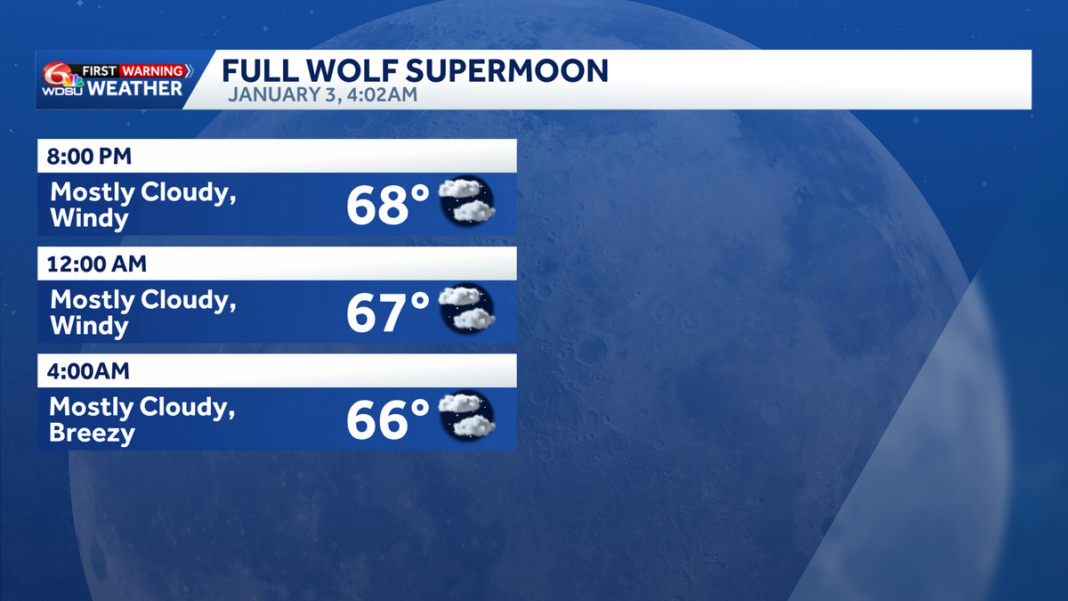


The Quadrantid meteor shower peaks tonight, coinciding with the year’s first supermoon, also known as the Super Wolf Moon. This rare combination promises to be a treat for stargazers and astronomy enthusiasts.
The Quadrantid Meteor Shower: A Unique Spectacle
The Quadrantid meteor shower is one of the most anticipated events of the year, originating from an asteroid, 2003 EH1, rather than a comet. According to sources, the shower will peak overnight between January 2 and January 3, with a short peak window of just a few hours. During this time, observers can expect to see 60-200 meteors per hour, making it one of the best meteor showers of the year.
However, this year’s supermoon may interfere with the viewing experience. The Super Wolf Moon will be visible on the same night, and its brightness may make it harder to spot the meteors. The Quadrantids’ peak is considered one of the best of the year due to its high rate of meteors, but the supermoon may affect visibility.
The shower can be seen mainly from the Northern Hemisphere, while the supermoon will be visible in clear skies everywhere that it’s night. To enjoy the show, find a dark spot with minimal light pollution and bring binoculars.
The Super Wolf Moon: A Rare Lunar Event

The Super Wolf Moon is the year’s first supermoon, appearing up to 14% bigger and 30% brighter than the faintest moon of the year. It will be visible on January 3, with peak illumination at 2:03 a.m. PST. The supermoon will have a noticeable orange glow due to the moon’s light traveling through more of the Earth’s atmosphere when it is low on the horizon.
This is one of three supermoons in 2026, with the other two occurring at the end of the year. The Super Wolf Moon is also known as a perigee-syzygy, occurring when the moon’s orbit is closest to Earth at the same time the moon is full.
Viewing Tips and Expectations
To make the most of this spectacular night, find a dark spot with minimal light pollution, dress warmly, and bring binoculars. The Quadrantid meteor shower will be visible in the Northern Hemisphere, while the supermoon will be visible everywhere with clear skies.
The Quadrantid meteor shower is expected to produce over 100 meteor fireballs per hour at its peak. Although the supermoon’s brightness may reduce the number of visible meteors, the event promises to be thrilling.
Viewing Tips for the Quadrantid Meteor Shower and Super Wolf Moon
To make the most of this rare celestial event, dress warmly and find a comfortable spot with minimal light pollution. The Quadrantid meteor shower can be seen mainly from the Northern Hemisphere.
It’s essential to allow your eyes to adjust to the dark for at least 20 minutes to maximize your chances of spotting the meteors. Bring binoculars or a telescope to enhance your viewing experience.
The peak window for the Quadrantid meteor shower is short, lasting only a few hours, so plan your viewing schedule accordingly. If you’re in a region with clear skies, try to observe the meteors between 10 PM and 2 AM, when the shower is most active.
The Science Behind the Supermoon
A supermoon occurs when the moon’s orbit is closest to Earth at the same time the moon is full, making it appear brighter and larger than a regular full moon. The Super Wolf Moon will appear up to 14% bigger and 30% brighter than the faintest moon of the year.
The moon’s orbit is not a perfect circle, which means that its distance from Earth varies throughout the month. When the moon is at its closest point, known as perigee, it appears larger and brighter than when it’s at its farthest point, known as apogee.
Astronomical Significance of the Quadrantid Meteor Shower
The Quadrantid meteor shower is one of the most anticipated events of the year, originating from an asteroid, 2003 EH1, rather than a comet. The shower is caused by the Earth passing through the debris trail left behind by the asteroid.
The Quadrantid meteor shower is notable for its high rate of meteors, with some estimates suggesting that it can produce over 100 meteor fireballs per hour. This makes it one of the best meteor showers of the year.
| Meteor Shower | Peak Date | Meteors per Hour |
|---|---|---|
| Quadrantid | Jan 2-3 | 60-200 |
For more information on the Quadrantid meteor shower and supermoons, visit NASA or National Weather Service websites. You can also check out the International Astronomical Union and United States Naval Observatory for more information on astronomical events and celestial bodies.