
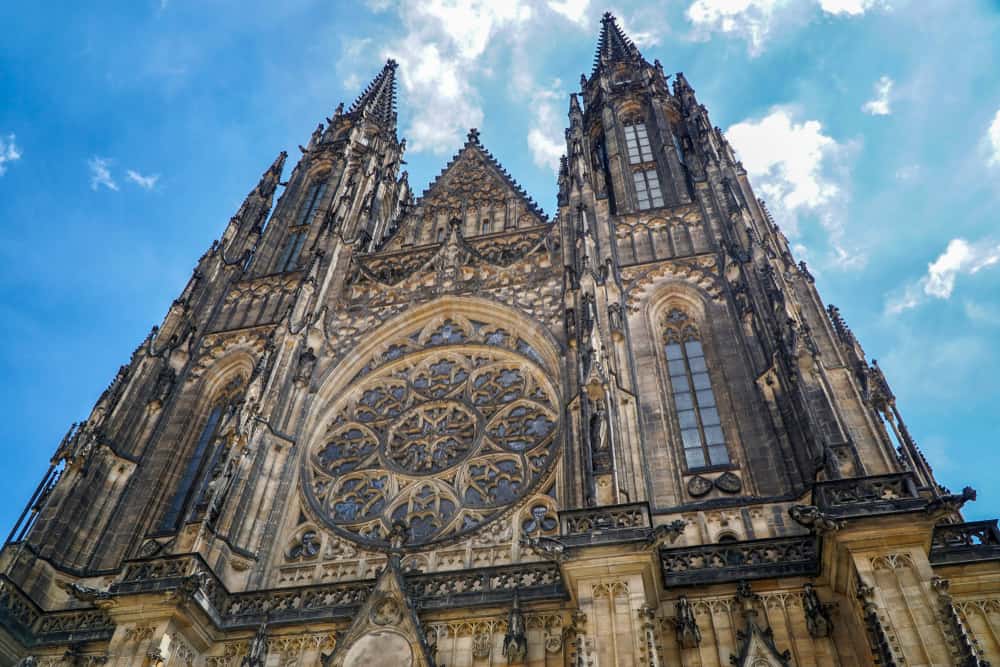


The historic city of Prague, with its stunning architecture and rich cultural heritage, has long been a favorite among tourists and filmmakers alike. But a recent controversy surrounding Netflix’s treatment of one of the city’s most iconic landmarks has left many in the industry stunned. The St. Vitus Cathedral, a breathtaking example of Gothic architecture that has stood the test of time, has been at the center of a heated debate over the streaming giant’s alleged disregard for the city’s cultural treasures.
The Heart of the Controversy
At the heart of the controversy lies Netflix’s production of an upcoming drama series, which reportedly filmed scenes within the St. Vitus Cathedral without proper permits or respect for the site’s historical significance. According to sources close to the production, the filmmakers allegedly failed to obtain the necessary permissions from the Archdiocese of Prague, which oversees the cathedral’s operations and preservation. This oversight has sparked outrage among local authorities, preservationists, and the general public, who feel that Netflix’s actions demonstrate a blatant disregard for the city’s cultural heritage.
The St. Vitus Cathedral, a masterpiece of Gothic architecture, is one of the most iconic landmarks in Prague, attracting millions of visitors each year. Its intricate stone carvings, stunning stained-glass windows, and ornate chapels make it a treasure trove of artistic and historical significance. The cathedral’s importance extends beyond its aesthetic appeal, as it has played a pivotal role in the city’s history, serving as a symbol of Czech identity and spirituality. For many Praguers, the cathedral is more than just a tourist attraction – it’s a sacred space that holds deep emotional and cultural significance.
A Pattern of Disregard?
This incident is not an isolated case, as Netflix has faced criticism in the past for its handling of historic sites during filming. In 2020, the streaming giant was accused of damaging the Pfalz Castle in Germany during the production of a historical drama. While Netflix has apologized for the damage and promised to take steps to prevent similar incidents in the future, this latest controversy raises questions about the company’s commitment to preserving cultural heritage. Martin Švanda, a local preservationist, expressed his concerns, stating, “We’re not just talking about a building; we’re talking about a piece of our history, our identity. It’s not just about the physical damage; it’s about the disrespect shown to our cultural heritage.”
The controversy has sparked a wider debate about the impact of film productions on historic sites and the need for greater accountability and regulation. As the film industry continues to boom, with streaming giants like Netflix producing more content than ever before, the pressure on historic sites is likely to increase. While the allure of using these sites as filming locations is undeniable, it’s essential to strike a balance between artistic expression and preservation. As Prague’s Mayor, Zdeněk Hřib, noted, “We want to welcome filmmakers to our city, but we also expect them to respect our cultural heritage. We need to find a way to balance the needs of the film industry with the need to preserve our historic sites for future generations.”
The City’s Response
In response to the controversy, the City of Prague has taken steps to address the issue. Prague’s Deputy Mayor, Petr Dolínek, announced that the city would be reviewing its policies on filming in historic sites, with a focus on ensuring that productions respect the city’s cultural heritage. The city is also exploring ways to work more closely with filmmakers to identify suitable locations and ensure that productions are carried out with the necessary permits and precautions. While it’s unclear what the future holds for Netflix’s production, one thing is certain – the city of Prague will be watching closely to ensure that its cultural treasures are treated with the respect they deserve.
As the debate continues to unfold, it’s clear that this is a complex issue with no easy answers. However, one thing is certain – the St. Vitus Cathedral, a true masterpiece of Gothic architecture, deserves our respect and protection. Will Netflix take steps to rectify the situation, or will the city take further action to prevent similar incidents in the future? Only time will tell, but one thing is certain – the eyes of the world are on Prague, and the city’s cultural heritage will not be ignored.
The Cathedral’s Fragile Majesty
What makes this situation particularly heartbreaking is the delicate nature of what Netflix allegedly treated as just another set. The St. Vitus Cathedral isn’t merely old – it’s a living, breathing monument that has survived wars, revolutions, and centuries of political upheaval. Its sandstone facades are so fragile that preservationists must monitor humidity levels constantly, as even small fluctuations can cause irreversible damage to the 14th-century stone.
Local archaeologist Dr. Martina Horáková explains the risk: “These walls have absorbed centuries of incense, candle smoke, and candle wax. Introducing modern filming equipment – the heat from lights, the vibration from generators, even the oils from human hands – can accelerate deterioration in ways we might not see for years.” The cathedral’s famous stained-glass windows, particularly those by Alfons Mucha, require such careful handling that even natural sunlight is monitored through specialized UV-filtering systems.
| Conservation Factor | Standard Requirements | Alleged Netflix Actions |
|---|---|---|
| Humidity Control | 45-55% RH maintained | Equipment raised temperatures |
| Foot Traffic | Limited to 30 people per area | Film crew of 80+ reported |
| Light Exposure | No direct lighting on artifacts | High-intensity film lights used |
The
“Jana Novotná, a certified Prague tour guide for over two decades, has seen cancellations spike since news broke.” What’s particularly galling to locals is that Prague Castle, which oversees the cathedral, has strict protocols for any commercial activity. The official website details how filming permits require extensive review, insurance coverage in the millions, and constant supervision by conservation experts. If Netflix bypassed these safeguards, it represents not just carelessness but a fundamental disrespect for Czech sovereignty over its cultural treasures. This incident illuminates a troubling pattern in how global entertainment conglomerates treat local communities as mere backdrops rather than partners. The streaming revolution, for all its democratizing potential, has created a gold rush mentality where content must be produced at breakneck speed to feed insatiable algorithms. In this frenzy, respect for local customs, regulations, and sacred spaces becomes negotiable – a cost-benefit analysis rather than a moral imperative. The Czech Film Commission’s official guidelines explicitly state that productions must respect “the intangible cultural heritage and spiritual significance of religious sites.” Yet Netflix’s alleged actions suggest these guidelines were viewed as optional suggestions rather than binding requirements. It’s a stark reminder that in the global entertainment economy, some companies view local regulations as obstacles to overcome rather than guardrails to respect. What makes this particularly ironic is that Netflix has built its brand on “authenticity” – producing local content in native languages, hiring regional talent, promising to tell stories with cultural specificity. But authentic storytelling requires authentic respect, something that’s impossible to achieve when you’re cutting corners on permits and potentially damaging irreplaceable heritage. As Prague’s municipal authorities consider legal action and conservation experts assess potential damage, this controversy serves as a watershed moment. It forces us to confront uncomfortable questions about cultural colonialism in the streaming age. When does appreciation become exploitation? When does showcasing a city’s beauty cross into exploiting its treasures? The real tragedy isn’t just what may have happened inside St. Vitus Cathedral – it’s what this represents: a world where digital content’s ephemeral value is placed above centuries of tangible heritage. Where a shot that might be watched for a few years justifies risking architecture that has endured for nearly seven centuries. Prague deserves better. The cathedral deserves better. And audiences – who ultimately fund Netflix through their subscriptions – deserve better than entertainment built on the potential destruction of our shared human heritage. Sometimes the most important stories aren’t the ones being filmed, but the ones being lived by communities forced to protect their treasures from those who should know better.When Streaming Giants Forget Their Responsibility
A Line in the Sandstone