
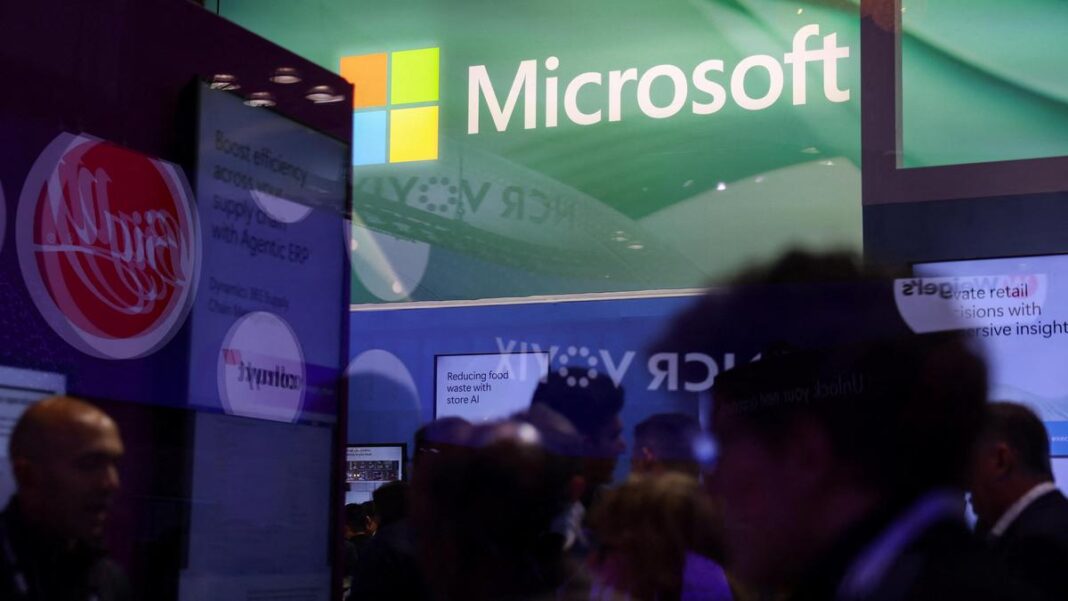


The fluorescent lights in Jennifer Martinez’s Phoenix kitchen flickered last summer as her utility bill climbed past $420, a jump she traced to the massive Microsoft data center on the city’s edge. The facility, roughly the size of ten Walmart supercenters, runs nonstop, its thousands of servers processing AI workloads, supporting Teams calls and storing personal photos while powerful air‑conditioners keep the racks cool enough to drown out desert cicadas. Until now, households like Martinez’s helped foot the bill: regulators allowed utilities to spread the cost of new substations, transmission lines and gas turbines across all ratepayers in the state. A single paragraph in President Trump’s latest energy order—easy to miss amid the rhetoric—reverses that practice. Beginning this month, tech giants must cover 100 % of the grid upgrades they trigger, a policy Microsoft volunteered to pilot nationwide. For Martinez, the next infrastructure upgrade will no longer appear on her monthly statement. “Finally,” she laughed over the hum of her aging window‑unit AC, “they’re paying their own air‑conditioning bill.”
The 6 % Bite That Could Have Become 18 %
Inside the Department of Energy’s marble corridors, analysts have long noted that U.S. data centers already consume 6–8 % of national electricity. Even if every Xbox, espresso machine and streetlight were added to the same ledger, the demand would still fall short of the power hungry server farms that underpin modern life. Conservative forecasts project that share could triple by 2035, driven largely by AI workloads that double in size every few months. Imagine every U.S. home having to install a second electric meter to supply a data center that runs around the clock—that is the trajectory grid planners were confronting.
Historically, when a utility faced such a surge it built a new gas plant or laid dozens of miles of high‑voltage wire, then asked regulators to embed the cost in the “rate base.” Every residential customer, whether equipped with a laptop or a flip phone, automatically contributed. The system kept the lights on, but it also meant a single company’s expansion could raise neighborhood bills for decades. Microsoft’s new pledge—formalized in a side‑letter to the Trump order—blocks that pathway. If the company wants another 500‑megawatt campus to train the next generation of AI, it will pre‑pay for the switchgear, transformers and, if necessary, a new peaker plant. “We’re essentially privatizing the cost of the AI boom,” a senior White House aide told me, still sounding surprised that the industry agreed.
From Subsidy to Self‑Checkout: How Microsoft Flipped the Script
Brad Smith, Microsoft’s president, stood under crystal chandeliers in the Roosevelt Room last week, flanked by a portrait of Theodore Roosevelt—trust‑buster, park‑builder, unlikely witness to a tech‑policy shift. In his blazer pocket he carried a single sheet: a voluntary but binding memorandum that obligates the company to assume “full cost responsibility” for any new U.S. capacity. No caps, no sunset clauses. Industry lobbyists called it corporate self‑sacrifice; Wall Street traders trimmed the stock’s market cap by roughly $20 billion within hours. Yet inside the briefing, Smith sounded relieved. “We looked at the projections,” he said, “and saw a future where our growth could become a household villain. That’s not a business model we want to defend in congressional hearings.”
The mechanics are straightforward. Before breaking ground on future campuses, Microsoft will deposit an estimate of 20 years of grid‑upgrade fees into an escrow account managed by the host utility. If actual costs exceed the estimate, shareholders—not ratepayers—absorb the difference. In return, utilities gain certainty: no more multi‑year rate cases arguing whether Grandma’s Christmas lights should subsidize a hyperscale cloud. State regulators, who must still approve every data‑center interconnect, now have political cover to say yes to expansion. Texas and Ohio have already signaled they will adopt the same template for other tech giants, creating a de‑facto national standard without new federal legislation.
For residents like Jennifer Martinez, the impact is modest but tangible: Arizona Corporation Commission estimates a $7–$11 reduction in the average monthly bill. “It’s the principle,” she said, scrolling through her utility app. “I shouldn’t have to choose between running my dryer and funding somebody else’s hologram meetings.”
The Hidden Subsidy Silicon Valley Doesn’t Put on Slide Decks
Walk into any big‑tech earnings call and you’ll hear polished phrases—“carbon negative by 2030,” “100 % renewable matching,” “grid‑interactive batteries.” What you won’t hear is that, until last week, those promises were partially funded by grandparents in Tucson running dialysis machines. The old cost‑recovery model resembled an all‑you‑can‑eat buffet where the kitchen bills the neighbors when diners go back for seconds. A single new 500‑kilovolt transmission line—a highway for electrons—can cost $2 billion and add roughly $3 per month to an average household bill for twenty years. Multiply that by the 37 major lines the
“Under the new tariff structure, the company will cut a $1.8 billion check to APS for a dedicated data‑center loop.” Even with their own wallets on the line, the tech titans are not planning to curb demand. Microsoft’s internal forecast shows its AI compute needs growing fifteen‑fold by 2027. The company’s response is vertical integration, not austerity. Last month it registered a new subsidiary, “Azure Energy LLC,” with the Nuclear Regulatory Commission. The goal is to own the electrons before they ever touch a public wire, sidestepping congestion charges and consumer pushback.What Happens When the Meter Runs Backward—And AI Still Wants More
| Strategy | Old Model (Shared Grid) | New Model (Self‑Pay) |
|---|---|---|
| Transmission Cost | Spread to all ratepayers | Paid 100 % by user |
| Generation Build‑Out | Utility decides tech mix | Tech firm chooses source & timeline |
| Risk of Cost Overruns | Socialized | Borne by corporate balance sheet |
For clean‑energy advocates, this could be a back‑door victory: firms focused on shareholder value dislike volatile fuel costs, so they are gravitating toward solar‑plus‑storage contracts with 20‑year fixed pricing. If the pattern scales, the carbon curve may bend faster than any EPA rule could achieve.
The Small‑Town Mayor Who Just Got a New Lever
Drive three hours north of Phoenix and you reach Holbrook, population 4,800, where the high‑school mascot is the Roadrunner and the largest employer is a state prison. When Microsoft announced plans for a 200‑acre campus on grazing land west of town, Mayor Wade McBride expected the usual song and dance—tax abatements, cheap water, a substation paid for by “the rate base,” which in Navajo County means ranchers and seniors on fixed incomes. Instead, the company arrived with a binder titled “Self‑Funded Infrastructure.” Microsoft will construct its own 345‑kV line, donate 1,200 acres to the state trust for wildlife corridors, and pay the county $10 million upfront for road upgrades. “We went from begging for crumbs to setting terms,” McBride told me over biscuits at the Hitch‑N‑Post Café. “If they want our sunshine, they finance the whole table.”
That new bargaining power is rippling across rural America. In Iowa, Meta is covering the $300 million cost of a 140‑mile transmission loop; in Texas, Amazon is financing a 1‑gigawatt solar array plus a 400‑megawatt battery that will double as grid stabilization for cotton farms during drought‑driven spikes. The practical effect: communities that once subsidized hyperscalers can now demand fiber for schools, fire‑station microgrids, or workforce‑training grants as part of the same package. Corporate citizenship is shifting from glossy CSR brochures to hard infrastructure stamped with the company’s own logo.
My Take: A Rare Win Where the Little Guy’s Light Bulb Stays On
Policy headlines love to promise relief, but most disappear into bureaucratic fog. This change feels different because it rewires the default economics: the cost of digital ambition now lands on the balance sheets of those who profit from it. Jennifer Martinez’s $4‑plus monthly saving won’t buy a Tesla, yet it restores a moral balance—she no longer underwrites someone else’s moonshot while sweating over a $420 electric bill. More importantly, it flips the politics of expansion: every new data center must carry its own weight, meter by meter, electron by electron. If the tech giants still believe their growth is essential, they will build clean, local, and fast—because shareholders hate stranded assets even more than regulators do. The rest of us get to keep the lights on, the AC humming, and maybe a few extra eggs in the fridge. That’s not just policy; that’s justice with the meter running in the right direction.