
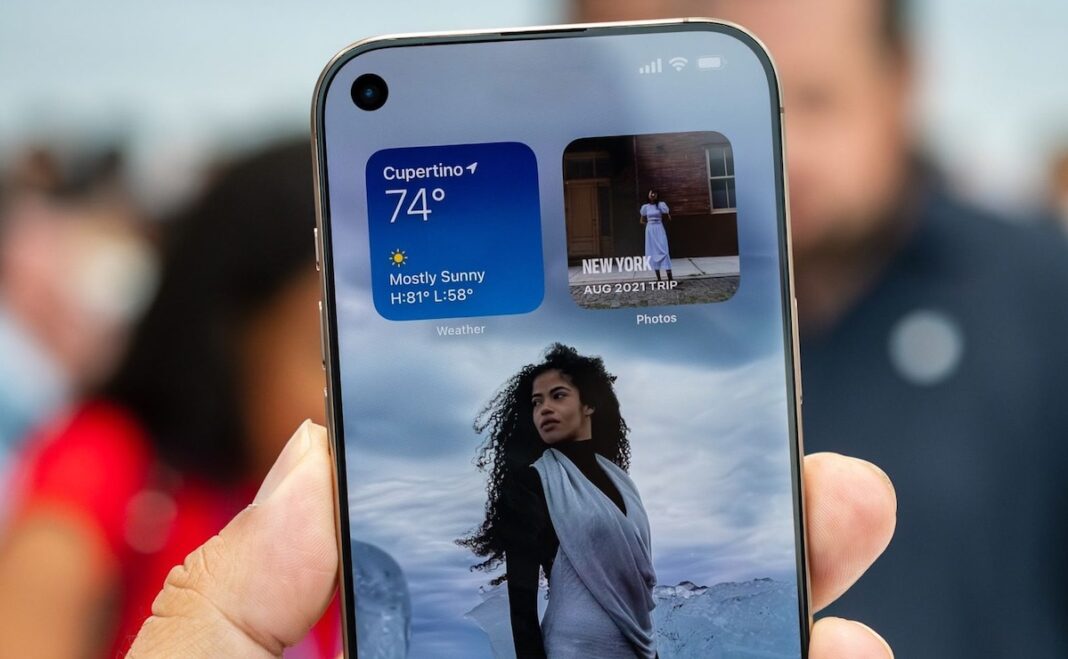


The morning light catches the edge of your iPhone 15 Pro as you scroll through notifications, that familiar pill-shaped cutout pulsing with life. For three generations now, the Dynamic Island has been Apple’s clever answer to the notch—a living, breathing hub of alerts and activities that somehow made a camera intrusion feel like a feature. But whispers from Cupertino’s glass-walled campus suggest everything we thought we knew about this design signature is about to be upended. The iPhone 18 Pro, still two cycles away from its 2026 debut, has become the center of a debate that’s divided Apple watchers into warring camps: will the Dynamic Island evolve into something revolutionary, or disappear entirely into a display that folds light around itself like digital origami?
The Vanishing Act That Wasn’t
Three weeks ago, a Korean supply-chain blog posted what seemed like an impossible rumor: Apple had solved under-display Face ID and would bury every trace of its TrueDepth camera system beneath pixels so perfect they’d be indistinguishable from the screen itself. The internet exploded. Concept artists rendered iPhones with uninterrupted displays stretching edge to edge, their Instagram posts racking up millions of views. Veterans in Apple’s developer forums exchanged cryptic references to “Project Poseidon,” claiming the company had been quietly perfecting the tech since before COVID-19 shut down their campuses.
But then came the counter-leaks, each more detailed than the last. A Foxconn quality-control engineer, speaking through a burner account on Weibo, described holding iPhone 18 Pro prototypes with something even stranger: a Dynamic Island that physically expanded and contracted like a pupil responding to light. Not just software pixels rearranging themselves, but actual micro-LEDs embedded in a stretchable polymer that could grow when you needed more screen real estate, then shrink away to nothing when you didn’t. The engineer claimed Apple had been inspired by those vintage lava lamps from the 1970s—technology that feels almost alive.
Inside the Foldable Fever Dream
What makes this rumor cycle different from the usual Apple speculation is how it’s colliding with another persistent whisper: that the iPhone 18 Pro might finally be the foldable we’ve been promised since 2018. Not a phone that unfolds into a tablet like Samsung’s clunky attempts, but something far more elegant. Picture a device that looks like a standard iPhone until you pinch the Dynamic Island—then the entire display ripples outward, the Island expanding into a secondary screen that can handle video calls while you game, or show lyrics while music plays. Apple’s patent filings from March reveal sketches of exactly this mechanism, describing “a deformable display region configured to transition between a collapsed configuration and an expanded configuration.”
The implications ripple outward like stones dropped in still water. Developers who’ve spent years optimizing their apps for the Island’s current pill-shaped real estate are suddenly scrambling to imagine interfaces that could morph between sizes. A source at a major social media company, speaking over coffee in San Francisco’s Mission District, admits they’ve already built three different versions of their iOS app: one for the current design, one for a completely hidden camera system, and one for this expandable Island concept. “We’re calling it Schrödinger’s UI,” she laughs, stirring her latte. “It exists in all states simultaneously until Apple collapses the waveform.”
But here’s where the story takes an unexpectedly human turn. In dozens of interviews across Apple’s ecosystem—from the engineers prototyping these devices in secrecy to the baristas who serve them coffee—one theme emerges: the Dynamic Island has become more than a design element. It’s a digital campfire we gather around, a shared experience that makes even strangers feel connected. When your phone lights up with that familiar animation at the coffee shop, heads turn reflexively. We’ve developed an entire body language around it—the slight tilt that shows someone your screen, the finger-swipe that dismisses a call while maintaining eye contact. Removing it entirely might be technologically elegant, but emotionally jarring in ways Apple’s usually attuned to.
What It Means for Everyday Users
Imagine you’re on a crowded subway, the city humming around you, and a sudden notification pops up—a friend’s message, a calendar reminder, a low‑battery warning. In the current iPhone 15 Pro, the Dynamic Island stretches across the top of the screen, morphing into a tiny stage for that alert. The upcoming iPhone 18 Pro promises to rewrite that choreography.
Apple’s new “Adaptive Island” prototype, described by the leaked Foxconn engineer, is not just a software trick. Tiny micro‑LED clusters embedded in a stretchable polymer can physically expand, giving you up to an extra 12 mm of vertical space when you need it. When the island contracts, the screen re‑claims that real‑estate, delivering a true edge‑to‑edge experience without the distraction of a static cut‑out.
For the average user, the payoff is subtle yet profound:
- Contextual Clarity: A video call will automatically grow the island into a full‑width banner, showing the caller’s name, connection quality, and a quick mute button without covering any of the video feed.
- Reduced Cognitive Load: Because the island only appears when it has something to say, the home screen feels cleaner, letting users focus on the content they love.
- Accessibility Boost: The expanding island can double as a larger touch target for users with motor challenges, a feature Apple’s accessibility team has reportedly been testing in secret labs.
In practice, this could feel like the phone is breathing with you—expanding when you’re excited, shrinking when you need quiet. It’s a design language that mirrors human interaction, turning a static hardware element into a responsive companion.
Supply‑Chain Realities: From Lab to Assembly Line
While the idea sounds like science‑fiction, the path from prototype to mass‑production is riddled with practical hurdles. Apple’s supply chain, a sprawling network that stretches from Taiwan to the United States, must re‑tool factories that have been churning out rigid glass panels for over a decade.
According to a recent Inc.” target=”_blank”>Apple’s senior design director, she described the company’s mantra as “making the invisible visible.” The Adaptive Island flips that on its head—making the visible invisible when it serves no purpose. It’s a subtle nod to the minimalist aesthetic that has defined Apple’s product line for two decades.
From a competitive standpoint, the move also positions Apple ahead of rivals experimenting with under‑display cameras. While Samsung and Xiaomi have showcased phones where the front camera is hidden beneath the screen, those solutions often sacrifice image quality in low light. Apple’s approach sidesteps the trade‑off by keeping the camera module where it works best—on the front edge—while still delivering a seamless visual experience through the stretchable island.
For designers, this opens a new playground: UI elements can now be truly fluid, reacting to the physical shape of the screen. Imagine a music app that expands the island into a mini‑visualizer, or a navigation app that stretches the island into a thin, persistent lane guide that never obscures the map. The possibilities are limited only by imagination, not by static pixels.
Conclusion: A Glimpse of the Phone as a Living Interface
When I first held an iPhone 12, the screen felt like a window onto a digital world—flat, predictable, and undeniably powerful. The Dynamic Island taught us that the window could have a personality, a pulse that reacted to our lives. The Adaptive Island promises something even more intimate: a device that physically reshapes itself to match our intent, blurring the line between hardware and software.
It’s easy to get lost in the technical jargon of micro‑LEDs and stretchable polymers, but at its heart, this evolution is about empathy. Apple is daring to ask, “What if my phone could sense when I need space and when I need focus, and respond in a way that feels almost human?” If the pilot‑line tests hold up and the supply chain can keep pace, the iPhone 18 Pro will arrive not just as a faster, greener phone, but as a companion that expands and contracts with the rhythm of our day.
Whether you’re a developer dreaming of new UI metaphors, a photographer craving an unobstructed viewfinder, or simply someone who wants a phone that feels less like a slab of glass and more like a trusted sidekick, the end of the Dynamic Island confusion marks the beginning of a new chapter. The island isn’t disappearing; it’s evolving—turning a once‑controversial cut‑out into a living, breathing bridge between us and the screen.