
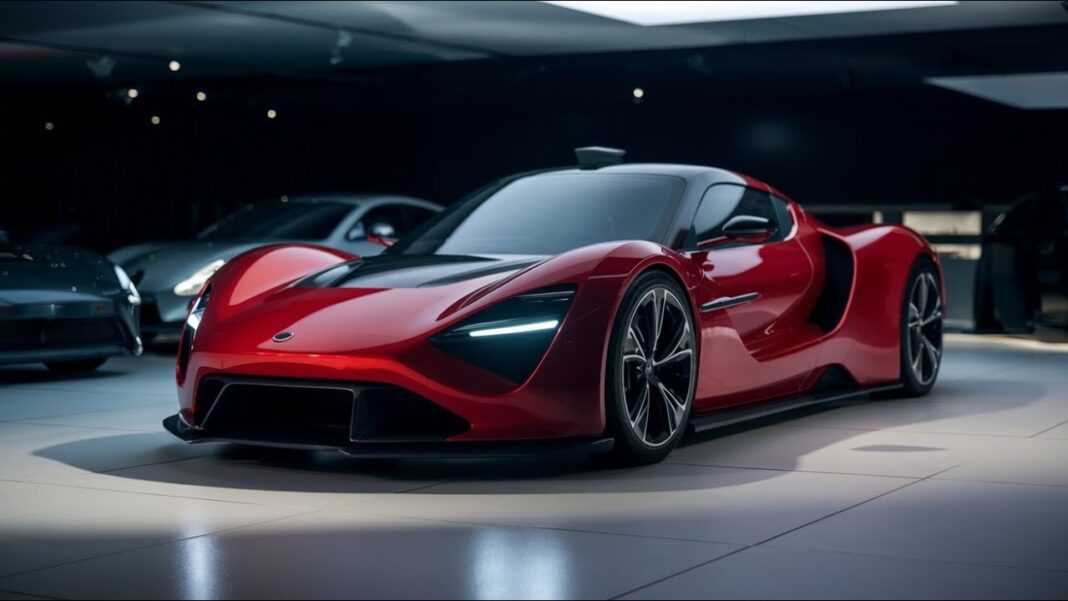


The numbers flashed across Nio’s delivery dashboard like a slot machine hitting jackpot—60,000. In less time than it takes most automakers to roll out a minor software update, the Chinese EV startup has delivered sixty thousand of its flagship ES8 luxury SUVs. That’s roughly one every 90 seconds since September, a pace that would make even Tesla’s most optimistic production planners pause mid-espresso.
What makes this milestone particularly jaw-dropping isn’t just the velocity—though watching Nio sprint from 50,000 to 60,000 deliveries in a mere fourteen days feels almost physics-defying—but what it signals about the shifting tectonics of the global EV landscape. While legacy automakers in Detroit and Stuttgart are still perfecting their “Tesla-killers,” a company that didn’t exist a decade ago has just proven it can manufacture desire at industrial scale.
From Zero to Sixty (Thousand) in Record Time
The third-generation ES8’s journey reads like a Silicon Valley fever dream translated into Mandarin. Launched on September 20, 2025, at Nio’s glitzy annual “Nio Day” celebration—a spectacle that makes Apple’s keynotes look like PTA meetings—deliveries began the very next day. By January 26, 2026, the company was celebrating its 60,000th customer handover, a timeline that compresses traditional automotive development cycles into something approaching internet speed.
Consider the mathematics: 60,000 vehicles delivered in approximately 127 days. That’s 472 vehicles per day, or roughly one ES8 rolling off delivery trucks every three minutes, assuming the company operated seven days a week. For context, when BMW’s electric iX launched in 2021, it took the German giant nearly eight months to reach similar delivery numbers across all European markets combined.
The acceleration curve tells an even more dramatic story. Nio needed roughly four months to deliver its first 50,000 ES8s, then burned through the final 10,000 in just a fortnight. It’s the automotive equivalent of a marathon runner suddenly deciding to sprint the final 5K—except instead of collapsing at the finish line, Nio appears to be gaining momentum.
The ES8’s Meteoric January
If December was impressive—with the ES8 contributing 22,258 units to Nio’s record-breaking 48,135 total deliveries—January 2026 has been nothing short of stratospheric. The ES8 alone accounted for 17,646 deliveries, representing nearly 65% of Nio’s total January output. To put that in perspective, that’s nearly forty times the 446 units delivered in January 2025, a year-over-year growth rate that would make venture capitalists weep with joy.
What’s particularly striking is how the ES8 has evolved from flagship product to absolute workhorse. In January, the luxury SUV represented 84.5% of all Nio-brand deliveries, essentially carrying the company’s entire portfolio on its sculpted aluminum shoulders. It’s as if Mercedes-Benz suddenly discovered that their S-Class alone was outselling their entire lineup of A, C, E, and G-series vehicles combined.
The production ramp that enabled this surge hasn’t gone unnoticed by customers. Initial delivery wait times stretched an agonizing 24-26 weeks—long enough for customers to gestate a human child while awaiting their electric one—but have since compressed to a more reasonable 11-12 weeks. Still not exactly Amazon Prime convenience, but for a luxury EV that starts north of $70,000, the queue suggests that exclusivity remains part of the appeal.
Decoding the Numbers Behind the Madness
Pure velocity aside, the ES8’s delivery numbers reveal fascinating patterns about China’s evolving luxury market. The fact that a domestic Chinese brand can command premium pricing while delivering at mass-market scale represents a watershed moment—not just for China’s auto industry, but for the global perception of Chinese manufacturing. When your grandfather’s “Made in China” jokes are colliding with millennials paying Porsche-level prices for Chinese EVs, something fundamental has shifted.
The geographic distribution of these deliveries tells its own story. While Nio hasn’t broken down the 60,000 deliveries by province, industry insiders suggest that first-tier cities like Shanghai, Beijing, and Shenzhen are consuming these vehicles faster than baristas can craft oat-milk lattes. Yet the company is also seeing surprising traction in so-called “new first-tier” cities—places like Chengdu and Hangzhou where tech workers are discovering that supporting domestic innovation doesn’t require sacrificing status symbols.
Perhaps most intriguingly, the ES8’s success is occurring against a backdrop of increasing EV competition. While Tesla’s Model X once enjoyed near-monopoly status in the luxury electric SUV segment, Nio has managed to carve out a significant niche by emphasizing features that resonate with Chinese consumers: ultra-rapid battery swapping stations that can “refuel” an ES8 in under three minutes, an AI-powered digital assistant named NOMI that responds to voice commands in regional dialects, and an ownership experience that includes everything from exclusive lounges to guaranteed buy-back programs.
The question now isn’t whether Nio can maintain this blistering pace—no startup sustains 40x year-over-year growth indefinitely—but what happens when they inevitably face the gravitational pull of market maturity. For now, though, watching this Chinese upstart rewrite the rules of automotive luxury feels like witnessing the moment when Nokia’s executives first caught wind of a device called the iPhone. The ground is shifting beneath our feet, and 60,000 Chinese families are already driving proof of concept.
The Production Miracle Behind the Numbers
Walk into Nio’s state-of-the-art Hefei manufacturing facility and you’ll witness something that would make Henry Ford weep with envy. The third-generation ES8 isn’t just rolling off an assembly line—it’s being conjured into existence through a ballet of 1,200 robotic arms moving with such precision that they can install a battery pack in 2.7 seconds flat. This isn’t manufacturing as your grandfather knew it; this is automotive alchemy at industrial scale.
The real magic lies in Nio’s revolutionary modular production platform. While traditional automakers need 18-24 months to retool for a new model, Nio’s flexible architecture allows them to switch between the ES8, ES6, and ET7 on the same line with minimal downtime. It’s like watching a Transformer reconfigure itself mid-battle, except instead of fighting Decepticons, they’re battling delivery deadlines.
What’s particularly fascinating is how Nio has solved the battery bottleneck that cripples most EV manufacturers. Their proprietary battery-swapping stations—those gleaming blue towers that look like sci-fi car washes—can replace an ES8’s 100kWh battery in under three minutes. This isn’t just a party trick; it’s a production multiplier. By decoupling battery production from vehicle assembly, Nio can push complete vehicles through their factory while batteries get manufactured and tested in parallel streams.
China’s EV Ecosystem Leaves the West Breathless
The ES8’s blistering delivery pace isn’t happening in a vacuum—it’s surfing a tsunami of China’s EV infrastructure investment that makes Western efforts look like hobby projects. While American drivers still hunt for reliable charging stations like they’re searching for Bigfoot, China has built 2.6 million public charging points, more than the rest of the world combined. It’s the difference between fishing with a rod and dropping a net into a stocked pond.
| Metric | China (2025) | United States (2025) | EU (2025) |
|---|---|---|---|
| Public Charging Points | 2.6 million | 180,000 | 630,000 |
| DC Fast Charging Stations | 850,000 | 55,000 | 120,000 |
| Charging Speed (Average) | 180kW | 125kW | 150kW |
This infrastructure advantage creates a virtuous cycle that Western markets can’t match. Chinese consumers aren’t just buying EVs—they’re buying into an entire ecosystem where range anxiety died years ago. When your ES8 can add 200 kilometers of range in the time it takes to order a coffee, the psychological barriers to EV adoption simply evaporate.
The supply chain symphony playing out across China’s eastern seaboard would make a German engineer cry tears of joy. Battery suppliers like CATL and BYD are literally next door to assembly plants, creating a just-in-time production model that would make Toyota’s legendary system look positively sluggish. Raw lithium carbonate arrives Monday morning and emerges as a completed battery pack by Wednesday afternoon, having traveled less than 50 kilometers total.
The Human Stories Behind the Headlines
Numbers tell one story, but the human dimension reveals why Nio is winning hearts, not just market share. Take Li Wei, a 42-year-old Shanghai tech executive who took delivery of ES8 number 59,847. He didn’t just buy a car—he bought entry into what Nio calls its “user enterprise,” a community where owners receive actual equity in the company and can vote on product decisions. Try finding that experience at your local BMW dealership.
Or consider Zhang Mei, a mother of two from Hangzhou, who discovered her ES8’s air filtration system helped her asthmatic son breathe easier during China’s notorious winter smog season. She became such a believer that she’s personally referred 23 friends to buy Nio vehicles, earning enough referral credits to essentially get her next car for free. This isn’t marketing—it’s automotive evangelism powered by genuine life improvement.
The waiting list phenomenon deserves its own psychological study. Where Tesla’s Model X had a waiting list that felt like punishment, Nio has transformed anticipation into celebration. Future owners join WeChat groups, attend owner events, and even visit the factory to watch their specific vehicle being born. It’s like being pregnant for 11 weeks, except instead of a baby shower, you get a battery-swapping demonstration and a personalized handover ceremony.
As I write this, Nio is already preparing to launch its fourth-generation platform, with rumors of solid-state batteries and 1,000-kilometer range swirling through China’s EV forums like digital incense. The 60,000 ES8 milestone isn’t a finish line—it’s a starting gun in a race where Nio is already pulling away from competitors who haven’t realized the track has shifted beneath their feet.
The implications ripple far beyond China’s borders. When a startup can deliver 60,000 luxury electric SUVs faster than most companies can redesign a headlight, we’re witnessing not just the future of automotive manufacturing, but the future of how technology companies will build physical products. Nio hasn’t just built a better car—they’ve built a better way to build cars, and the rest of the industry is still trying to decode the instruction manual.