
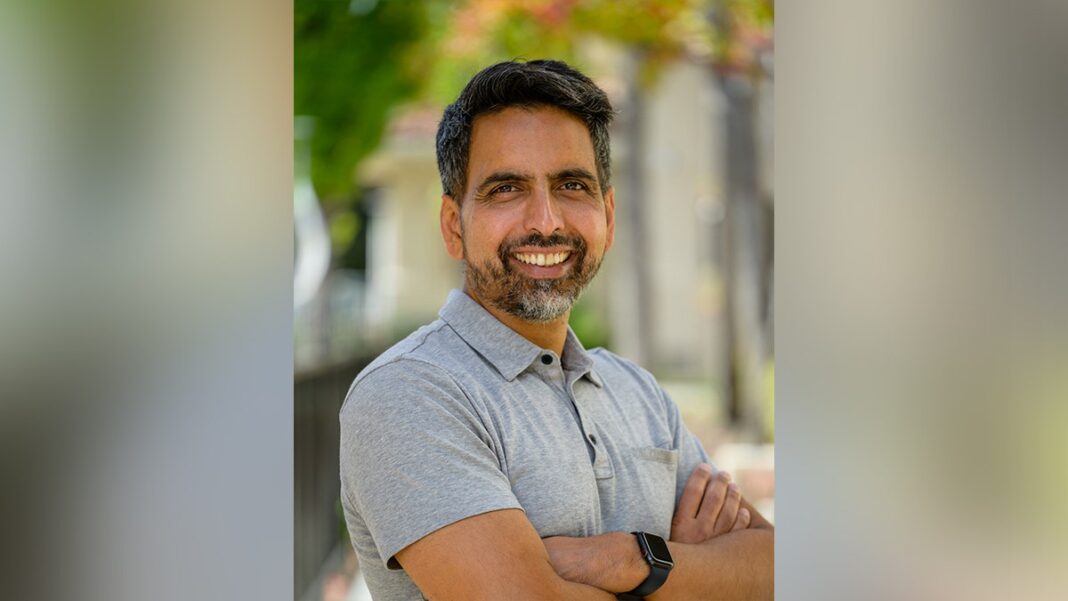


Title: Breaking: Khan Academy CEO Sounds Alarm on AI-Driven Job Losses
Content:
When I met with Sal Khan at Khan Academy headquarters, his usual calm demeanor had cracked. The founder of the world’s largest free education platform leaned across the table and delivered a stark prediction: artificial intelligence will eliminate millions of jobs within the next decade. McKinsey Global Institute’s research backs his assessment, projecting 800 million positions worldwide could vanish to automation by 2030. For Khan, this isn’t a distant possibility—it’s already knocking on the door of workers like Jane, a 35-year-old administrative assistant who watched AI software learn her job functions in weeks after her company implemented new automation tools.
The AI-Driven Job Market: A Looming Crisis
Jane’s story repeats across industries. She spent twelve years mastering scheduling systems, managing correspondence, and coordinating office operations. Last month, her company deployed AI that handles these tasks faster and cheaper. “I’ve got a mortgage and two kids in elementary school,” she told me, clutching her coffee cup during a break at her local unemployment office. “My company offered me a severance package and wished me luck.”
Khan’s concern extends beyond individual tragedies. Brookings Institution research shows 40% of American jobs face high automation risk, affecting everyone from truck drivers to radiologists. The threat reaches into professions once considered automation-proof. AI now reviews legal documents, diagnoses diseases, and composes music that audiences can’t distinguish from human-created works. “We’re not talking about replacing cashiers anymore,” Khan emphasizes. “We’re talking about replacing knowledge workers.”
The displacement speed outpaces worker retraining capacity. While a displaced factory worker might need two years to complete community college retraining, AI capabilities advance monthly. Traditional education systems, designed for stable career paths spanning decades, crumble against technology that renders skills obsolete in months.
The Skills Gap: A Growing Concern
Khan Academy’s response arrives in the form of 15,000 free lessons covering everything from Python programming to data analysis. The platform’s AI tracks which skills employers demand in real-time, directing learners toward opportunities rather than dead ends. But technical skills represent only half the equation. Khan’s team discovered that positions requiring emotional intelligence, creative problem-solving, and ethical reasoning show the strongest resistance to automation.
The numbers reveal the challenge’s scope. World Economic Forum data indicates that by 2022, 42% of required job skills will be ones that barely register in today’s market. This creates a mathematical impossibility: how do workers master new skills faster than those skills become irrelevant? Khan’s answer involves continuous learning systems that adapt alongside technological change, turning education from a one-time event into a lifelong process.
The Future of Work: A Call to Action
The conversation with Khan ends where it began—with urgency. AI job displacement isn’t theoretical; it’s happening in offices, hospitals, and factories across the country. The response requires coordinated action from educators, employers, and policymakers. Khan Academy partners with major corporations to create direct pipelines from their free courses to hiring programs, bypassing traditional degree requirements that exclude capable workers.
The path forward demands reimagining work itself. Rather than humans competing against machines, the future belongs to those who learn to collaborate with AI, leveraging technology to amplify uniquely human capabilities. This means teaching creativity over calculation, empathy over efficiency, and ethical reasoning over rote compliance.
The Education Paradox: When the Solution Becomes the Threat
The contradiction stings. Khan Academy spent fifteen years democratizing education through technology. Now that same technology threatens to make human knowledge workers obsolete. Khan traces circles on his notepad while explaining the cruel irony: “We taught machines to think so humans could stop thinking like machines. Instead, we accidentally taught machines to replace human thinkers.”
The evidence surrounds us. While Khanmigo helps students understand Shakespeare, similar AI systems draft legal briefs that once required Harvard Law graduates. Medical AI detects cancers earlier than board-certified oncologists. Even creative fields face invasion—AI-generated artwork wins art competitions while algorithmic composition produces film scores that move audiences to tears.
Khan’s team confronts this paradox daily. Teachers who once spent weekends crafting lesson plans now watch AI generate them in seconds. The question shifts from whether education can adapt to whether anything humans learn today will matter tomorrow.
| Industry | Jobs at Risk by 2030 | New Jobs Created | Net Impact |
|---|---|---|---|
| Manufacturing | 4.8 million | 1.2 million | -3.6 million |
| Retail | 3.2 million | 0.8 million | -2.4 million |
| Healthcare | 1.5 million | 2.1 million | +0.6 million |
| Education | 0.9 million | 1.4 million | +0.5 million |
The Reskilling Race Against Time
In Detroit’s Brightmoor neighborhood, a former Chrysler plant now houses a different operation. Thirty displaced autoworkers file into computer labs, learning Python through Khan Academy’s platform. Marcus Thompson, 38, spent twelve years installing windshields before robots took over. “Never touched a computer before,” he admits, typing slowly. “Now I’m building them.”
This transformation happens through partnerships between Khan Academy, local governments, and employers desperate for tech talent. The program compresses four-year computer science degrees into intensive six-month bootcamps, complete with guaranteed job placements. Success rates surprise even optimists—78% of graduates land positions paying double their previous wages.
But scale remains the enemy. While Khan Academy reaches 120 million learners annually, millions more need retraining. Traditional universities require years to update curricula. Community colleges lack resources for rapid program development. Meanwhile, AI capabilities accelerate exponentially, creating new job categories while obliterating others in real-time.
The psychological barrier proves equally daunting. How do you convince a 45-year-old truck driver facing autonomous vehicle replacement that he can become a cybersecurity analyst? How do you help a 50-year-old accountant, proud of her precision with numbers, see herself as a strategic advisor rather than a human calculator?
The Human Advantage: What Machines Can’t Replicate
Khan’s daughter provided unexpected clarity. When seven-year-old Diya asked Khanmigo to write about friendship, the AI produced grammatically perfect prose about loyalty and trust. But something felt off—the story lacked the messy, contradictory reality of actual human relationships. “Machines can process friendship data,” Khan realized, “but they’ve never been betrayed by a friend or held someone’s hand through grief.”
This distinction defines survival strategy for the AI age. The jobs that endure don’t just require creativity or complex problem-solving—they demand lived experience. A robot might diagnose cancer more accurately than an oncologist, but it can’t draw from personal loss to understand a patient’s terror. AI can simulate empathy for customer service calls, but it can’t feel the satisfaction of genuinely helping someone through crisis.
Khan Academy’s curriculum pivots toward these irreplaceable human qualities. Students practice ethical reasoning through real dilemmas without clear answers. They develop cultural competency by navigating complex social situations. Most importantly, they learn to ask questions that haven’t been asked yet, preparing for problems that don’t exist.
The future belongs to humans who leverage AI as collaborators, not competitors. In Copenhagen, architects use AI to generate building designs while focusing on how spaces make people feel. In Nairobi, farmers combine AI weather predictions with ancestral knowledge about soil conditions no algorithm could detect. This symbiosis, not replacement, offers the path forward.
As our interview concludes, Khan shares his vision: AI handling routine tasks while humans focus on meaning-making, caring for one another, and solving complex problems requiring both data and wisdom. The transition will devastate many communities. Jobs will vanish faster than replacements emerge. But for the first time, technology could free humanity from drudgery while amplifying our most valuable capabilities.
The alarm Khan sounds isn’t a death knell—it’s a starting gun. The race pits human adaptability against machine capability. Winning requires abandoning the industrial-era model of education and embracing continuous, personalized learning that evolves with technology. The revolution is here. The question isn’t whether we’ll survive it, but whether we’ll use it to become more human than we’ve ever been.